Nag Tibba Trek (2026): Route from Dehradun, Difficulty and Weekend Groups
Plan the Nag Tibba trek in 2026 with route details from Dehradun, difficulty for beginners, costs and weekend group departures worth booking.
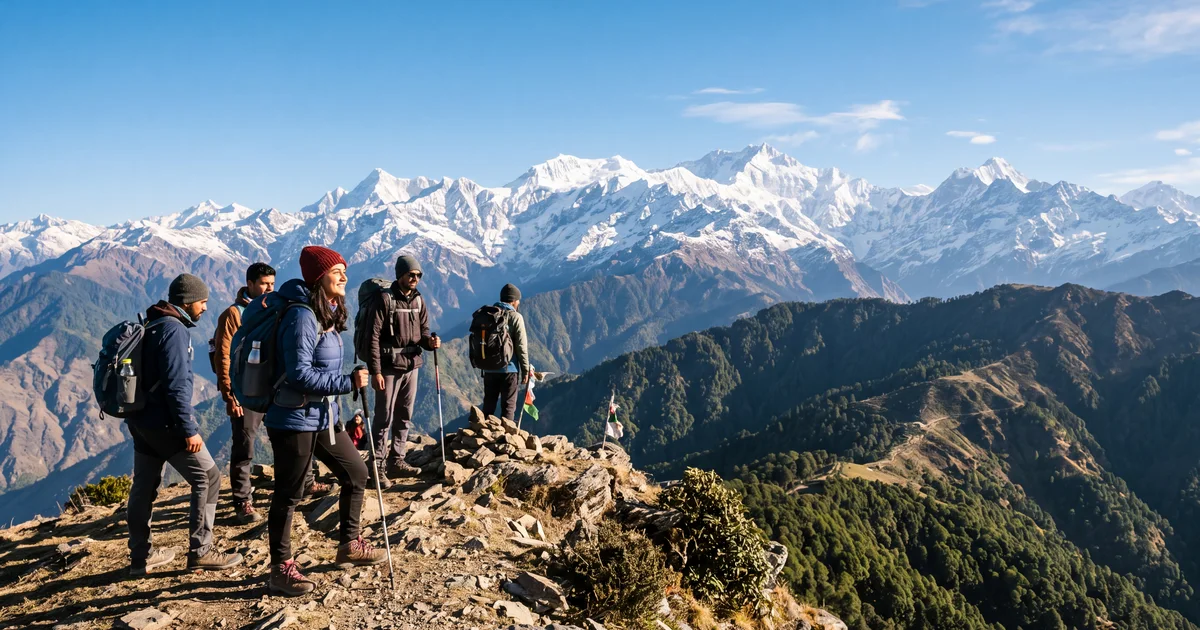
Nag Tibba sits at 9,915 ft in the Garhwal Himalayas, about 3.5 hours from Dehradun by road. It is the highest peak in the lower Himalayan range of Uttarakhand, and for most weekenders from Delhi, it represents the shortest possible path to a real Himalayan summit without taking time off work.
The entire trek covers roughly 16 km over 2 days. You leave Pantwari village on Saturday morning, camp at a meadow at 8,500 ft, summit the next day, and return to Pantwari by early afternoon. Back in Dehradun for dinner. Back in Delhi by Monday morning if you want. That compressed timeline is what makes Nag Tibba one of the most popular weekend treks in North India.
But popularity has trade offs. The Pantwari to summit trail gets crowded on winter weekends, and some operators pack 30+ people into a single batch. The views from the top, a 360 degree panorama including Swargarohini, Bandarpunch, Kedarkantha, and on clear days the Gangotri group, are worth the early alarm. The trek itself just requires a bit of planning to get right.
TL;DR
- Summit altitude: 9,915 ft. Total distance: ~16 km over 2 days (1 night camping).
- Difficulty: Easy. No technical sections. Suitable for absolute beginners.
- Best months: December to February for snow, April to June for green trails, September to October for views.
- Cost: 3,500 to 5,500 rupees for a group package from Dehradun. Delhi to Dehradun travel extra.
- Weekend friendly: leave Delhi Friday night, trek Saturday and Sunday, back Monday.
What Is the Nag Tibba Trek Route from Dehradun?
The standard route starts from Pantwari village, 60 km from Dehradun via Mussoorie. The drive takes about 3.5 hours including the Mussoorie bypass. From November to March, the road occasionally gets icy patches after Dhanaulti, so most operators leave Dehradun by 7 AM to clear the stretch in daylight.
Day 1: Pantwari (5,100 ft) to Nag Tibba Base Camp (8,500 ft)
The trail begins at the edge of Pantwari, climbing through oak and rhododendron forests. The first hour follows a well marked mule track that local villagers use daily. After about 3 km, the forest thickens and the gradient steepens slightly.
The campsite sits in a flat meadow clearing at 8,500 ft, roughly 8 km from Pantwari. Most groups reach it in 4 to 5 hours with breaks. In winter, the meadow carries a layer of snow from December onwards. In spring, it turns into a wildflower carpet by April.
One caveat worth knowing: there is no water source at the campsite. Operators carry water up by mule or you need to fill bottles at a stream crossing about 1 km before camp. Ask your operator beforehand whether they provide water or expect you to carry your own.
Day 2: Base Camp to Nag Tibba Summit (9,915 ft) and back to Pantwari
The summit push is about 4 km from camp, gaining roughly 1,400 ft in under 2 hours. The trail leaves the tree line and climbs through open grassland and rocky terrain. On clear mornings, you start seeing the Himalayan panorama from about 9,000 ft.
The summit has a small Nag Devta temple and prayer flags. On a clear day, you can see peaks spanning from Swargarohini in the west to Kedarkantha in the east, with Bandarpunch and the Gangotri group in between. The summit ridge is narrow, so if your group is large, expect to wait for photos.
Return from summit to Pantwari takes 4 to 5 hours. Most groups finish by 2 PM.
Is Nag Tibba Hard? Difficulty Breakdown
No. By Himalayan trekking standards, Nag Tibba ranks among the easiest options available.
The maximum altitude is 9,915 ft, well below where serious altitude sickness typically kicks in (12,000 ft and above). The trail gains about 4,800 ft total from Pantwari to summit, but spread across a day and a half with a camp break in between. No scrambling. No exposed ridges. No rope sections.
That said, two things catch beginners off guard:
The forest section on Day 1 can feel relentless. Eight kilometers of uphill through dense trees without views gets mentally tiring if you are not used to walking for hours. Keep a steady pace and do not race.
Winter cold at the campsite surprises people who underestimate 8,500 ft in December. Night temperatures hit minus 5°C regularly. If your sleeping bag is not warm enough, you will not sleep. Operators provide bags rated to minus 10°C in most cases, but confirm before booking.
If you can walk 10 km on a hilly trail without stopping every 200 meters, you can do Nag Tibba. The threshold is lower than people assume.
How Much Does the Nag Tibba Trek Cost?
Weekend group packages from Dehradun range between 3,500 and 5,500 rupees per person in 2026. Here is what that typically includes:
Transport from Dehradun to Pantwari and back. Camping gear (tent, sleeping bag, mat). All meals from lunch on Day 1 to lunch on Day 2. A guide and support staff. Forest entry charges.
What it does not include: your travel from Delhi (or wherever) to Dehradun, personal gear like trekking shoes and warm layers, and any tips for the guide.
Delhi to Dehradun costs between 500 and 1,500 depending on whether you take a state bus, Volvo AC, or train. Return is the same.
Total budget for a Delhi weekender: roughly 5,000 to 8,000 rupees all in.
One thing to watch: some operators advertise packages at 2,500 to 3,000 rupees but exclude the Dehradun pickup, meaning you arrange your own transport to Pantwari. That adds 1,500 to 2,000 for a shared taxi, so the real cost evens out. Read the inclusions carefully before comparing prices. Check current group departures on /trips.
When Should You Do the Nag Tibba Trek?
The trek works year round except during peak monsoon (July to August). Each season offers something different.
December to February (Winter)
This is peak season for Nag Tibba. Snow covers the trail above 7,500 ft, the campsite turns white, and the summit ridge feels like a proper Himalayan winter. Weekend batches in January fill up 2 to 3 weeks in advance. Daytime temperatures hover around 2 to 5°C at camp. Expect frozen water bottles by morning.
The downside: crowds. Winter weekends often have 50+ trekkers on the same route from different operators. The campsite meadow gets noisy. If you want a quieter experience, pick a Tuesday to Wednesday departure (some operators run midweek batches in January).
April to June (Spring and Summer)
Snow melts by late March. The forest fills with rhododendron blooms in April. Green meadows, bird calls, and comfortable 10 to 15°C temperatures at camp. Far fewer people on the trail. Summit views are often clearer because winter haze lifts.
The trade off: no snow means the summit area looks less dramatic in photos. But the hiking itself is more pleasant.
September to October (Post Monsoon)
The best combination of clear skies, comfortable weather, and thin crowds. The monsoon washes the air, giving you the sharpest Himalayan views from the summit. Trails are still damp in early September but dry out by October.
Avoid: July and August. The Mussoorie road gets landslide prone during heavy monsoon, and forest trails turn slippery with leeches active below 7,000 ft.
How Do Weekend Group Departures Work?
Most operators run fixed departure batches every Friday night or Saturday morning from Dehradun. You book a slot in an existing batch rather than organizing a private group.
A typical weekend schedule looks like this:
Friday night: depart Delhi by bus or train (arrive Dehradun by 5 to 6 AM Saturday). Saturday morning: operator picks you up in Dehradun, drive to Pantwari, start trek. Camp at meadow by evening. Sunday morning: summit push, return to Pantwari by afternoon, drive back to Dehradun. Sunday evening: overnight bus or train back to Delhi. Monday morning: back at work.
Group sizes range from 8 to 25 people depending on the operator. Smaller batches (8 to 12) give a better experience on trail and at camp, but cost slightly more. Larger groups (20+) are cheaper but the camp gets cramped and summit waits grow longer.
If you are travelling from Delhi, most group packages handle the Dehradun logistics. Check Himalayan trek collections for operators running weekend Nag Tibba batches.
What to Pack for Nag Tibba
The packing list depends entirely on the season. Winter needs layering. Summer needs sun protection. Here is the core across seasons:
Trekking shoes with ankle support (mandatory, not negotiable). A 2 liter water bottle or hydration bladder. A headlamp (summit pushes start early). Sunscreen and lip balm with SPF. A light daypack for summit day if your main bag stays at camp.
For winter specifically: a down jacket, thermal base layers, waterproof outer shell, fleece gloves, a balaclava or warm hat, and a pair of gaiters if snow is deep. Most operators provide sleeping bags, but carry a liner for hygiene.
Carry a rain poncho even in non monsoon months. Mountain weather shifts fast at this altitude, and a sudden shower at 9,000 ft can soak you within minutes.
Is Nag Tibba Worth It Compared to Other Weekend Treks?
For a Delhiite wanting their first Himalayan summit experience without taking leave, Nag Tibba is hard to beat on logistics. The only comparable option is Triund above McLeodganj, but that requires a longer road journey (10+ hours from Delhi) and the trail itself has become heavily congested.
Nag Tibba gives you a legitimate summit, a proper camping night, and Himalayan views spanning Bandarpunch to Kedarkantha. All within a 48 hour window from Delhi. The trek is not life changing, and you will not feel isolated from civilization, but as a weekend introduction to walking in the mountains it does what it promises.
Most people who do Nag Tibba end up booking Kedarkantha or Brahmatal within a few months. Consider it a gateway rather than a destination. If you already have 2 to 3 treks behind you and want a challenge, look at options on /trips instead. Nag Tibba will feel too short.
For first timers though, or for anyone who just wants a clean weekend in the mountains without complexity, it is the right choice. Book a weekend departure from Delhi and keep your expectations realistic. The mountain delivers, but it delivers gently.
Frequently asked questions
- How difficult is the Nag Tibba trek for beginners?
- Nag Tibba is considered one of the easiest Himalayan treks in Uttarakhand. The total trek distance is about 16 km spread over 2 days, with a maximum altitude of 9,915 ft. No technical climbing is involved. You need basic fitness to walk 4 to 6 hours per day on forest trails, but first timers regularly complete it without issues.
- How do I reach Nag Tibba from Delhi?
- Take an overnight bus or train from Delhi to Dehradun, which takes about 5 to 6 hours. From Dehradun, drive to Pantwari village (about 3.5 hours via Mussoorie). Pantwari at 5,100 ft is the trek basecamp. Most operators include the Dehradun to Pantwari transfer in their package.
- What is the best time for the Nag Tibba trek?
- April to June gives clear weather and green trails. December to February offers snow on the summit ridge and freezing nights at camp. September and October have post monsoon clarity with good Himalayan views. Avoid July and August because the Mussoorie road gets landslide prone and trails turn slippery.
- How much does a Nag Tibba trek package cost in 2026?
- Weekend group packages from Dehradun typically cost between 3,500 and 5,500 rupees per person. That covers transport from Dehradun, camping, meals, and a guide for 2 days and 1 night. Add your Delhi to Dehradun travel separately. Solo bookings may cost 1,000 to 1,500 more than group rates.
- Can I do the Nag Tibba trek in one day?
- Technically yes, but it requires starting very early from Pantwari (around 4 AM) and a fast pace. The 16 km round trip in a single day means 8 to 9 hours of continuous walking. Most people prefer the standard 2 day itinerary with a night at the meadow campsite at 8,500 ft, which makes the summit push shorter and more enjoyable.
- Is the Nag Tibba trek safe in winter?
- Yes, with proper gear. December to February brings snow above 8,000 ft and temperatures drop to minus 5°C at the campsite. You need a good sleeping bag rated for minus 10°C, layered clothing, and waterproof shoes. The trail itself stays non technical even in snow. Groups carry microspikes for the summit day push when ice patches form.