Kerala Group Tours from Mumbai (2026): Backwaters, Munnar and Fixed Departures
Compare Kerala group tours from Mumbai for 2026. Covers backwaters, Munnar, Thekkady, costs, best months and how to pick a departure.
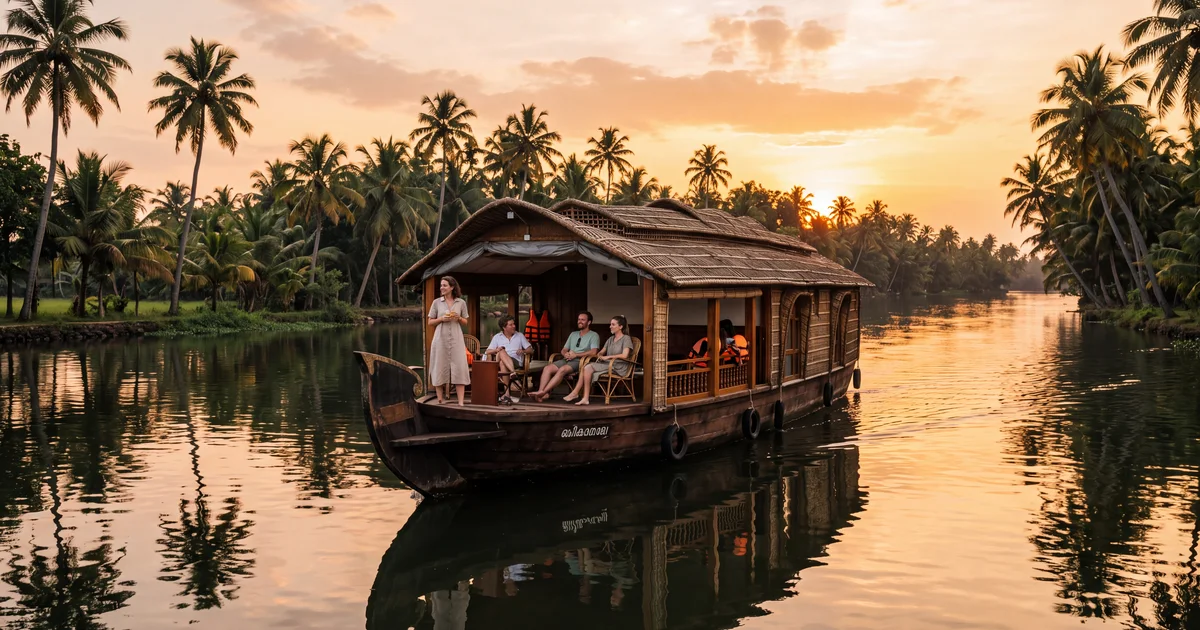
Kerala is a 2 hour flight from Mumbai. That proximity makes it one of the most popular group tour destinations for Mumbaikars, whether the occasion is a friends trip, a family reunion, or a team outing that needed to happen 6 months ago. The state packs backwaters, hill stations, wildlife, beaches, and some of the best food in India into a stretch smaller than Karnataka's coastline.
The problem is not whether to go. It is deciding between 200 operators offering packages that look identical on paper but vary wildly in execution. This is what matters when you are picking a Kerala group tour from Mumbai.
TL;DR
- Kerala group tours from Mumbai run 12,000 to 35,000 per person for 4 to 7 nights.
- The standard circuit covers Kochi, Munnar, Thekkady (or Periyar), and Alleppey backwaters.
- Best months: October to February for weather. September and March are shoulder months with lower prices.
- Fly into Kochi, fly out of Trivandrum. That gives you a linear route without backtracking.
- Group departures with 10 to 20 people split houseboat costs and get better hotel rates than solo booking.
What Does a Typical Kerala Group Tour from Mumbai Cover?
Most operators run a 5 night, 6 day itinerary that follows the same spine:
Day 1: Fly Mumbai to Kochi. Airport pickup, Fort Kochi walkthrough (Chinese fishing nets, St. Francis Church, the spice markets on Jew Town Road). Night in Kochi.
Day 2: Drive to Munnar (4 to 5 hours via Neriamangalam). The road climbs through rubber plantations and then tea estates appear around every bend above 1,200 metres. Night in Munnar.
Day 3: Munnar sightseeing. Eravikulam National Park (if open; it closes January to March for breeding season), Top Station viewpoint, a tea museum or factory visit. Night in Munnar.
Day 4: Drive to Thekkady (3 to 4 hours). Periyar lake boat ride in the evening, spice plantation walk. Night in Thekkady.
Day 5: Drive to Alleppey (4 hours). Board a houseboat by 12:00. Lunch and dinner cooked on board, cruise through the canals. Night on the houseboat.
Day 6: Disembark by 09:00. Drive to Kochi airport (1.5 hours) or continue to Trivandrum (4 hours) for the return flight.
This is the safe, proven route. It works. The question is what makes one operator's version of this better than another's.
How Much Does a Kerala Group Tour from Mumbai Cost?
Prices in 2026 fall into three tiers:
Budget (12,000 to 18,000 per person, twin sharing): 2-star hotels, non-AC transport on some legs, a shared houseboat (your group plus other guests), no flights included. Meals limited to breakfast. Works for college groups and backpacker-minded friends who care more about being there than the room.
Mid-range (18,000 to 28,000 per person): 3-star hotels with proper hot water, AC tempo traveller or Innova for the group, a private houseboat for groups of 6 or more, breakfast plus one meal daily. Includes airport transfers and inter-city transport. This is where most friend groups and family reunions land.
Premium (28,000 to 35,000 per person): 4-star properties or heritage stays, private houseboat regardless of group size, all meals, a dedicated guide, and sometimes a Kathakali performance or Ayurvedic massage session included. Honeymoon groups and corporate offsites typically book this tier.
Flights are extra in all tiers. Mumbai to Kochi runs 3,000 to 7,000 one way depending on how early you book. Return from Trivandrum is similar. Book 6 to 8 weeks ahead for the best fares.
Compare group tour options and prices on /trips.
When Should You Go?
Kerala's weather divides cleanly. Choose your window based on what you want from the trip.
October to February: The sweet spot. Rain has stopped, the backwaters are full and calm, Munnar is green without being foggy, and the coast has clear skies. Temperatures sit at 22 to 32°C in the lowlands. Munnar nights drop to 10 to 15°C, which feels glorious after Mumbai's humidity.
September and March: Shoulder months. September still catches the tail end of monsoon (expect a shower or two daily in Kochi and Alleppey), but prices drop 20 to 30% and crowds thin out. March gets warm in the lowlands (35°C in Alleppey by afternoon) but Munnar stays pleasant.
June to August: Full monsoon. The backwaters flood, some houseboat services suspend operations in heavy rain weeks, and hill roads occasionally get blocked by landslides near Munnar. Ayurveda resorts and spas offer their steepest discounts (40 to 50% off rack rate) because this is traditionally when Keralites themselves do rejuvenation treatments.
One honest caveat: even in peak season, Kerala's heat and humidity catch Mumbai people off guard. Alleppey at noon in November is 33°C with 80% humidity. If your group has people who struggle with heat, front-load the Munnar days (cooler altitude) and keep the backwaters for late afternoon onward.
What Makes a Good Kerala Group Tour Operator?
Not every package listed at 15,000 gives you the same experience. Here is what separates a well-run group tour from a frustrating one.
Transport quality: The road from Kochi to Munnar is 130 km of ghat sections with hairpin bends. A poorly maintained vehicle or an aggressive driver turns this into 4 hours of nausea. Ask the operator what vehicle they use. A force traveller or tempo traveller works for groups of 8 to 12. An Innova or Ertiga suits 4 to 6 people. AC is non-negotiable below Munnar's altitude.
Houseboat standard: Alleppey has roughly 900 registered houseboats. They range from floating shacks with mattresses on the floor to air-conditioned upper deck boats with chefs who cook Kerala fish curry from scratch. "Private houseboat" in a budget package often means the smallest, oldest boat. Ask for photos dated this year.
Guide presence: A good local guide in Kochi makes Fort Kochi interesting instead of a confused walk past old buildings. In Periyar, a naturalist guide doubles your chances of spotting gaur and elephants on the boat ride. Budget tours rarely include guides. Mid-range should.
What is not included (but should be): Entry tickets to Eravikulam, the Periyar boat ride fee (150 per person), toll charges, and parking. These add 1,500 to 2,500 per person across a 5-day trip. Some operators bundle them; others surprise you at every stop. Ask before booking.
Browse verified group tour operators on /operators.
Mumbai to Kerala: Flight vs Train
Flying (recommended): Mumbai to Kochi direct flights take 2 hours. IndiGo, Air India Express, and Akasa run 8 to 10 daily flights. Book early for 3,000 to 4,500 one way. The return from Trivandrum is similar. Flying into Kochi and out of Trivandrum (one-way routing) costs slightly more but eliminates the 5 hour return drive from Alleppey to Kochi airport.
Konkan Railway: The Netravati Express (Mumbai LTT to Ernakulam Junction) takes 17 to 18 hours overnight. A 3AC berth costs roughly 1,200 to 1,500. The Mangala Lakshadweep Express runs a similar route. Scenic ride along the Konkan coast with breakfast included. Good for budget groups who have an extra day. The catch: train delays into Ernakulam often run 2 to 4 hours, which breaks your Day 1 plans.
The smart hybrid: Fly in to Kochi (saves Day 1), do the tour, train back from Ernakulam to Mumbai on the last night (saves hotel + airport hassle). You lose nothing except comfort compared to a return flight.
Beyond the Standard Route: Extensions That Work
If your group has 7 days instead of 5, these additions fit into the linear route without much backtracking.
Wayanad (2 nights, fits between Kochi and Munnar): Drive to Wayanad from Kochi (4 hours via Kozhikode). Bamboo rafting at Kuruva Island, Edakkal Caves, and the Banasura Sagar dam. Then continue to Munnar from Wayanad (5 hours). Good for groups that prefer wildlife and quiet over hill-station crowds.
Kovalam or Varkala (1 to 2 nights, after Alleppey): Instead of flying out from Trivandrum immediately, spend a night at the beach. Kovalam is more developed (resorts, restaurants, surf schools). Varkala has the cliff-edge cafes and a younger backpacker vibe. Both are 1 to 1.5 hours from Trivandrum airport.
Kumarakom instead of Alleppey: Same backwaters, fewer houseboats jostling for space. The Vembanad Lake side is quieter and the birdlife is better (November to February brings migratory species). Some operators offer this as a premium swap. Worth asking about.
How to Pick the Right Group Tour from Mumbai
Start with these questions before you compare prices.
What is your group's non-negotiable? If it is the houseboat experience, allocate budget there and take simpler hotels elsewhere. If Munnar is the highlight, get a property with a valley view rather than a town-centre room.
How many people are going? Groups under 6 get squeezed into shared transport with strangers on budget packages. If you have 8 or more, you can negotiate a private vehicle and often get a better per-person rate than the listed price.
Does anyone in the group have mobility concerns? Periyar's boat ride involves a 1 km walk to the jetty. Munnar's viewpoints sometimes require short climbs. Eravikulam involves a bus ride and then a 2 km walk. Let the operator know upfront so they can adjust.
When did the operator last run this tour? Ask for the most recent departure date. Operators who run the Kerala circuit weekly know which hotels are reliable this month, which roads are blocked, and which houseboat crews are good. Seasonal operators who list Kerala as one of 40 destinations may not have that ground-level intel.
Find options from Mumbai on /from/mumbai and compare departure dates.
The Food Situation (Because It Matters)
Kerala's food is the quiet highlight that most tour brochures undersell. A proper Kerala meals (sadya) on a banana leaf, fresh karimeen (pearl spot fish) on the houseboat, Malabar parotta with beef fry in Kochi, cardamom tea in Munnar at 06:00 when the fog sits below your balcony.
Most group tours include breakfast only. That is fine because eating local is half the experience and costs 200 to 400 per meal at local restaurants. The houseboat meals are typically included and are the best food of the trip: the cook buys fish from the canal-side sellers that morning.
One tip: if your group has vegetarians and non-vegetarians, Kerala handles both well. The vegetarian sadya is a complete meal. But flag it with the operator for the houseboat cook; otherwise they default to a fish-heavy menu.
What to Skip
Athirapally waterfalls as a day trip from Kochi: It is 80 km each way on congested roads. You spend 4 hours in a vehicle for 30 minutes at the waterfall. Unless your group is waterfall-obsessed, skip it.
Packed Munnar viewpoints on weekends: Top Station and Photo Point get overrun on Saturdays. If your itinerary allows, swap to a weekday for Munnar. The tea estates are best explored early morning (06:30 to 08:00) before the tour buses arrive.
"Luxury" houseboats at rock-bottom prices: If a 4-bedroom premium AC houseboat is quoted at 8,000 total for an overnight (split across the group), something is off. The boat is either old, the food will be minimal, or the "private" booking will have another group on board. A genuine premium houseboat for 6 people costs 12,000 to 18,000 per night in peak season.
Booking Timeline
8 weeks before: Book flights (Mumbai to Kochi, Trivandrum to Mumbai). Fares double inside 3 weeks for peak season dates.
6 weeks before: Confirm the operator and pay the advance. Good houseboats for December to January dates fill by October.
2 weeks before: Share the itinerary with your group, confirm everyone's ID proofs for hotels, and check if Eravikulam is open (the park closes unpredictably for wildlife census periods).
1 day before: Reconfirm your airport pickup. Kochi airport is in Nedumbassery, 30 km from Fort Kochi. A missed pickup at midnight after a delayed Mumbai flight is how trips start badly.
Check current availability and group departures on /trips.
Frequently asked questions
- How much does a Kerala group tour from Mumbai cost?
- Group tours range from 12,000 to 35,000 per person for 4 to 7 nights depending on the operator, hotel tier, and inclusions. Budget packages use 2-star stays and shared transport. Mid-range ones include 3-star hotels, a houseboat night, and internal transfers. Flights from Mumbai to Kochi add 3,000 to 7,000 each way.
- What is the best time to visit Kerala from Mumbai?
- September to March. The monsoon retreats by late September, and the backwaters are full without flooding. October to February gives you the best weather for both Munnar hills and the coast. March starts getting hot in the lowlands. June to August is off season with heavy rain, though Ayurveda resorts offer steep discounts.
- How many days are enough for a Kerala trip?
- Five nights cover the essentials: Kochi (1 night), Munnar (2 nights), Thekkady or Periyar (1 night), and Alleppey backwaters (1 night). Seven nights let you add Kovalam beach or Wayanad without rushing. Anything under 4 nights feels like a highlight reel with too much time in a vehicle.
- Is Kerala good for a group trip with friends?
- Kerala works well for groups because the distances between destinations are short (3 to 4 hours between stops), most activities are group-friendly (houseboat stays, spice plantation walks, Kathakali shows), and operators run fixed departures that fill with 10 to 20 people. You split costs on the houseboat and transport without losing flexibility.
- What should a Kerala group tour include?
- At minimum: flights or train from Mumbai, airport transfers, all inter-city transport, hotel stays, one houseboat night in Alleppey, and a Periyar boat ride or spice garden visit. Better packages add a Kathakali show in Kochi, tea factory visit in Munnar, and a Marari or Varkala beach day. Meals beyond breakfast are usually excluded.
- Can I do Kerala from Mumbai without flying?
- The Konkan Railway runs overnight trains from Mumbai to Kochi and Trivandrum. The Netravati Express takes about 17 hours to Ernakulam Junction. It is doable but eats two full days of your trip on travel. Most group tours assume you fly into Kochi and out of Trivandrum (or reverse), which opens up a linear route without backtracking.