Kedarkantha Trek (2026): Best Time, Route, Cost and Group Departures
Everything you need to plan the Kedarkantha trek in 2026, from route options and costs to the best months and group departures worth booking.
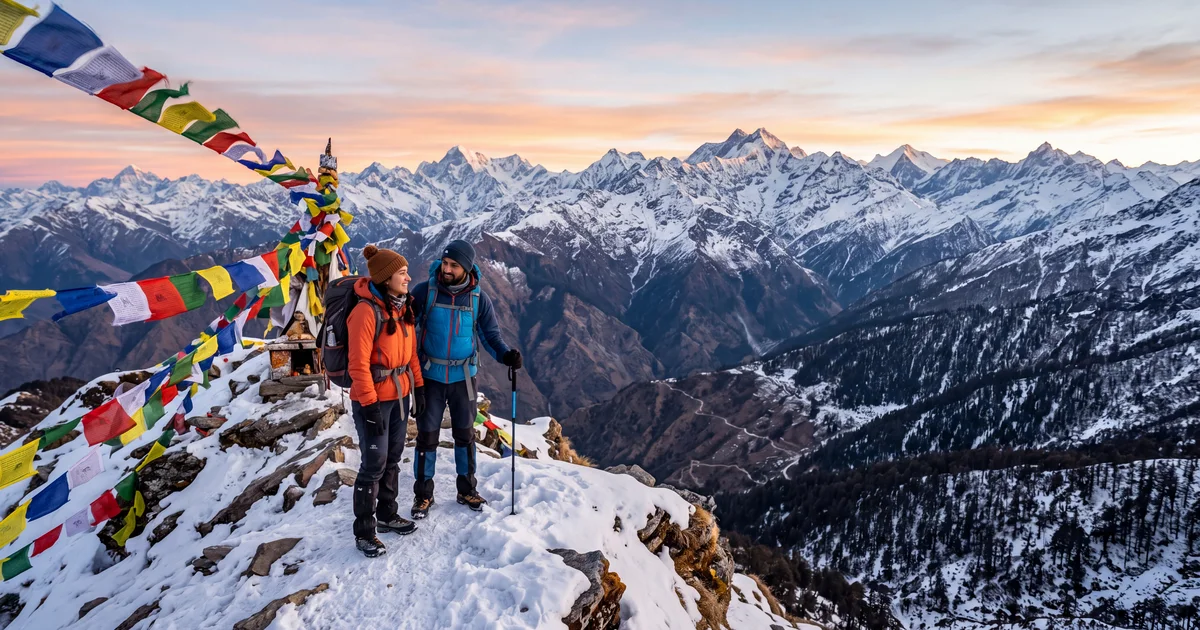
The Kedarkantha trek has a reputation problem. It shows up on every "best winter treks in India" list, which makes it sound like a bucket list thing that requires months of preparation. It does not. This is a 4 day walk through oak and pine forests to a 12,500 ft summit in Uttarakhand, and thousands of people with zero trekking experience finish it every winter.
That said, "easy" does not mean "just show up." The altitude is real. The cold below minus 10°C at night is real. And the 8 hour drive from Dehradun to Sankri on winding hill roads will test your patience before the trek even starts. Here is what you actually need to know to plan it right in 2026.
TL;DR
- Best months: December to February for snow, April to June for green meadows without the crowds.
- Difficulty: Easy to moderate. No technical climbing. 4 days, about 20 km total, summit at 12,500 ft.
- Cost: 6,500 to 9,000 rupees for a group package from Dehradun. Add flights or trains separately.
- Basecamp: Sankri village (6,400 ft), 8 to 9 hours from Dehradun by road.
- Group departures run almost daily from November to March through multiple operators on TripzSearch.
What Makes the Kedarkantha Trek So Popular?
The snow is the main draw. From mid December onward, the entire route above the treeline sits under 2 to 3 feet of powder. You camp in it, walk through it, and summit in it. For most people from Indian cities, this is their first real snow experience.
The accessibility helps too. Sankri is connected by road. The trek itself is short enough that working professionals can do it in a 5 day leave window (including travel days). You do not need to fly to Leh or drive for 16 hours to get to a Himalayan basecamp.
And it looks better in person than in photos. The forests between Sankri and Juda Ka Talab are dense and silent. The meadows above the treeline open up to a 360 degree panorama of the Swargarohini, Bandarpoonch, and Black Peak massifs. On a clear January morning, you can count over a dozen peaks above 6,000 metres from the summit.
The trade off is crowds. December and January weekends get busy. You will share campsites with 3 to 5 other groups on peak dates. If solitude matters more than guaranteed snow, try mid November or late February.
When Is the Best Time for the Kedarkantha Trek?
The answer depends on what you want from the experience.
December to February is peak season. Snow covers everything above 10,000 ft. Night temperatures at the high camps drop to minus 10 to minus 15°C. The summit day is usually a 4 to 5 AM start on packed snow with crampons or microspikes (most operators provide these). This is when the trek is at its most photogenic and also its most crowded.
March and April catch the tail end of winter. Snow lingers at the summit and upper meadows but the forests are clear. The approach is easier, the nights are warmer (only minus 3 to minus 5°C), and the groups thin out. You lose the full white landscape but gain clearer mountain views without cloud cover.
May and June transform the route entirely. The meadows fill with wildflowers. Shepherds return with their flocks. The trek becomes a gentle alpine walk rather than a snow expedition. Far fewer operators run batches in summer, so availability can be patchy.
July to September is closed season. The monsoon makes the Dehradun to Sankri road treacherous (landslides are common past Mussoorie), and the park authority sometimes restricts entry.
October and November are transitional. Late November brings the first snowfall but it is unreliable. October is post monsoon and dry with excellent visibility, though there is no snow at all.
My honest take: if it is your first snow trek ever, go in January. The trail is packed, the route is obvious, and you will not miss the snow. If you have done a winter trek before and want a quieter version of the same route, February last week or first week of March hits the sweet spot.
The Kedarkantha Trek Route: Day by Day
The standard itinerary is 4 trekking days with a travel day on each end. Total distance is about 20 km.
Day 0: Dehradun to Sankri (6,400 ft). The drive takes 8 to 9 hours via Mussoorie, Purola, and Mori. Most operators pick you up at Dehradun railway station or ISBT early morning and reach Sankri by evening. The road is fully paved but narrow and winding after Purola. Get rest tonight; the trek starts early tomorrow.
Day 1: Sankri to Juda Ka Talab (9,100 ft). About 4 km, 3 to 4 hours of walking. The trail climbs steadily through pine and oak forests. Juda Ka Talab is a small frozen lake (in winter) surrounded by tall deodar trees. Most groups camp here. The campsite is flat and sheltered, which helps on windy nights.
Day 2: Juda Ka Talab to Kedarkantha Base Camp (11,250 ft). Around 4 km, 3 to 4 hours. The forest thins out and you emerge onto open meadows. In December or January this section is entirely under snow. The base camp sits at the edge of the treeline with the summit cone visible directly ahead. Sunset views from here are better than most people expect.
Day 3: Summit day. Base Camp to Kedarkantha Summit (12,500 ft) and back to Juda Ka Talab. This is the long day. 6 to 8 hours total. You start at 4 or 5 AM to catch sunrise at the summit. The climb is steep but short (about 1,250 ft gain over 2 km). The last stretch before the top involves a few rocky patches; in snow they require microspikes. The 360 degree summit view makes the early alarm worth it. You descend back to Juda Ka Talab the same evening.
Day 4: Juda Ka Talab to Sankri. A quick downhill, 2 to 3 hours. You reach Sankri by noon and the vehicle takes you back to Dehradun by late evening.
Some operators add a day (splitting Day 3 into two), which makes the summit push less rushed. If you are a first timer or not confident about your fitness at altitude, the 5 day version is worth asking about.
How Hard Is the Kedarkantha Trek, Really?
On the standard difficulty scale for Indian Himalayan treks, Kedarkantha sits at "easy to moderate." Here is what that actually means in practice:
You walk 4 to 8 km per day on a well marked trail. The steepest section is the summit push, which gains about 1,250 ft in 2 km. There are no ladders, no river crossings, no scrambling. In winter, you walk on packed snow for about 60% of the route above Juda Ka Talab.
The real difficulty is not the terrain. It is the cold and the altitude. At 12,500 ft, you are getting about 60% of the oxygen you are used to at sea level. Walking uphill at that altitude with a daypack feels harder than it looks. People who run 5 km three times a week at sea level generally do fine. People who have not exercised in months will struggle on summit day.
One honest caveat: altitude affects people unpredictably. Fitness helps but does not guarantee you will feel great above 11,000 ft. Drink at least 3 litres of water daily, skip alcohol entirely, and tell your guide immediately if you get a persistent headache or nausea. Mild headaches on the first night at Juda Ka Talab are common and usually pass by morning.
How Much Does the Kedarkantha Trek Cost?
Group packages from Dehradun in 2026 typically range from 6,500 to 9,000 rupees per person. Here is what that usually includes:
- Transport: Dehradun to Sankri and back
- Camping: Tents, sleeping bags, and mats for all nights
- Food: All meals from Sankri onwards (breakfast, lunch, dinner, and tea)
- Guide and support staff
- Permit fees for Govind Pashu Vihar National Park
- Microspikes or gaiters (varies by operator)
What it does not include: your travel to Dehradun (flights from Bangalore or Mumbai run 4,000 to 7,000 return), personal gear like jackets and trekking shoes, tips for the guide, and anything in Dehradun (hotel stay if you arrive a night early).
Budget tip: the cheapest way to reach Dehradun from most Indian cities is the overnight Nandadevi Express or the Shatabdi from Delhi. If you are flying from Bangalore, Jolly Grant airport (Dehradun) has direct flights on IndiGo and AirAsia.
Compare current group trek packages to check prices and upcoming departure dates.
How to Pick a Group Trek Operator for Kedarkantha
Kedarkantha is one of the most commercially operated treks in India. That means options are plentiful but quality varies. Here are the things worth checking:
Group size. Anything above 25 people per batch gets chaotic at campsites. The best operators cap at 15 to 20 and assign one guide per 8 to 10 trekkers.
Gear quality. Ask specifically about sleeping bag ratings. At minus 10°C you need a bag rated to minus 15 or lower. Some budget operators provide bags rated only to 0°C and charge extra for warmer ones.
Cancellation policy. Weather cancellations happen, especially in heavy snowfall years. Check whether the operator refunds, reschedules, or keeps your money.
Reviews you can verify. Not just star ratings. Look for specific mentions of the summit day experience, food quality at camps, and how the guide handled any altitude sickness cases.
Browse Kedarkantha trek departures on TripzSearch to filter by date, group size, and operator rating.
What to Pack for the Kedarkantha Trek
Keep your pack under 10 kg. You are carrying your own daypack on trekking days (porters carry the camping gear). Here is what matters:
Layering system: a thermal base layer, a fleece mid layer, and a waterproof outer shell. Do not buy an expensive down jacket unless you plan more winter treks. A good fleece plus a windproof layer works fine for Kedarkantha.
Footwear: waterproof trekking shoes with ankle support. In winter, carry gaiters to keep snow out. Do not wear new shoes on the trek; break them in for at least two weeks before.
Accessories: a warm beanie, sun hat, gloves (two pairs, one liner and one waterproof), sunglasses (snow blindness is real above the treeline), and sunscreen SPF 50.
Water: carry a 1 litre bottle minimum and refill at camps. The stream water on this route is safe to drink at Juda Ka Talab and above.
Skip the jeans, cotton t shirts, and anything that does not dry fast. Cotton kills in cold weather because it holds moisture against your skin.
Is the Kedarkantha Trek Worth It Compared to Other Winter Options?
If you have never done a Himalayan trek in snow, Kedarkantha is the obvious first choice. It is accessible, affordable, and short enough that you do not need to take a full week off work. The summit views rival treks that take twice as long to reach.
If you have already done Kedarkantha and want the next step up, look at Brahmatal (same region, slightly harder, fewer people) or Kuari Pass (longer, more varied terrain, better mountain panorama). Both run similar itineraries and price points.
For experienced trekkers, Kedarkantha may feel too easy and too crowded in peak season. That is a fair criticism. The January weekend batches have 50 to 100 people on the trail and the summit gets a queue by 7 AM. If that sounds terrible, go on a weekday batch or pick November.
Explore Himalayan treks with fixed group departures to compare options across difficulty levels.
Getting to Sankri: The Travel Day Nobody Warns You About
The 8 to 9 hour drive from Dehradun to Sankri deserves its own warning. The road is fine until Purola (about 5 hours in). After that, it narrows, winds aggressively, and has stretches under repair every winter. You will stop multiple times for oncoming traffic on blind corners.
If you get carsick, take a Dramamine before leaving Dehradun. Sit in the front. Do not read or look at your phone once the road starts climbing.
Most operators leave Dehradun at 6 to 7 AM and reach Sankri between 3 and 5 PM. Reaching Dehradun the night before (instead of catching a morning train) saves you a miserably early wake up.
One more thing. Phone signal dies about an hour before Sankri. If you need to inform family, call before you lose service at Mori. BSNL occasionally works in Sankri village itself, but do not count on it.
Permits and Logistics You Should Know About
Permit: Govind Pashu Vihar National Park charges approximately 600 rupees for Indian nationals and 1,500 rupees for foreign nationals. Your operator handles this at the park office in Sankri on Day 1 morning. Carry a government photo ID (Aadhaar or passport).
Insurance: Not mandatory but strongly recommended for any high altitude trek. A basic travel insurance policy that covers emergency helicopter evacuation costs about 500 to 1,000 rupees for a week. The nearest hospital to Sankri is in Purola, 4 hours by road.
ATM and cash: The last ATM is in Purola. Carry enough cash for tips (500 to 1,000 per guide is standard), any extras in Sankri, and an emergency buffer.
Season closures: The forest department occasionally closes the route after heavy snowfall or if avalanche risk is high. Operators check conditions before departure but last minute cancellations happen once or twice every winter. This is why a flexible cancellation policy matters.
If you are travelling from Bangalore, plan for a flight to Dehradun plus one night in Dehradun before the trek starts. Trying to catch a morning flight and the same day drive to Sankri is technically possible but exhausting.
Frequently asked questions
- What is the best time to do the Kedarkantha trek?
- December to February is the best window if you want guaranteed snow. The summit climb at 12,500 ft is cleanest in early January when the trail is well packed. March and April still get snow but it melts patchy below the treeline. Avoid July to September entirely because the monsoon makes the approach roads dangerous.
- Is Kedarkantha trek difficult for beginners?
- Kedarkantha is one of the easiest Himalayan snow treks. The trail gains about 4,000 ft over 4 days with no technical sections. You need reasonable fitness to walk 6 to 8 hours at altitude, but no prior trekking experience is required. Most groups include first timers every batch.
- How much does the Kedarkantha trek cost in 2026?
- Group trek packages typically run between 6,500 and 9,000 rupees per person for a 5 to 6 day itinerary from Dehradun. That covers transport from Dehradun, camping, meals, and a guide. Add about 3,000 to 5,000 for your flight or train to Dehradun. Solo bookings cost more; groups of 4 or more sometimes get a discount.
- How do I reach the Kedarkantha trek basecamp from Delhi?
- Take an overnight bus or train from Delhi to Dehradun (5 to 6 hours). From Dehradun, a shared taxi or operator vehicle takes you to Sankri village in about 8 to 9 hours. Sankri at 6,400 ft is the basecamp and the last stop with phone signal. Most operators include the Dehradun to Sankri transfer in the package price.
- Do I need any permits for the Kedarkantha trek?
- You need an entry permit from the Govind Pashu Vihar National Park office in Sankri. The fee is about 600 rupees for Indians and 1,500 for foreigners. Most group operators handle this on arrival day, so you do not need to arrange anything in advance yourself.
- Can I do the Kedarkantha trek in summer?
- Yes, but the experience is completely different. April to June gives you green meadows and clear Himalayan views without snow. Fewer groups run in summer so you may need to wait for a batch or book a private departure. The trail is easier without snow but also less dramatic.