Hill Stations Near Pune (2026): 12 Cool Escapes in the Sahyadris
Explore 12 hill stations near Pune with drive times, real costs and honest notes on which ones are worth the trip in 2026.
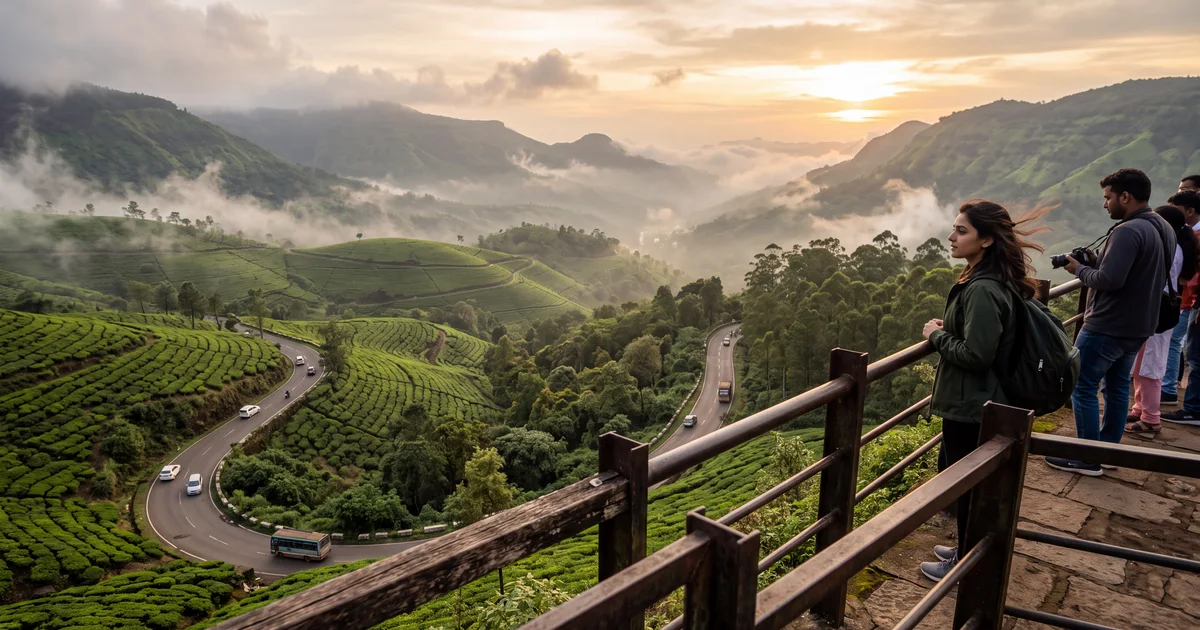
Pune has the Western Ghats practically at its doorstep. The Sahyadri escarpment begins less than 40 km west of the city, which means you can leave home at 6 AM and be standing on a misty ridge before your second chai. Not many Indian cities can say that.
The problem is not the options. It is the default thinking. Every weekend the Expressway clogs with the same Lonavala traffic, and half the people sitting in that jam have no idea that a quieter, cooler hill station sits 30 minutes further on a road nobody Googles. This list covers 12 hill stations near Pune that actually deliver in 2026, sorted by distance, with the kind of honest notes that trip planning blogs usually leave out.
TL;DR
- Pune has 12+ hill stations within a 200 km radius, from quick day trips (Sinhagad, 35 km) to proper weekend escapes (Mahabaleshwar, 120 km).
- Best season: October to February for clarity, June to September for waterfalls and green Sahyadri valleys.
- Budget ranges from 1,500 rupees (day trip for two) to 8,000 rupees (overnight resort stay for two at Mahabaleshwar).
- Monsoon drives through Tamhini Ghat and Malshej Ghat are worth every hairpin turn, but need careful driving after dark.
- Compare fixed weekend departures and group trips from Pune on TripzSearch.
Which hill stations near Pune can you reach within 100 km?
Six of the twelve on this list sit inside that 100 km circle. That is the real advantage of Pune's location. You are not planning a holiday. You are just driving west for an hour.
Sinhagad (35 km, 1 hour)
Technically a fort, not a hill station. But the ridge sits at 1,312 metres and the temperature drops by 5 to 7°C compared to Pune city, so it counts. The paved road from Sinhagad Ghat takes you most of the way up. The last stretch is a steep 20 minute climb on foot.
Go for the sunrise. Seriously. The view of the Sahyadri range at 6:30 AM, with mist still sitting in the valleys, is one of the best things within an hour of Pune. The chai and bhakri stalls at the top open early and charge 30 rupees for a glass of sweet tea that tastes better at altitude.
The downside: weekends after 10 AM get crowded, and parking becomes a headache. The Pune Municipal Corporation charges 20 rupees per vehicle and the lot fills up fast.
Lonavala and Khandala (66 km, 1.5 hours)
The Expressway made Lonavala too easy to reach. That is both the appeal and the problem. On a clear Tuesday morning you are there in 75 minutes. On a monsoon Saturday you might sit in bumper to bumper traffic for twice that.
The monsoon transforms the place. Bhushi Dam overflows, Tiger's Leap disappears into cloud, and every rock face sprouts a waterfall. The real move is to park at the INS Shivaji end and walk toward Rajmachi Fort. The trail filters out the selfie crowd within the first kilometre.
One honest note: Lonavala town itself is not pretty. The strip of hotels and chikki shops feels more like a highway rest stop than a hill station. The beauty is in the ghats around it, not the town centre.
Best months: June to September for waterfalls, October to January for trekking.
Tamhini Ghat (60 km, 1.5 hours)
This is the drive, not the destination. The 40 km ghat road from Mulshi to Tamhini village has waterfalls every 200 metres during peak monsoon. Some of them pour directly onto the road. You will see cars pulled over every few hundred metres with people standing in the spray.
The ghat tops out at around 600 metres. The temperature is not dramatically different from Pune, maybe 3 to 4°C cooler, but the cloud cover and the rain make it feel like another climate entirely. There is no town at the end, no resort strip. Just a forest road that eventually connects to Kolad.
Pack a raincoat. Your phone's waterproofing will be tested. And do not drive this road after dark during the rains; the hairpin turns have no reflectors and the fog can drop visibility to 10 metres.
Lavasa (57 km, 1.5 hours)
Lavasa was supposed to be India's first planned hill city. The reality is more complicated. Construction stalled, the developer ran into financial trouble, and large parts of the town sit unfinished. The lakeside promenade and some hotels are operational, and the drive through the ghats is scenic.
The town sits at 640 metres on the banks of Warasgaon Dam. Temperatures stay 3 to 5°C below Pune through the year. It works as a day trip, particularly if you want a lakeside lunch without the chaos of Lonavala. But go with realistic expectations. This is not the Italian hill town the brochures promised.
Entry fees apply for vehicles (around 300 rupees per car as of early 2026), and some facilities have limited operating hours.
Panshet and Varasgaon (50 km, 1.5 hours)
Two dams sitting side by side in the hills southwest of Pune. The backwaters are calm, the surrounding hills are green for eight months of the year, and the campsites along the shore are some of the best budget options near the city.
Panshet is the more developed of the two, with water sports (kayaking and speed boats) available from October to May. Varasgaon is quieter. The drive from Pune via Sinhagad Road takes about 90 minutes and passes through some quiet, pretty villages.
This is not a classic hill station. The elevation is modest (around 650 metres). But the combination of water, green hills and relative quiet makes it a solid alternative to the Lonavala crowds.
Rajmachi (65 km, 2 hours by road + 1 hour trek)
Two forts, Shrivardhan and Manaranjan, sitting on a plateau at 820 metres. You can drive to Udhewadi village from the Lonavala side and then trek 45 minutes to the top. The other approach from Kondhane Caves is longer (about 5 km uphill) but more scenic, especially in the monsoon when the waterfalls along the trail are at full force.
The plateau between the forts is flat and makes a good camping spot. Operators run weekend camping trips here from Pune, with tents and meals included for 1,500 to 2,500 per person. The night sky is surprisingly clear for a spot just 65 km from a metro city.
Avoid this trek in heavy rain. The Kondhane route gets slippery and the stream crossings become risky.
What about the hill stations 100 to 200 km from Pune?
These require a full weekend. You leave Saturday morning and come back Sunday evening. The extra distance buys you more altitude, cooler temperatures and fewer day trippers.
Mahabaleshwar (120 km, 3 hours)
The king of Pune's hill station circuit. Sitting at 1,353 metres, it is the highest point in the Western Ghats south of Wilson Hills. Average temperatures in October run 15 to 22°C, and January nights dip to 10°C. That is genuine jacket weather.
The town has more viewpoints than you can cover in two days: Arthur's Seat, Wilson Point, Kate's Point, Elephant's Head. Most of them offer views of the Konkan plain 1,000 metres below. The strawberry farms (Mapro being the most commercial) are fun if you have kids.
Skip the horse rides on the main road. The horses look tired and the prices are inflated. Walk to Lingmala Waterfall instead (about 2 km from the town centre), which has a proper 150 foot drop that is best after monsoon rains.
Honest caveat: Mahabaleshwar is packed during Diwali and Christmas. Hotel prices double, parking disappears, and the main street becomes a slow moving traffic jam. Visit in September or late January for the same views at half the crowd.
Panchgani (100 km, 2.5 hours)
Panchgani sits 4 km from Mahabaleshwar at a slightly lower elevation of 1,293 metres. It has a different feel. Quieter. Smaller. The boarding schools give it an old hill station character that Mahabaleshwar has mostly lost to commercial development.
Table Land is the main attraction: a flat laterite plateau at the top of the town, claimed to be Asia's second longest. On a clear morning you can see the Krishna Valley stretching south. The walk across the plateau takes about 45 minutes and feels like walking on the roof of the Sahyadris.
The sunset from Sydney Point is worth timing your day around. Bring a jacket. Even in October the wind picks up after 5 PM and the temperature drops fast.
Bhandardara (185 km, 3.5 hours)
This is where the Sahyadris get wilder. Bhandardara sits at the base of Kalsubai Peak (1,646 metres, the highest in Maharashtra) and wraps around Arthur Lake, a quiet reservoir that fills to capacity during the monsoon.
The village itself is small. The appeal is what surrounds you: Randha Falls (a 170 foot cascade that peaks from August to October), firefly season in May and early June when the trees along the lake light up at night, and the Kalsubai trek that starts from the far side of the dam.
Camping along the lake shore is the best way to experience this place. Operators from Pune run weekend packages for 2,000 to 3,500 per person. The sunrise over the lake with Kalsubai's silhouette behind it is one of the most photographed scenes in Maharashtra for a reason.
Getting there without a car: Train to Kasara (Mumbai line), then shared cab to Bhandardara. Takes about 90 minutes from Kasara.
Malshej Ghat (130 km, 3 hours)
The ghat road from Pune to Malshej is the journey. The last 20 km climb through hairpin turns with waterfalls on both sides, and during peak monsoon (July to August) the flamingos arrive at the small lake near the MTDC resort. Yes, flamingos at a Sahyadri hill station. About 200 to 500 birds gather here between July and October.
The pass sits at roughly 700 metres. Not the highest on this list, but the combination of the ghat drive, the waterfall count, and the flamingos makes it unique. The MTDC resort is basic but clean, with rooms starting around 2,500 per night.
Come in August for the flamingos. Come in October for the post monsoon clarity and golden light. Skip February to May; it gets hot and the waterfalls dry up.
Matheran (120 km, 3 hours)
India's smallest hill station, and the only one on this list where vehicles are banned. You park at the base (Dasturi Naka) and walk or take a horse up the 2.5 km path to the town. A toy train runs from Neral Junction, though service is intermittent and takes about 2 hours for 20 km.
At 800 metres, Matheran is not dramatically cool, but the car free streets and the silence are the real draw. Charlotte Lake, Louisa Point and Panorama Point are the main viewpoints. The red laterite paths through the forest feel like a different era.
The downside: the walk up from Dasturi is steep if you are carrying luggage, and the horse rides are bumpy. Most hotels are basic and overpriced for what you get. But for a true digital detox (mobile signals are patchy at best) it is hard to match.
Pratapgad and Javali Valley (110 km, 2.5 hours)
Not a traditional hill station, but the valley below Pratapgad Fort (1,080 metres) is one of the most scenic pockets in the Sahyadris. The fort itself is famous for the Shivaji and Afzal Khan story, and the views from the top stretch across forested ridges in every direction.
The valley below hosts a few homestays and farm stays. Temperatures run 3 to 5°C below Pune through the year. The real appeal is the quiet: no commercial strip, no crowds except on weekends, and the drive through the Mahabaleshwar ghats to get here is beautiful.
Combine this with a Mahabaleshwar trip. Drive to Mahabaleshwar on Saturday, do the fort and valley on Sunday morning, and head back to Pune by afternoon.
How do group trips to hill stations near Pune work?
Operators based in Pune run fixed weekend departures to most of these places. A typical package includes transport (usually a tempo traveller or Innova), camping or hotel stay, meals and a guide. Prices range from 1,500 to 4,000 per person depending on the destination and duration.
The advantage is no planning and no driving. You show up at a pickup point (usually Swargate or Chandni Chowk) on Saturday morning and get dropped back Sunday evening. For solo travellers or couples who do not want to deal with logistics, this is the easiest way to do these hill stations.
You can browse and compare group trips from Pune on TripzSearch, with verified operator reviews and transparent pricing. For broader trip options, including treks and longer getaways, the full listing covers all active departures.
Check the destinations page for detailed guides on specific locations mentioned in this list.
Planning tips that actually matter
Fuel costs in 2026: Pune to Mahabaleshwar in a petrol hatchback costs about 800 to 1,000 rupees one way at current fuel prices. Tolls add another 200 to 400 depending on the route.
Road conditions: The Pune to Mahabaleshwar road via Panchgani is well maintained. Tamhini Ghat and Malshej Ghat roads are narrower and need more care, especially during the rains. The Bhandardara approach from the Pune side via Rajur is decent but has a few potholed stretches.
When to avoid: April and May are brutally hot at lower elevations and only marginally cooler at the hill stations. Diwali weekend is chaos everywhere. The first week of monsoon (early June) brings excitement and also the worst road conditions before repairs kick in.
Phone signal: Spotty at Matheran (by design), weak at Bhandardara and in the Tamhini Ghat stretch. Mahabaleshwar and Lonavala have reliable 4G coverage.
Frequently asked questions
- Which hill stations near Pune can I visit within 50 km?
- Sinhagad, Lonavala and Khandala are all under 50 km from Pune city. Sinhagad is the closest at roughly 35 km from Swargate, reachable in about an hour depending on traffic. Lonavala sits at 66 km by the Expressway, which takes 90 minutes on a clear day. For a quick half day escape, Sinhagad is hard to beat.
- What is the best time to visit hill stations near Pune?
- October to February for clear skies and cooler temperatures, with nights dropping to 10 to 12°C at higher stations like Mahabaleshwar. Monsoon (June to September) is spectacular for greenery and waterfalls but roads get slippery and leeches appear on forest trails. Avoid April and May unless you are fine with 38°C heat at lower elevations.
- How much does a hill station trip from Pune cost for two people?
- A day trip to Sinhagad or Lonavala costs 1,500 to 3,000 rupees for two including fuel and food. An overnight at Mahabaleshwar runs 4,000 to 8,000 rupees depending on hotel choice. Budget camping at Bhandardara or Pawna starts around 1,200 per person including tent and meals.
- Are there any hill stations near Pune suitable for families with kids?
- Mahabaleshwar is the most family friendly, with horse rides, strawberry farms and gentle viewpoint walks. Panchgani's table land is flat enough for young children to run around safely. Lonavala works for day trips, though the monsoon crowds can be overwhelming with toddlers.
- Which hill station near Pune has the best monsoon scenery?
- Tamhini Ghat and the road to Mulshi Dam are hard to beat during the rains. Waterfalls appear every 200 metres along the ghat road from June to September. Bhandardara is another strong pick, with the Arthur Lake at full capacity and Randha Falls at peak flow. Just carry rain gear and drive carefully after dark.
- Can I reach hill stations near Pune by public transport?
- MSRTC runs regular buses from Swargate to Mahabaleshwar (about 4 hours) and Panchgani. Lonavala has its own railway station on the Mumbai line with dozens of daily trains. For Bhandardara, take a train to Kasara and then a shared cab to the lake. Sinhagad is trickier by bus; most people use two wheelers or cabs.
- Which hill stations near Pune have group trip departures?
- Operators run fixed weekend departures for Bhandardara camping, Rajmachi trek, Tamhini Ghat trails and Mahabaleshwar road trips. You can compare group trip options with verified reviews on TripzSearch.