Hill Stations Near Mumbai (2026): Western Ghats Escapes Within 5 Hours
10 best hill stations near Mumbai ranked by drive time, vibe and monsoon appeal, with honest notes on crowds, roads and what to expect.
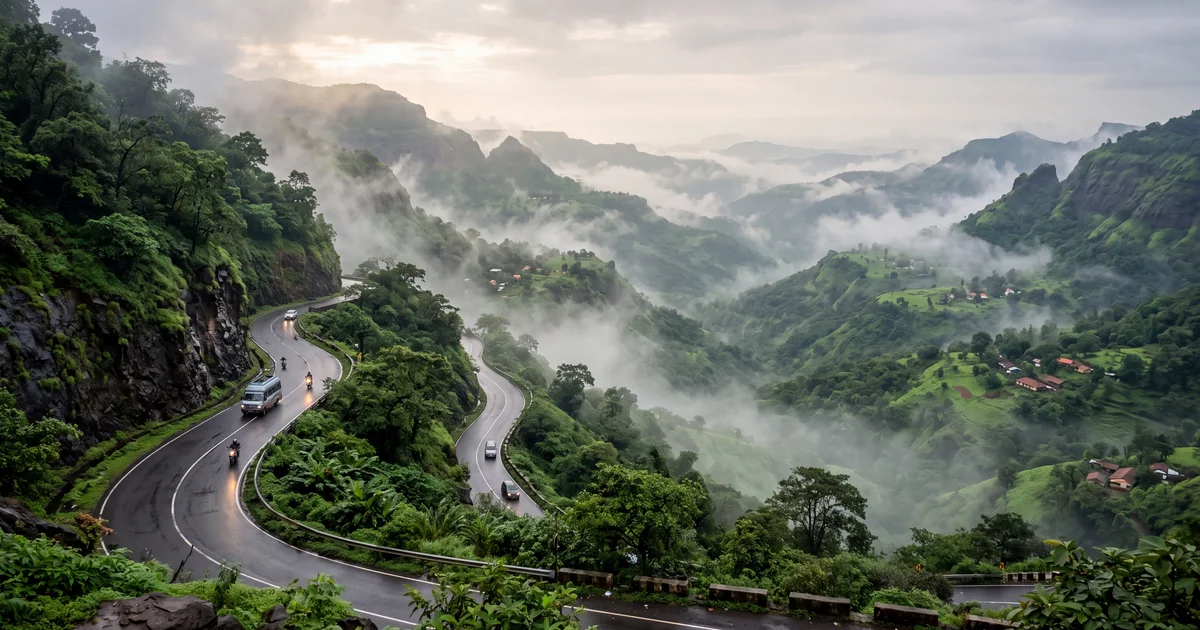
Mumbai sits at sea level, surrounded by concrete, and gets 2,400 mm of rain between June and September. The Western Ghats start 80 km east of the city, rising to 1,400 metres in places, with temperatures that drop 8 to 12°C below what the coast feels. That proximity is the reason hill stations near Mumbai have been weekend escapes since the British built the first ghat roads in the 1850s.
The problem in 2026 is not finding a hill station. It is finding one that is not bumper to bumper on a Saturday morning. Lonavala gets an estimated 20,000 visitors on peak monsoon weekends. Mahabaleshwar's main road resembles a parking lot in December. But most of the Western Ghats between Mumbai and Pune remain quiet if you know where to look.
This guide covers 10 hill stations within a 5 hour drive of Mumbai, ranked by distance, with honest notes on crowds, road conditions, and when each one is worth the trip.
TL;DR
- Closest: Lonavala (83 km, 1.5h), Matheran (80 km + walk), Karjat (62 km, 1.5h).
- Best for monsoon: Matheran (car free, green, misty) and Malshej Ghat (flamingos, waterfalls).
- Best for 2 to 3 days: Mahabaleshwar and Panchgani (combined itinerary).
- Skip Lonavala on weekends unless you enjoy traffic jams that start at Khopoli.
- Budget: 1,500 to 4,000 per person per day depending on the place and accommodation tier.
How Far Are the Best Hill Stations from Mumbai?
Distance matters when you are leaving Mumbai on a Friday evening and the Expressway traffic is already crawling past Khalapur. Here is what the drive looks like:
Lonavala: 83 km via Mumbai Pune Expressway. Takes 1.5 hours on a good day, 3 hours on a Friday evening or monsoon weekend. The Expressway is in excellent condition. The last 5 km off the highway into Lonavala town can take 30 minutes in season.
Matheran: 80 km to the base (Dasturi Naka). No motorized vehicles allowed inside, so you park at the base and walk 2.5 km uphill or take a horse. The toy train from Neral runs in non monsoon months but breaks down regularly. Budget 3 hours total from Mumbai including the walk.
Karjat: 62 km on the NH4. Under 1.5 hours. Not a hill station in the traditional sense, but the surrounding Sahyadri foothills have resorts, waterfalls, and camping spots that serve the same purpose. The train from CSMT takes about 2 hours and costs under 100 rupees.
Igatpuri: 120 km on the NH3 via Kasara Ghat. About 2.5 hours. Less commercial than Lonavala. The Vipassana centre here is the largest in India but the town itself is small and quiet.
Malshej Ghat: 130 km. About 3 hours. The road from Kalyan through Murbad is narrow in sections but scenic. The last 20 km of ghat road climbs steeply with hairpin bends and limited barriers. Not ideal for nervous drivers in heavy rain.
Mahabaleshwar: 260 km. About 5 hours. The drive goes through Pune, so you hit Expressway traffic first and then the ghat road after Panchgani. Worth it for 2 nights but too far for a comfortable day trip.
Panchgani: 242 km. About 4.5 hours. Usually combined with Mahabaleshwar, 18 km apart. The Table Land plateau at Panchgani (the second longest in Asia) is the main draw.
Which Hill Station Near Mumbai Works Best for a One Day Trip?
If you are leaving Mumbai after breakfast and want to be home by dinner, your options narrow to three.
Lonavala is the default because it is the closest and has the most infrastructure. Tiger Point, Bhushi Dam, Rajmachi Point, and Lohagad Fort (20 minutes from town) cover a full day. The food scene has improved with cafes and restaurants that go beyond vada pav, though the vada pav at the highway stops is still excellent.
The honest caveat: Lonavala on a monsoon weekend is chaos. The waterfalls attract crowds that turn the walking paths into queues. Bhushi Dam overflows with people, not just water. If you are going in July or August, leave Mumbai by 5 AM or go on a Tuesday.
Matheran works as a day trip if you start early. The walk up takes 45 minutes at moderate pace, and the main viewpoints (Charlotte Lake, Panorama Point, Louisa Point) can be covered in 4 to 5 hours on foot. The absence of vehicles makes it peaceful in a way that Lonavala cannot match. Bring water and snacks because the vendors on the trail charge 3x the base rate.
My opinion: Matheran is the most underrated day trip from Mumbai. People dismiss it because of the uphill walk, but that walk is exactly what filters out the lazy day trippers who clog Lonavala. The quiet at the top is worth 45 minutes of effort.
Karjat is the budget option. The Kondana Caves are a 1 hour trek from the base village, and several waterfalls along the route are active from June to October. The Ulhas River runs through Karjat and the riverbank camping spots fill up on weekends but remain available midweek. The train from CSMT makes this the most accessible option for people without cars.
What Makes Matheran Different from Other Hill Stations?
Matheran banned motorized vehicles in 2003, making it the only automobile free hill station in Asia. That single rule changes everything about the experience. No honking. No exhaust. No traffic jams on the viewpoint roads. The sounds are birds, wind, and your own footsteps on the red laterite paths.
The town sits at 803 metres, about 700 metres above the Konkan plain. Temperatures stay 5 to 8°C below Mumbai through the year. In monsoon, the entire hillside turns green and low clouds roll through the streets. You can see them approaching from Charlotte Lake and watch them swallow the viewpoints one by one.
There are 38 named viewpoints in Matheran. Most visitors see 5 or 6 and leave. The quieter ones on the far side of the plateau (One Tree Hill, Heart Point, Monkey Point) require a 2 km walk from the main bazaar and see maybe 10 visitors a day. That is where the views open up toward the Sahyadri range stretching south.
The accommodation in Matheran ranges from basic lodges at 800 per night to heritage hotels like the Lords Central at 3,000 to 5,000. The heritage properties have character but creaky infrastructure. Expect inconsistent hot water and power cuts during storms.
One caveat: the toy train from Neral to Matheran (the Neral Matheran Railway, built 1907) runs on a narrow gauge track along the cliff edge. When it runs, the 2 hour journey is beautiful. But breakdowns and monsoon closures are frequent. Do not rely on it as your only transport option. The walk from Dasturi Naka is the reliable alternative.
Is Mahabaleshwar Worth the 5 Hour Drive?
For a weekend, yes. For a day trip, no.
Mahabaleshwar sits at 1,353 metres and is the largest hill station near Mumbai. It has viewpoints (Arthur's Seat, Wilson Point, Elephant's Head Point), strawberry farms (seasonal, November to May), Venna Lake for boating, and Pratapgad Fort 24 km away for a half day trek. Two full days covers the main sights without rushing. Three days is comfortable.
The town itself is commercial and busy. The main road has the feel of a tourist market rather than a hill station retreat. Move 2 km away from Market Road and the noise drops. The view from Connaught Peak (the highest point at 1,400 metres) on a clear morning makes the drive worthwhile.
Panchgani sits 18 km before Mahabaleshwar and makes a good combined itinerary. Table Land, a flat volcanic plateau stretching 95 acres, is the kind of landscape that looks wrong for Maharashtra. Wind, open sky, and grass in every direction. The Parsi community settled here in the 1860s and built bungalows that still stand along the main road.
For groups travelling from Mumbai, check Mumbai group trips on TripzSearch for packages that combine Mahabaleshwar and Panchgani. Most operators run Friday evening departures that reach Mahabaleshwar by Saturday morning and return Sunday evening.
A practical note: the return drive on Sunday evening hits the Pune Mumbai Expressway at its worst. Expect 4 to 5 hours if you leave Mahabaleshwar after 3 PM. Leave by noon or plan for the crawl.
Where Should You Go During Monsoon?
The Western Ghats transform between June and September. Waterfalls appear on cliff faces that were dry rock a month earlier. The valleys fill with mist. The air smells like wet earth and wild grass. Mumbai's hill stations exist because of monsoon, not despite it.
Malshej Ghat is the monsoon destination that most people discover late. At 700 metres, it sits on the crest of the Ghats with waterfalls dropping on both sides of the road. Between June and September, flamingos migrate to the Pimpalgaon Joga Dam at the base of the ghat. Hundreds of them. Seeing flamingos in Maharashtra surprises people, but they have been coming here for decades.
The drive to Malshej through Murbad is narrow and winding after the first 100 km. In heavy rain the last 30 km takes over an hour. The accommodation options are limited: MTDC resort (government run, functional, book early) and a few private resorts. Camping is possible but gets soggy.
Bhandardara, 165 km from Mumbai, is where the Western Ghats start looking like a different country. Wilson Dam, Arthur Lake, and the Randha waterfall (the tallest in Maharashtra at 170 feet, active June to October) are within 10 km of each other. The firefly festival here in May and early June draws photographers from across the state.
Igatpuri in monsoon is quieter than Lonavala and greener than Matheran. The Camel Valley viewpoint and the Vaitarna Dam are worth a day trip. The Bhamshangavi waterfall is accessible by a 1 hour hike from Igatpuri station. The town is small enough that two hours of walking covers the main sights.
My take on monsoon travel: the weather will interrupt your plans. Roads close. Views disappear in cloud. Waterfalls turn from scenic to dangerous in hours. Accept that before you leave Mumbai. Carry a rain jacket, a change of clothes, and no rigid schedule. The reward for tolerating the chaos is scenery that looks nothing like the brown, dry Maharashtra you see the rest of the year.
Getting to Hill Stations from Mumbai (and Beyond)
Most hill stations near Mumbai sit along two corridors: the Mumbai Pune Expressway (south, for Lonavala, Khandala, Mahabaleshwar) and the NH3 (north, for Igatpuri, Malshej). Trains serve Lonavala, Matheran (via Neral), Karjat, and Igatpuri directly from CSMT or Dadar.
By train: The fastest way to Lonavala is the Deccan Express or Indrayani Express from Dadar (2 hours, 100 rupees in second class). Karjat and Neral are on the Central Railway suburban and mainline network. Igatpuri is a stop on the CSMT to Nashik route.
By road: The Mumbai Pune Expressway is India's first controlled access highway and remains one of the best maintained. Tolls total about 300 to 350 one way for a car. The NH3 toward Igatpuri is a standard two lane national highway that widens to four lanes in sections.
By group trip: If the logistics of driving in monsoon ghats feel like more effort than the vacation is worth, browse trips from Mumbai on TripzSearch for weekend departures that include transport, accommodation, and a local guide. The operator handles the ghat roads so you do not have to.
For exploring other destinations across India on TripzSearch, especially if you are comparing a Maharashtra hill station to a Himalayan option, the distance, budget, and season should guide the choice.
Frequently asked questions
- Which is the best hill station near Mumbai?
- Lonavala is the most accessible at just 83 km, but Matheran is the better hill station if you want quiet and no vehicles. For a longer trip, Mahabaleshwar offers more to do across 2 to 3 days. The best choice depends on whether you prioritize drive time, peace, or variety.
- Which hill stations near Mumbai can I visit in one day?
- Lonavala, Khandala, and Matheran all work as day trips from Mumbai. Lonavala is 83 km (under 2 hours without traffic). Matheran is 80 km plus a 2.5 km walk or horse ride from the car park. Igatpuri is 120 km and doable in a day but feels rushed. Start before 6 AM on weekends to avoid ghat traffic.
- Which hill station near Mumbai is best in monsoon?
- Matheran and Malshej Ghat are the best monsoon picks. Matheran turns green and misty with waterfalls visible from every viewpoint. Malshej Ghat attracts flamingos between June and September, and the drive through the ghats in rain is scenic. Lonavala gets extremely crowded in monsoon weekends, so go on a weekday if you must.
- Are hill stations near Mumbai safe to drive to in monsoon?
- The main highways to Lonavala and Igatpuri are well maintained and safe in normal rain. The ghat roads to Matheran and Malshej require more caution because of sharp turns, fog, and occasional landslides. Avoid night driving during heavy rain. Check MSRDC updates for road closures before leaving.
- What is the cheapest hill station near Mumbai?
- Karjat and Igatpuri are the most affordable options. Budget accommodation starts at 800 to 1,200 per night. Food at local dhabas costs 150 to 250 per meal. Both are under 2 hours from Mumbai by train, which saves on fuel and tolls. Matheran is cheap once you arrive but the toy train or horse ride adds to the cost.
- Which hill station near Mumbai is best for couples?
- Mahabaleshwar has the widest range of private stays and scenic viewpoints. The strawberry farms and Venna Lake area offer easy walking without strenuous trails. For something quieter, Panchgani is 18 km from Mahabaleshwar with fewer crowds and a calmer atmosphere. Avoid Lonavala on weekends if you want privacy.