Hill Stations Near Delhi (2026): The Short List for Weekend Escapes
12 hill stations near Delhi sorted by drive time, altitude and honest season advice for 2026 weekend trips.
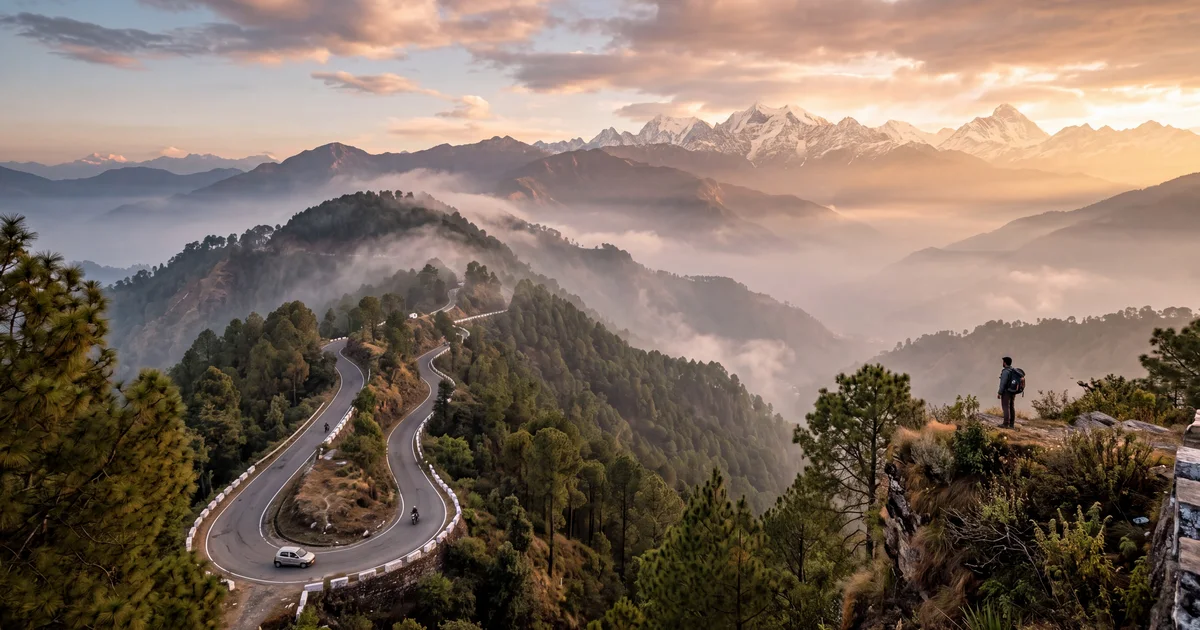
Every summer, Delhi crosses 45°C and the entire NCR starts Googling the same thing: hill stations near Delhi. The search spikes again in October when the air quality index starts climbing past 300. Both are valid reasons to leave.
The problem is not a shortage of hill stations. There are plenty within a day's drive. The problem is picking the right one for the right weekend, because a crowded Mussoorie in May feels worse than staying home with the AC on.
This list covers 12 hill stations sorted by distance from Delhi. Each entry includes altitude, realistic drive time, the honest best months, and what kind of traveller it actually suits. No ranking, no "top 10" bait. Just the information you need to pick and go.
TL;DR
- Delhi has 12 hill stations within 6 hours by road, from 1,200 metres (Morni Hills) to 2,500 metres (Kanatal).
- October to November and March to June are peak windows. Monsoon means landslide risk on most Uttarakhand routes.
- Budget for a couple ranges from 3,500 rupees (Lansdowne overnight) to 15,000 rupees (premium Mashobra weekend).
- Leave Delhi before 6 AM or after 9 PM to clear NCR traffic, especially on the NH44 and NH58 corridors.
- Compare fixed departure group trips from Delhi on TripzSearch if you want someone else to handle the driving.
Which hill stations near Delhi can you actually reach in a weekend?
The honest answer depends on how much windshield time you tolerate. Anything under 300 km one way gives you about 30 usable hours at the destination on a two night trip. Push past 350 km and you are spending Saturday morning and Sunday evening on the highway instead of on a trail.
Here is the radius breakdown for Delhi NCR:
Under 300 km: Mussoorie, Lansdowne, Kasauli, Morni Hills. Leave by 6 AM Saturday, arrive by noon.
300 to 400 km: Shimla, Nainital, Kanatal, Dhanaulti, Mashobra. These need a Friday night departure or a half day leave to work comfortably in two days.
400+ km: Manali, Bir Billing, Ranikhet. Not weekend trips unless you fly to Chandigarh or Dehradun and drive from there.
Mussoorie (280 km, 5.5 hours)
Altitude: 2,000 metres. The most popular hill station from Delhi for a reason, and the most overcrowded for the same reason. Mall Road on a Saturday in May feels like Connaught Place with fog.
Skip Mall Road entirely. Landour, 3 km uphill, has the cafes, the walks, and the Himalayan views that made Mussoorie famous decades ago. The Lal Tibba viewpoint on a clear morning shows peaks from Badrinath to Gangotri. Company Garden is skippable unless you have children who need an hour of distraction.
The drive from Delhi via Roorkee takes 5.5 hours without traffic. Friday evening departures add 60 to 90 minutes through Meerut. The Dehradun bypass road is complete now, which saves about 20 minutes over the old route.
Best months: March to June for heat escape, September to November for clear mountain views. Avoid July and August unless you enjoy roadblocks from landslides.
The catch: Hotel prices in Mussoorie have roughly doubled since 2022 for anything with a valley view. Mid range rooms run 3,500 to 6,000 per night in peak season. Book three weeks ahead for May or October weekends.
Lansdowne (260 km, 5 hours)
Altitude: 1,700 metres. The cantonment town that tourism largely skipped. Lansdowne is run by the Indian Army's Garhwal Rifles, and it shows: clean roads, no honking zones, and pine forests that stay intact because nobody is building resorts in them.
The Bhulla Lake area is pleasant for an evening walk. The Garhwal Rifles Museum is small but worth an hour. Tip-in-Top viewpoint gives you the Shivalik range on clear mornings. That is about it for "sightseeing," and that is exactly the point. Lansdowne works when you want to sit on a balcony, read, sleep early, and wake up to birdsong at 1,700 metres.
You drive via Kotdwar. The road narrows after Kotdwar but the army maintains it well. No direct train to Lansdowne; the nearest station is Kotdwar, 40 km downhill.
Best months: Year round. October and November have the clearest skies. Summer stays 10 to 15 degrees cooler than Delhi.
The catch: Limited restaurant options. Bring snacks or eat at your hotel. The town effectively closes by 9 PM.
Kasauli (290 km, 5 hours via Chandigarh)
Altitude: 1,900 metres. A small cantonment town in Himachal Pradesh that feels more like a neighbourhood than a hill station. Kasauli has one main road, a handful of colonial era buildings, a brewery (the oldest in Asia, Mohan Meakins), and a Monkey Point that the Air Force manages.
The walk from the bus stand to Monkey Point takes about 45 minutes through pine and oak forest. That is the main activity. The Gilbert Trail is another hour of quiet walking through deodar trees. If you need activities, adventure parks, or nightlife, Kasauli is wrong for you.
The route goes through Chandigarh on NH44, then a 30 km climb from Dharampur. The Shatabdi Express to Chandigarh (3.5 hours) plus a taxi from there (1.5 hours) works if you do not want to drive.
Best months: March to June and September to November. Winters bring fog but also a certain beauty if you like empty hill stations.
The catch: Kasauli has strict cantonment rules. Photography is restricted near the Air Force station at Monkey Point. Vehicle entry into certain areas is limited on weekends.
Nainital (300 km, 6 hours)
Altitude: 1,938 metres. The lake town of Kumaon. Nainital has more to do than most hill stations on this list, which makes it better for families and worse for people who want quiet.
Naini Lake is the centrepiece. Boating costs 200 to 400 rupees per hour depending on the type. The Mall Road runs along the lake's north shore and stays busy from 10 AM to 10 PM through the season. Snow View Point by cable car (150 rupees) gives you a panorama of the Nanda Devi range on clear days. The Zoo is small but houses Himalayan black bears, snow leopards, and red pandas.
The drive from Delhi via Haldwani takes 6 hours. The road up from Haldwani is steep and narrow, with hairpin bends that test first time mountain drivers. KMOU buses run overnight from Delhi ISBT and reach by early morning.
Best months: March to June, October to November. December and January see snowfall some years, which is beautiful but makes the road icy. Monsoon brings heavy rainfall and occasional road closures.
The catch: Nainital gets suffocating during long weekends. Diwali, Christmas, and May weekends mean 2 hour traffic jams on the single road into town. If your dates overlap with a national holiday, pick somewhere else.
Kanatal and Dhanaulti (310 km, 6 hours via Chamba)
Altitude: 2,500 metres (Kanatal), 2,250 metres (Dhanaulti). These two villages sit 40 km past Mussoorie on the Chamba road and offer what Mussoorie used to be before the crowds found it. Apple orchards, pine forests, zero traffic, and genuine cold.
Kanatal has no market, no mall road, no tourist infrastructure beyond a few resorts and campsites. That is the selling point. Eco parks and forest walks fill a day. Dhanaulti is 10 km further and slightly more developed, with two small temple gardens (Amber and Surkanda Devi) and a Potato Farm (it is a park, not an actual potato farm, but the name stuck).
The route goes through Mussoorie and continues to Chamba. Adding these 40 km past Mussoorie puts you at about 6 hours total from Delhi.
Best months: April to June for cool weather, September to November for mountain views. December to February brings occasional snow, which is appealing but the road gets icy after Dhanaulti.
The catch: The nearest hospital is in Mussoorie, 40 km downhill. Families with elderly members or very young children should factor this in.
Shimla (350 km, 6.5 hours via Chandigarh)
Altitude: 2,200 metres. The former British summer capital, and the hill station every Indian has heard of whether they have visited or not. Shimla divides opinion because the city is genuinely beautiful and genuinely overcrowded at the same time.
The Ridge and Mall Road are the obvious stops. The Christ Church (built 1857) is among the oldest in North India. Jakhoo Temple sits at 2,455 metres, the highest point in Shimla, and the langurs there are aggressive enough to steal your phone. The Kalka to Shimla toy train (UNESCO heritage, 5 hours, 102 tunnels) is worth doing once if you have the patience.
The NH44 to Chandigarh followed by NH5 to Shimla takes 6.5 to 7 hours. The Shatabdi to Chandigarh plus a cab (3 hours from Chandigarh to Shimla) is often faster than driving the entire way. The new Atal Tunnel alternative route through Manali is not relevant for Shimla.
Best months: March to June, October to November. December to February for snow, but bring warm gear and expect road closures on the Kufri stretch. Monsoon means landslides on the Shimla to Chandigarh highway at least twice a month.
The catch: Shimla is a city of 170,000 people, not a village. Traffic, construction noise, and crowds are constant realities from April through June. Lower Shimla's water shortage is a recurring problem every summer.
Mashobra (360 km, 7 hours)
Altitude: 2,150 metres. Mashobra is 13 km past Shimla on the Kufri road, and it functions as what Shimla should feel like without the Shimla crowd. The Presidential Retreat (Rashtrapati Niwas) sits here, surrounded by dense deodar and oak forest.
The area is known for apple orchards (September harvest), nature walks, and a handful of upscale resorts. The IIAS (Indian Institute of Advanced Study) in the Viceregal Lodge nearby is architecturally stunning and open to visitors. Beyond that, Mashobra is for walking, resting, and eating apples. No action. No nightlife.
The drive adds 30 to 45 minutes past Shimla. You can also take a shared taxi from Shimla bus stand for 50 to 80 rupees.
Best months: April to June and September to November. The apple orchards in September are the unique draw.
The catch: Accommodation options are limited compared to Shimla. You will find either budget guesthouses or premium resorts with little in between. Book early for October weekends.
Morni Hills (260 km, 4.5 hours)
Altitude: 1,220 metres. Haryana's only hill station, and the closest option from Delhi if your definition of hill station is flexible. Morni Hills will not give you snow peaks or 2,000 metre altitude. It will give you a pine covered ridge, a lake, and a weekend where you drive less than 5 hours total.
Tikkar Taal (a pair of connected lakes) is the main attraction. The forest around the lakes has trails that the Haryana tourism department has marked, though "marked" is generous. The Morni Fort ruins are a 30 minute walk uphill and give views of the Shivalik foothills.
The drive via Chandigarh takes 4.5 hours. You can also go through Panchkula and skip Chandigarh entirely, which saves 20 minutes.
Best months: October to March. Summers get warmer than other hill stations on this list because the altitude is lower. Monsoon makes the trails muddy but the greenery is at its peak.
The catch: Infrastructure is basic. Hotels are few, and the ones that exist are mid range at best. This is a one night getaway, not a two night holiday. Carry your own snacks and a full tank of fuel.
How do these hill stations compare for different travellers?
Families with kids: Nainital (lake, zoo, cable car) or Mussoorie (Gun Hill, Company Garden). Both have enough to keep children occupied for two days.
Couples wanting quiet: Kasauli, Lansdowne, or Kanatal. Low infrastructure means fewer people.
Groups looking for adventure: Mussoorie as a base for Benog Wildlife Sanctuary or George Everest trek. Nainital for the Kilbury bird trail. For trekking focused trips, browse Himalayan treks with fixed departures on TripzSearch.
Solo travellers on a budget: Lansdowne (cheap guesthouses, army town safety) or Nainital (bus from Delhi ISBT for under 700 rupees).
First time mountain drivers: Kasauli via Chandigarh. The NH44 to Chandigarh is a flat expressway, and the climb from Dharampur is only 30 km with gentle curves.
What is the best time to visit hill stations near Delhi?
There is no single answer because altitude changes everything.
March to June: Peak summer escape season. Every hill station on this list will be cooler than Delhi. The 2,000+ metre stations (Mussoorie, Shimla, Kanatal) stay below 25°C. The lower ones (Morni Hills, Lansdowne) hover around 28 to 32°C, which is still 15 degrees below Delhi's peak.
July to September: Monsoon. Beautiful greenery but real landslide risk on Uttarakhand and Himachal roads. Lansdowne and Morni Hills are safer bets since their approach roads are lower altitude and less prone to slides.
October to November: The sweet spot. Post monsoon air is clean, skies are clear, crowds thin out after Dussehra. This is when you see the Himalayan range from hill stations that promised mountain views but delivered fog in summer.
December to February: Cold. Shimla, Kanatal, and Dhanaulti can see snow. Mussoorie drops to 2 to 5°C at night. The drives are scenic but roads above 2,000 metres can ice over without warning.
How to plan a weekend hill station trip from Delhi
The logistics are simpler than most people make them.
Leave Friday night or Saturday before 6 AM. The NH44 (towards Chandigarh), NH58 (towards Meerut/Mussoorie), and NH9 (towards Haldwani) all congest between 7 and 10 AM on Saturday mornings. Leave during that window and your 5 hour drive becomes 7.
Book accommodation 2 to 3 weeks ahead for peak season. May, October long weekends, Christmas, and New Year are the crunch periods. Mussoorie and Nainital sell out fastest. Lansdowne and Kanatal have fewer rooms to begin with, so even moderate demand fills them.
Check road conditions the day before. The Uttarakhand and Himachal PWD Twitter handles post landslide and road closure updates. For monsoon travel, this is not optional.
Consider a group trip if you want to skip the logistics. Fixed departure trips from Delhi run most weekends to Rishikesh, Mussoorie corridor, and various Himalayan trek base camps. They handle transport, stays, and itinerary. Compare operators and read real reviews on TripzSearch before booking.
Fuel up before the hills. The last reliable petrol pumps are usually at the base of the climb (Dehradun for Mussoorie, Dharampur for Kasauli, Haldwani for Nainital). Hill station pumps exist but sometimes run dry on busy weekends.
Frequently asked questions
- Which is the nearest hill station to Delhi?
- Mussoorie is the closest popular hill station at about 280 km and 5.5 hours by road. Morni Hills in Haryana sit closer at 260 km but offer fewer facilities. If you count altitude over distance, Kasauli at 290 km reaches 1,900 metres and keeps temperatures around 20°C through summer.
- What are the best hill stations near Delhi within 300 km?
- Mussoorie (280 km), Kasauli (290 km), Lansdowne (260 km) and Morni Hills (260 km) all fall within 300 km. Mussoorie has the most infrastructure. Lansdowne and Kasauli reward people who prefer quiet over activity. All four work for a two night weekend if you leave Delhi by 6 AM Saturday.
- Which hill station near Delhi is best in summer?
- Kanatal (2,500 metres) and Dhanaulti (2,250 metres) stay below 22°C through May and June. Mussoorie and Lansdowne also cool down, but Mussoorie gets extremely crowded in peak summer. For the coolest temperatures with the fewest people, Kanatal is the better pick.
- How much does a weekend hill station trip from Delhi cost?
- A budget trip for two to Lansdowne or Morni Hills costs 3,500 to 6,000 rupees including fuel, tolls and a mid range stay. Mussoorie and Kasauli run 6,000 to 12,000 for two nights in season. Premium resorts in Mashobra or Kanatal can push past 15,000 for a weekend.
- Can I reach hill stations near Delhi by train or bus?
- The Shatabdi Express runs to Chandigarh (for Kasauli and Shimla) and to Dehradun (for Mussoorie). HRTC and UTC Volvo buses connect Delhi ISBT to Shimla, Mussoorie and Nainital overnight. Lansdowne and Kanatal are harder without a car since the last stretch from Kotdwar or Chamba has limited public transport.
- Which hill stations near Delhi are good for families with kids?
- Mussoorie has the widest range of activities for children, including the Kempty Falls area and the Gun Hill cable car. Nainital has boating and the Nainital Zoo. Kasauli is better for older kids who enjoy walking. Avoid Kanatal with very young children since the steep terrain and limited medical facilities make it tricky.
- Are there group trips from Delhi to hill stations?
- Several operators run fixed departure weekend trips from Delhi to Mussoorie, Rishikesh, Chopta, and Nainital. You can compare real departure dates, group sizes and reviews on TripzSearch without calling ten different operators.