Hampta Pass Trek (2026): Itinerary, Difficulty and Group Trips That Handle Everything
Plan the Hampta Pass trek in 2026 with this route guide covering itinerary, difficulty, best months, costs and group departures from Manali.
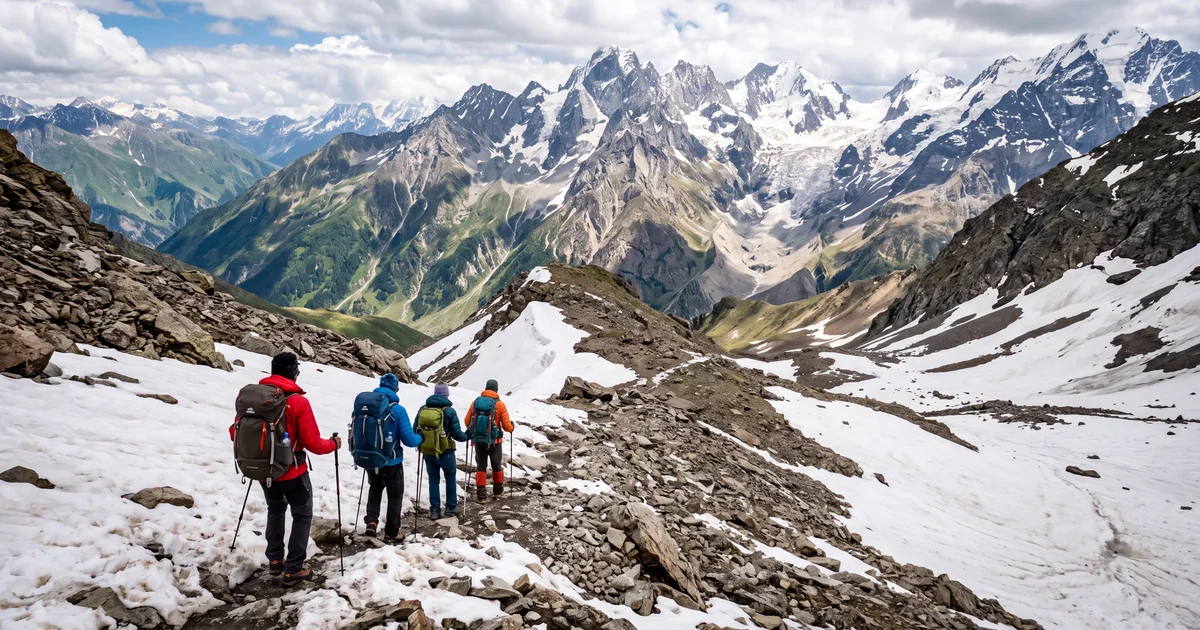
The Hampta Pass trek does something unusual for a 4 day walk. It puts you in two completely different worlds on either side of a single mountain ridge. You start in the green, forested Kullu valley near Manali. Flowers, streams, apple orchards. Then you cross a 14,100 ft pass and drop into the Lahaul valley: barren, brown, high desert with nothing growing and the wind coming straight off Spiti.
That contrast is what brings people here instead of other Himalayan treks at a similar difficulty level. Most treks give you one landscape. Hampta gives you two in the same week.
But here is the thing most guides do not mention: the pass crossing itself is not a gentle walk. It is a steep 1,500 ft scramble on loose scree, often with snow patches into early July, and the weather window matters. People who come expecting "moderate" to mean "Kedarkantha with a longer drive" get a reality check on Day 3. This guide covers what to actually expect, day by day.
TL;DR
- Route: Jobra (near Manali) to Chatru via Hampta Pass at 14,100 ft. 4 trekking days, about 26 km.
- Difficulty: Moderate. Harder than Kedarkantha, easier than Rupin Pass. The pass day is the test.
- Best months: June (snow on pass, green valleys), September to October (clear skies, autumn colours).
- Cost: 7,000 to 11,000 rupees for a group package from Manali. Add travel to Manali separately.
- Bonus: Most itineraries include Chandratal Lake on Day 5. Worth adding if you have the extra day.
- Browse upcoming group departures for Himalayan treks to compare dates and operators.
What Makes the Hampta Pass Trek Different?
Most Himalayan treks stick to one type of terrain. You are either in forests, or above the treeline, or in a dry valley. Hampta puts all of them into a single itinerary.
The Kullu side (Days 1 to 2) is lush. Dense birch and pine forests. Meadows with wildflowers in June. The Rani Nallah stream running alongside. Shepherds with their Gaddi flocks pass you on the trail. It looks and feels like something from a travel brochure, except it smells like wet earth and wild herbs.
Then you cross the pass on Day 3 and everything changes within an hour. The Lahaul side is arid and quiet. No trees. Rocky moraines. The wind picks up because there is nothing to block it. Chatru at the bottom sits at 11,000 ft in a wide flat valley that feels closer to Ladakh than to Manali.
That transition from green to brown over a single ridge is the reason experienced trekkers rate this as one of the best 4 to 5 day routes in Himachal. It is also why the photos from this trek look like they were taken on two separate holidays.
One honest caveat: if you go in July or August, the monsoon turns the Kullu side into a muddy, leech ridden slog and makes the river crossings dangerous. The pass itself stays fine, but getting there is miserable. Time your trip for June or September onward.
The Hampta Pass Trek Itinerary: Day by Day
The standard route is 4 trekking days with an optional Day 5 to Chandratal Lake. Total trekking distance is about 26 km.
Day 1: Jobra to Chika (10,100 ft). About 6 km, 4 to 5 hours. You drive from Manali to Jobra (15 minutes), then start walking through a dense forest along the Rani Nallah. The trail is gentle for the first 3 km before a steady climb through birch and rhododendron. Chika is a flat meadow campsite beside the stream. Good place to acclimatize because you have only gained about 900 ft from Jobra.
Day 2: Chika to Balu Ka Ghera (11,900 ft). About 7 km, 5 to 6 hours. The forest thins out and the valley opens into wide alpine meadows. You cross the Rani Nallah twice (knee deep in June, ankle deep in September). Balu Ka Ghera is a boulder field at the base of the pass approach. Camping here puts you 2,200 ft below the pass, which you tackle next morning. Night temperatures drop to minus 2 to minus 5°C even in September.
Day 3: Balu Ka Ghera to Shea Goru via Hampta Pass (14,100 ft). About 6 km, 6 to 8 hours. This is the crux day. The climb from camp to the pass is steep and relentless, about 2,200 ft gain over 3 km. The last 500 metres before the pass are loose scree (or snow in June). At the top, you get a sudden view of the entire Lahaul valley and Spiti peaks in the distance. The descent to Shea Goru on the Lahaul side is steep but shorter (about 1,500 ft down in 2 km). Camp at Shea Goru or continue to Chatru if the group is fast.
Day 4: Shea Goru to Chatru (11,000 ft). About 7 km, 3 to 4 hours. A gentle descent through the dry Lahaul valley. The terrain is open and barren, a complete contrast to Day 1. Chatru is a roadhead, so vehicles can reach here. Most itineraries end at Chatru with a drive back to Manali (about 4 to 5 hours via Rohtang). Groups doing Chandratal continue instead of driving back.
Day 5 (optional): Chatru to Chandratal Lake (14,100 ft). About 14 km by road or a shorter walking route. Chandratal is a crescent shaped high altitude lake with absurdly blue water. You camp near the lake (not at the shore; camping is restricted within 500 metres). The lake is best visited in September when the water is calmest and the surrounding hills turn golden brown. Drive back to Manali the next morning.
How Difficult Is the Hampta Pass Trek?
Moderate, but the difficulty is concentrated on one day. Days 1, 2, and 4 are easy walking. Day 3 is where the trek earns its rating.
The pass approach from Balu Ka Ghera gains 2,200 ft in about 3 km. The gradient is steep enough that you are using your hands in a few sections, especially where loose scree has eroded the trail. In June, this section has snow patches that require careful footing (microspikes help but most operators do not provide them by default; ask beforehand).
At 14,100 ft, the reduced oxygen makes the climb feel harder than it looks. People who walk 5 km daily at sea level will manage but feel tired. People who run or cycle regularly will handle it without much trouble.
The descent on the Lahaul side is knee jarringly steep for about 45 minutes. Trekking poles make a real difference here. If you do not own poles, most operators rent them for 100 to 200 rupees.
Compared to other popular options: Hampta is harder than Kedarkantha (no technical sections but more elevation gain per day), about equal to Brahmatal, and easier than Rupin Pass or Pin Bhaba.
The river crossings on Day 2 deserve a mention. The Rani Nallah is usually knee deep in September but can be waist deep in June after a rainy night. Your operator should have a fixed rope for this. If they do not, that tells you something about their preparation. In August, these crossings can become dangerous enough to cancel the trek.
When Should You Do the Hampta Pass Trek?
The trekking window is roughly June to October, with two sweet spots:
June is the classic month. The Kullu side is at its greenest. Wildflowers are blooming in the meadows between Chika and Balu Ka Ghera. The pass often has snow, which makes the crossing more dramatic (and slightly harder). Nights are cold but manageable. The downside: river crossings are at their highest and the weather is less predictable. You might get a full day of rain.
September and early October are equally good but for different reasons. The monsoon has passed, so skies are clear almost every day. The Lahaul valley turns gold and brown with autumn colours. The pass is dry (no snow), making the crossing faster. The river crossings are at their lowest. The trade off: the Kullu side loses some of its lushness, and nights get cold earlier (minus 5 to minus 8°C at Balu Ka Ghera by October).
July and August are risky. Not impossible, but the monsoon hits the Kullu side hard. Trails get slippery, leeches appear below the treeline, and the river crossings can become dangerous. Some operators still run batches in late August, but cancellation rates are higher.
November onward is too late. The pass gets heavy snow and the road to Chatru from the Lahaul side closes. You cannot complete the circuit.
My take: September last week is the single best window. Clear skies. Manageable crossings. The pass is dry. And you get the Lahaul autumn landscape that peaks in early October.
How Much Does the Hampta Pass Trek Cost?
Group packages from Manali in 2026 range from 7,000 to 11,000 rupees per person for a 5 to 6 day itinerary. Here is what that typically includes:
- Camping: tents, sleeping bags, and mats for all trekking nights
- Meals: breakfast, lunch (packed or hot at camp), dinner, and tea from Day 1 to the last trekking day
- Guide, cook, and support staff
- Mules for carrying community gear
- Return transport from Chatru or Chandratal back to Manali
What is not included: travel to Manali (flights to Kullu Bhuntar airport are 5,000 to 9,000 rupees return from Bangalore or Delhi; Volvo buses from Delhi cost about 1,200 to 1,800), personal gear, and your hotel in Manali the night before the trek starts.
The Chandratal extension usually adds 1,500 to 2,500 rupees to the package (extra night of camping plus the vehicle cost to the lake).
Compare current prices and upcoming departures on TripzSearch.
What to Pack for Hampta Pass
The Hampta Pass trek runs through two climate zones in one itinerary, so your gear needs to cover rain, cold, and sun.
Layers: a moisture wicking base, a warm fleece, and a waterproof rain jacket. The Kullu side can rain at any time in June and September. The pass day needs all three layers at once. On the descent into Lahaul, you will strip down to a base layer because the dry side is warmer in the afternoon.
Footwear: waterproof ankle length trekking shoes are essential. The river crossings on Day 2 will get your feet wet regardless; bring a pair of quick dry sandals for crossings and let your shoes dry overnight.
Trekking poles: not optional for this trek. The scree on the pass and the steep descent make poles a genuine safety item, not a luxury. Telescopic aluminium poles that fit in your backpack are ideal.
Rain protection: a poncho or rain cover for your backpack. Even in September, afternoon showers are possible on the Kullu side.
Sun: above the treeline from Day 2 onward, UV is intense. Sunscreen SPF 50, lip balm with SPF, sunglasses, and a hat with a brim.
Keep your total pack weight under 8 kg. Mules carry the camping gear and food; you carry only a daypack with your layers, water, snacks, camera, and rain gear.
How to Choose a Group Trek Operator for Hampta Pass
Hampta Pass is one of the busiest moderate treks in Himachal, so finding an operator is easy. Finding a good one takes slightly more effort.
Ask about group size. Camps at Chika and Balu Ka Ghera get crowded in peak season. Operators who run groups of 20 or more often merge with other groups at the same campsite, which means noise, queue for food, and less guide attention. Look for caps at 12 to 15.
Ask about the river crossing protocol. A responsible operator pre rigs a safety rope at the Rani Nallah crossing and has the guide go first to check depth. If the operator's response to "what about river crossings" is "it's fine, don't worry," keep looking.
Check the Chandratal policy. Some operators include it by default. Others offer it as an add on. A few skip it entirely and drive you back from Chatru. If seeing Chandratal matters to you, confirm this before booking.
Vehicle quality for the Chatru to Manali drive also matters. The road goes over Rohtang, which is busy and poorly maintained. A shared Tempo Traveller is standard. A few operators cram people into Sumos or Boleros, which makes the 5 hour return drive uncomfortable.
Browse Himalayan treks with fixed group departures to filter by date and operator.
Getting to Manali: Routes from Major Cities
From Delhi: The overnight Volvo bus from ISBT Kashmere Gate takes 12 to 14 hours and costs 1,200 to 1,800 rupees. HRTC and private operators both run daily services. You arrive in Manali by early morning, which gives you the day to rest before the trek starts next morning. Alternatively, fly to Kullu Bhuntar airport (1.5 hours) and take a taxi (1.5 hours, about 1,500 rupees).
From Bangalore: Fly to Delhi, then take the overnight bus. Or fly directly to Kullu Bhuntar (one stop via Delhi, sometimes Chandigarh). Direct flights to Bhuntar from Bangalore are seasonal and unreliable, so the Delhi route is safer. Total travel time from Bangalore is about 18 to 20 hours including the bus.
From Chandigarh: A Volvo bus takes about 8 to 10 hours. Overnight buses leave at 9 or 10 PM and reach Manali by 6 AM.
Most operators ask you to reach Manali by the evening before Day 1. They pick you up from Mall Road or your hotel the next morning at 7 or 8 AM for the 30 minute drive to Jobra.
Hampta Pass vs Kedarkantha: Which One Should You Do?
These two treks sit at similar price points and trip durations but deliver very different experiences.
Kedarkantha is a winter trek (December to February). The whole point is snow. It is shorter (20 km vs 26 km), easier (no steep scree scramble, no river crossings), and reaches a lower altitude (12,500 ft vs 14,100 ft). It works well as a first ever Himalayan trek.
Hampta Pass runs in summer and autumn (June, September, October). The point is the landscape contrast and the pass crossing itself. It is harder, more varied, and rewards people who enjoy the physical challenge of a proper mountain day. The Chandratal add on makes it a more complete trip.
If you have never done a Himalayan trek: start with Kedarkantha in winter, then do Hampta Pass the following summer. If you have done one or two easy treks and want something with more teeth: Hampta is the logical next step.
Both treks are available as group departures through TripzSearch.
Permits, Safety and Things to Know Before You Go
Permits: You need a forest permit for crossing through Hampta wildlife area. The fee is nominal (about 150 rupees for Indians) and your operator arranges it. No advance booking required.
Altitude sickness: The maximum altitude is 14,100 ft, which is high enough for mild AMS symptoms (headache, nausea) in some people. The itinerary builds in gradual acclimatization, but if you fly directly from sea level to Manali (6,500 ft) and start trekking the next day, you are at higher risk. Spending one extra night in Manali before the trek helps.
Phone signal: You lose signal within 30 minutes of Jobra. BSNL sometimes works at Chatru on the other side. For 4 days, you are offline. Let family know before you start.
Emergency evacuation: The trail is accessible by mule up to Balu Ka Ghera. Beyond that (on the pass and the Lahaul side), evacuation means walking out or a helicopter. Your operator should carry a satellite communicator or at minimum know the nearest rescue contact points. Ask this before booking.
Weather changes: Mountain weather in Himachal shifts fast. A clear morning can turn to hail by 2 PM. Always carry your rain layer in your daypack, not in the mule bag. The pass crossing should start early (6 AM) specifically to avoid afternoon weather.
If you are flying in from Bangalore, give yourself a buffer day in Manali for acclimatization and jetlag. Rushing from a 3 AM flight through Delhi into an overnight bus and starting a trek the next morning is asking for trouble.
Frequently asked questions
- How difficult is the Hampta Pass trek?
- Hampta Pass is rated moderate. The trail covers about 26 km over 4 trekking days with a maximum altitude of 14,100 ft. The pass crossing on Day 3 involves steep loose scree and possible snow patches. You need decent cardio fitness and comfort walking 6 to 8 hours at altitude. Prior trekking experience is helpful but not strictly required.
- What is the best time to do the Hampta Pass trek?
- June and September to October are the best months. June catches late spring snow on the pass with green valleys on the Kullu side. September and October give clear skies and the Lahaul valley in autumn gold. July and August bring heavy monsoon rain that makes river crossings dangerous and the trail muddy.
- Can I combine Hampta Pass with Chandratal Lake?
- Yes, and most group itineraries include Chandratal as a Day 5 add on. After descending to Chatru on the Lahaul side, you drive or walk to Chandratal (about 14 km). The lake at 14,100 ft is one of the most photographed spots in Himachal. It adds one day to the itinerary and is worth the extra night if weather cooperates.
- How much does the Hampta Pass trek cost in 2026?
- Group packages from Manali range from 7,000 to 11,000 rupees per person for a 5 to 6 day itinerary. This covers camping, meals, guide, permits, and the return vehicle from Chatru or Chandratal. Add your own travel to Manali (flights to Kullu are 5,000 to 9,000 return from most cities) and personal gear.
- How do I reach the Hampta Pass trek starting point?
- The trek starts from Jobra, about 30 minutes by road from Manali. Most operators pick you up from Manali bus stand or your hotel. To reach Manali, fly into Bhuntar (Kullu) airport and take a 1.5 hour taxi, or take an overnight Volvo bus from Delhi (12 to 14 hours). From Bangalore, a flight to Delhi plus the overnight bus is the most common route.
- Do I need a guide for the Hampta Pass trek?
- The trail past Balu Ka Ghera is not well marked, especially in early season when snow covers the route. River crossings above Chika change every year. Going without a guide is possible if you are experienced and carry GPS tracks, but for first timers a guided group is the safer and cheaper option. Solo permits are not restricted but navigation is the real concern.