Best Forts in Maharashtra (2026): Treks, History and Monsoon Season Guide
15 best forts in Maharashtra for 2026. Trek difficulty, monsoon tips, how to reach from Pune and Mumbai, and group departure options.
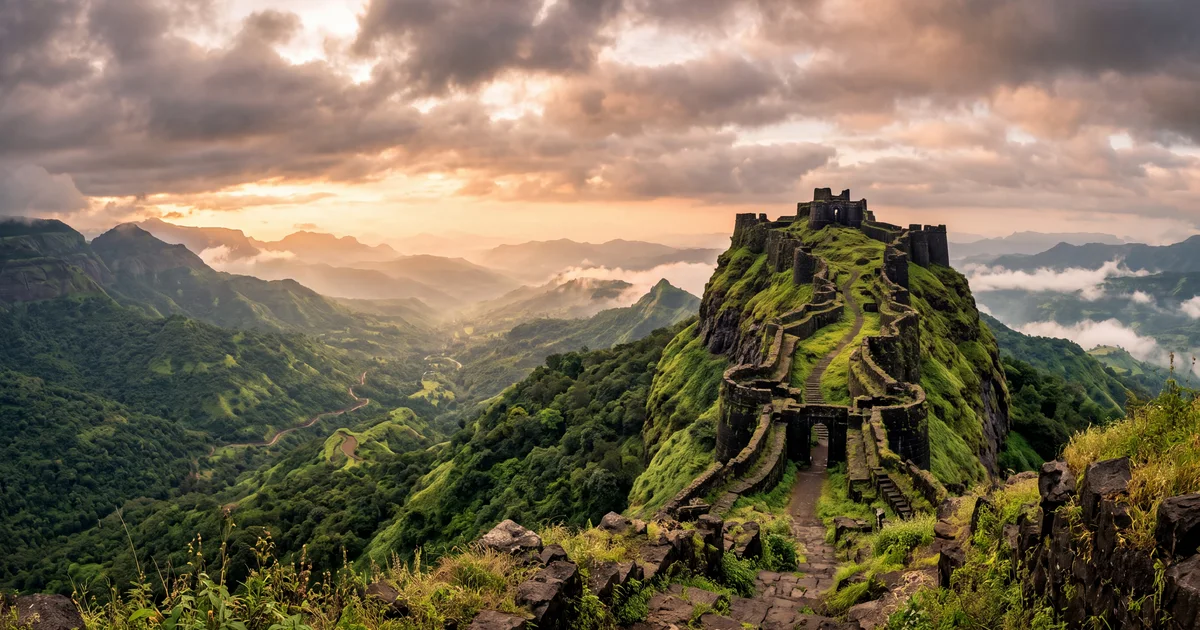
Maharashtra has more forts than most countries. Over 350 of them sit across the Sahyadris, the Konkan coast, and the Deccan plateau. Some are roadside ruins you can walk through in twenty minutes. Others require a full day of climbing up basalt rock with nothing but chain railings between you and a 300 metre drop.
Forts in Maharashtra are not museum pieces. They are active trekking destinations. Every weekend, thousands of people from Pune and Mumbai drive to base villages at 4am, climb to the top before the sun gets brutal, eat thecha and bhakri from a local stall, and drive back by lunch. Monsoon weekends double those numbers because the Sahyadris turn into a green wall of waterfalls and clouds.
This is not a directory of all 350. That would be a Wikipedia article, and not a useful one. This covers 15 forts worth your time in 2026, sorted by difficulty, with notes on crowd levels, the best season, and how to actually get there from Pune or Mumbai.
TL;DR
- Best beginner fort: Sinhagad (30 km from Pune, paved road to the top, done in 90 minutes)
- Best monsoon fort: Lohagad (accessible from Malavli railway station, waterfalls on every side)
- Best overnight trek: Rajgad (4 to 5 hour climb, camp at the top, 360 degree Sahyadri views)
- Best for history: Raigad (capital of the Maratha Empire, ropeway available)
- Hardest trek: Alang Madan Kulang (full day traverse, vertical rock patches, experts only)
Why Maharashtra's forts are different from other trekking destinations
The Sahyadri range runs 1,600 km along Maharashtra's western edge. It is not tall by Himalayan standards. The highest peaks barely cross 1,600 metres. What makes it interesting for trekking is the geology: flat topped basalt hills with sheer cliff faces on three sides, connected by narrow ridges.
The Maratha rulers in the 17th century saw the same thing trekkers see today. These hilltops are natural fortresses. Chhatrapati Shivaji Maharaj built or captured over 300 forts during his campaigns, placing garrisons on summits that could see enemy armies approaching from 30 km away. The cut rock steps, water cisterns, and fortification walls he built are what you walk on today.
The forts sit between 700 and 1,400 metres above sea level. Pune is at 560 metres. That means most treks gain 300 to 800 metres of elevation in distances of 3 to 8 km. Short, steep, and over fast. You do not need a week's leave or Himalayan fitness for a fort trek. You need decent shoes and the willingness to wake up early.
One caveat that every regular trekker in Pune knows: popularity has a cost. Sinhagad on a Sunday morning feels like a highway. Lohagad during October gets queues at the Vinchukata (scorpion tail) section. If crowds bother you, go on a Thursday or pick the forts further from Pune.
Beginner forts (1 to 2 hours, no technical climbing)
Sinhagad (Lion Fort)
Sinhagad is 30 km southwest of Pune and the first fort most people in the city ever visit. The main path from Sinhagad Ghat is a paved road that cars can drive up, though the trek route from Kalyan Darwaza takes about 90 minutes on foot. Elevation gain is roughly 300 metres.
The fort has two gates, ruined palace walls, the tombs of Tanaji Malusare and Rajaram Maharaj, and a handful of food stalls at the top selling pithla bhakri, kanda bhaji, and curd. The view over Khadakwasla Dam and the Pune valley is wide and unobstructed.
Go on a weekday if possible. Weekend mornings see parking jams that stretch 2 km down the ghat road. The best time is October to January when the post monsoon green hasn't faded and the air is cool enough for a comfortable climb.
Lohagad (Iron Fort)
Lohagad is unusual because you can reach its base on a suburban train. Malavli station on the Pune to Lonavala line is a 20 minute walk from the trailhead. The trek itself takes about an hour, gaining 300 metres through wide stone steps carved into the hillside.
The Vinchukata, a narrow ridge shaped like a scorpion's tail, connects Lohagad to Visapur Fort. It looks dramatic but is only about 5 metres wide and perfectly walkable unless it is raining heavily. In monsoon, the entire hillside streams with water and the approach trail has waterfalls every 100 metres. It is one of the best rainy season treks near Pune.
The fort has four gates. Ganesh Darwaza, the main entrance, still has intact basalt arches. Inside the fort walls, the plateau is flat enough for a comfortable two hour exploration.
Tikona (Triangle Fort)
Tikona Fort sits 60 km from Pune near Kamshet. The base village is Tikona Peth, and the climb takes about 75 minutes. The trail is steep in the last section with rock cut steps, but nothing that requires hands or ropes.
The fort earns its name from the triangular shape visible from the Pawna Lake road. Speaking of which, Pawna Lake camping is directly below the fort, making this a good combination trip: trek Tikona in the morning, camp by the lake at night.
The summit has a Trimbakeshwar Mahadev temple, water cisterns that still hold water during monsoon, and views over Tung Fort, Lohagad, and Visapur. On a clear December morning you can count seven fort peaks from the top.
Intermediate forts (3 to 5 hours, some rock sections)
Rajgad (King Fort)
Rajgad was the capital of the Maratha Empire for 26 years before Shivaji moved his seat to Raigad. It sits 60 km southwest of Pune, and the standard route from Gunjavane village takes 3 to 4 hours up. The fort has three machis (plateaus): Padmavati, Suvela, and Sanjivani, connected by fortification walls along ridgelines.
This is one of the best overnight treks near Pune. The Padmavati Machi has a temple with a flat area where groups camp. Watching the sun set over the Sahyadris from Suvela Machi, with Torna Fort visible to the south, is worth the climb alone.
The trail from Gunjavane starts easy through farmland and then steepens through forest. The last 45 minutes involve loose rock and a couple of sections where you use your hands. Carry at least 2 litres of water per person. There is a water source at Padmavati temple, but it is unreliable in summer.
Torna (Prachandagad)
Torna was the first fort Shivaji captured at the age of 16 in 1643. It is the highest fort in Pune district at 1,403 metres, sitting 50 km southwest of the city. The trek from Velhe village takes about 3 hours with 700 metres of elevation gain.
The climb has two distinct sections. The first half winds through forest on a moderate trail. The second half has exposed rock with carved steps. The Zunjar Machi section along a narrow ridge is the most photographic part of the trek, with drops on both sides.
Torna and Rajgad are visible from each other. Some trekking groups do a Rajgad to Torna traverse over two days, covering the ridge between them. This is a serious trek that requires camping gear and 8 to 10 hours of walking.
Harishchandragad
Harishchandragad is 170 km from Pune and requires a longer drive, but the fort repays the effort. It is famous for Kokan Kada, a concave cliff face that drops 500 metres straight down to the Konkan plains. Standing on the edge feels like being at the prow of a ship made of rock.
Three routes reach the summit. The Khireshwar route is the standard (3 hours, moderate). The Pachnai route is easier but longer. The Nalichi Vaat route is near vertical and should only be attempted by experienced trekkers with a guide who knows the fixed holds.
The Kedareshwar Cave near the summit has a Shiva lingam surrounded by water year round. The fort also has Saptatirtha Pushkarni, a rock pool that the Maratha garrison used as a water supply. Overnight camping is popular on the flat area near the cave.
How much do fort treks near Pune cost?
Group departures from Pune for a day trek run between 600 and 1,200 rupees per person. That typically includes transport from a central pickup point in Pune (Swargate, Shivajinagar, or Wakad), a guide, and sometimes breakfast at the base village.
Overnight fort treks like Rajgad or Harishchandragad cost 1,800 to 3,500 rupees and include camping gear, dinner, and breakfast. Prices climb during monsoon weekends and long weekends because demand spikes.
You can also trek independently. MSRTC buses run to base villages of most forts within 100 km of Pune. The entry fee for most forts is zero. Rajgad and Raigad charge a nominal 20 to 50 rupee fee managed by local village committees.
For current group departure dates and pricing, check listings on TripzSearch. Each listing shows the operator, batch size, and actual reviews from past trekkers.
Expert level forts (full day, technical sections)
Harihar Fort
Harihar Fort near Nashik has the most photographed approach in Maharashtra: a nearly vertical rock cut staircase with no railings, carved into the cliff face at an 80 degree angle. The steps are about 30 cm wide. You climb them using carved hand holds in the rock while trying not to look down.
That sounds worse than it is. The vertical section is only about 20 metres. Most reasonably fit people manage it fine going up. Coming down is the harder part because you are looking at the drop. Do not attempt this in rain. The rock becomes slippery and there is nothing to catch you.
The fort itself is a small plateau with a Hanuman temple and views over the Trimbak range. The trek takes about 2.5 hours from Nirgudpada village. Go between October and February for dry rock and clear views.
Alang, Madan, and Kulang (AMK)
The AMK trio near Igatpuri is the endgame for fort trekkers in Maharashtra. Three forts connected by ridges, with vertical rock patches requiring rope assistance, exposed traverses, and a full 10 to 12 hour trek if you attempt all three in a day.
Most groups camp at Alang Fort and do Madan and Kulang on day two. The approach from Ambewadi village has several false summits and unmarked junctions where groups regularly get lost without an experienced guide.
This is not a trek for beginners or even intermediate trekkers. You need comfort with vertical exposure, basic rock scrambling skills, and the physical stamina for 12 plus hours of climbing. Fixed departure groups with professional guides run these treks between October and February. Outside that window, the rock is too wet or too hot.
Kalavantin Durg
Kalavantin Durg sits next to Prabalgad Fort near Panvel, about 55 km from Mumbai. The last section to the summit is a vertical rock face with carved steps and no railings. The exposure is real: a slip here means a very long fall.
The standard route starts from Prabal village and takes about 3 hours. Most groups pair Kalavantin with Prabalgad, doing both in a long day. The 4am start from Mumbai or Navi Mumbai gets you to the base before sunrise, and the summit view of Matheran plateau and the Konkan coastline is spectacular.
A word of honest caution: multiple accidents have happened on Kalavantin Durg, mostly during monsoon and mostly involving unprepared trekkers in smooth soled shoes. Go in dry season, wear trek shoes with grip, and do not climb if you are uncomfortable with heights.
What is the best time to visit forts in Maharashtra?
The Sahyadris have three distinct trekking seasons, and each changes the fort experience completely.
October to February is peak season. Post monsoon greenery lasts through November. Temperatures at fort summits hover between 10 and 22 degrees Celsius. Skies are clear enough for 30 km visibility on good days. The downside is crowds. Sinhagad and Lohagad on a December Sunday feel like a pilgrimage rather than a trek.
June to September is monsoon. The Sahyadris transform. Every cliff has a waterfall. The valleys fill with mist. Trails become streams. The views are worth the wet socks. But exposed forts become genuinely risky. Lohagad and Visapur handle monsoon well because their trails are wide stone steps. Harihar and Kalavantin become dangerous. Leeches appear on every forest trail below 800 metres. Pack salt, long socks, and waterproof bags for your phone.
March to May is summer. Temperatures at lower fort elevations cross 35 degrees Celsius by 9am. Trekking is possible if you start at 5am and finish by 10am, but it is not pleasant. Water sources on forts dry up. The landscape turns brown. Most regular trekkers skip this season entirely.
How are forts in Maharashtra different from Himalayan treks?
If you have trekked in Uttarakhand or Himachal, the Sahyadri forts will feel like a different activity. Himalayan treks are multi day, remote, and measured in days and stages. Fort treks are measured in hours. You are rarely more than 3 km from a road. Mobile signal works on most summits. Tea stalls exist at the base of popular forts.
The climbing is different too. Himalayan trails gain elevation gradually over long distances. Sahyadri forts gain it sharply. A 700 metre ascent in 3 km is common. Your knees feel it more than your lungs.
The history layer changes things. Every fort summit has cisterns, gates, grain storage rooms, and sometimes temples that are 300 to 400 years old. You walk through military architecture that shaped western Indian politics for two centuries. Imagine if every Himalayan pass had a well preserved castle at the top. That is the Sahyadris.
For current group departures to Maharashtra forts, operator details, and verified reviews, browse the listings on TripzSearch. You can filter by difficulty, city of departure, and upcoming dates.
A realistic weekend plan for your first fort trek
If this is your first fort trek in Maharashtra, start with Lohagad. Take the Pune to Lonavala train (6:30am departure from Pune Junction reaches Malavli by 8am). Walk to the trailhead, climb to Lohagad, explore for an hour, and walk back. You will be on a return train by 1pm.
If you want something more involved, do Rajgad as an overnight. Most group operators pick up from Pune on Saturday at 6am, reach the base by 8am, summit by noon, camp on Padmavati Machi, and descend Sunday morning. The monsoon Western Ghats collection on TripzSearch has group departures that handle tents, food, and guides.
For Mumbai based trekkers, Kalavantin Durg is the closest serious fort. A 4am start from the city gets you to the summit by 8am. Pair it with breakfast at a dhaba in Panvel on the way back. Just remember: dry season only, grip shoes mandatory.
Frequently asked questions
- How many forts are there in Maharashtra?
- Maharashtra has over 350 forts spread across the Sahyadri range, Konkan coast, and Deccan plateau. Most were built or expanded during the Maratha Empire under Chhatrapati Shivaji Maharaj in the 17th century. Around 40 to 50 are popular trekking destinations with maintained trails and regular group departures.
- Which is the most difficult fort trek in Maharashtra?
- Alang, Madan, and Kulang (the AMK trio) near Igatpuri are considered the toughest fort treks in the state. The traverse involves vertical rock patches, exposed ridges, and a full day of climbing. Harishchandragad via the Nalichi Vaat route is another hard option, with a near vertical rock face in the final section.
- What is the best time to visit forts in Maharashtra?
- October to February offers clear skies and comfortable temperatures for trekking. Monsoon season from June to September transforms the Sahyadris into green valleys with waterfalls, but trails get slippery and leeches are common. Avoid March to May unless you start well before sunrise.
- Can beginners trek to forts in Maharashtra?
- Yes. Sinhagad, Lohagad, and Tikona are beginner friendly forts with well marked paths and short climbs of 1 to 2 hours. Most have paved sections or cut rock steps. Group departures from Pune typically include guides who know the route and handle logistics.
- How do I reach forts near Pune by public transport?
- MSRTC and local ST buses connect Pune to base villages for most forts within 100 km. Sinhagad has a direct road from Sinhagad Road. For Rajgad, take a bus to Gunjavane village. Lohagad is a 20 minute walk from Malavli railway station on the Pune to Mumbai rail line.
- Are monsoon fort treks safe in Maharashtra?
- Monsoon treks are safe on well maintained forts like Lohagad, Visapur, and Tikona if you have proper grip footwear and trek with an experienced group. Avoid exposed climbs like Harihar and the AMK trio during heavy rain. Waterproof bags and trekking poles reduce the slip risk on muddy trails.