Chopta Tungnath Trek (2026): The Highest Shiva Temple and How to Get There
Plan your Chopta Tungnath trek in 2026 with route details, best months, costs and group departures to the world's highest Shiva temple.
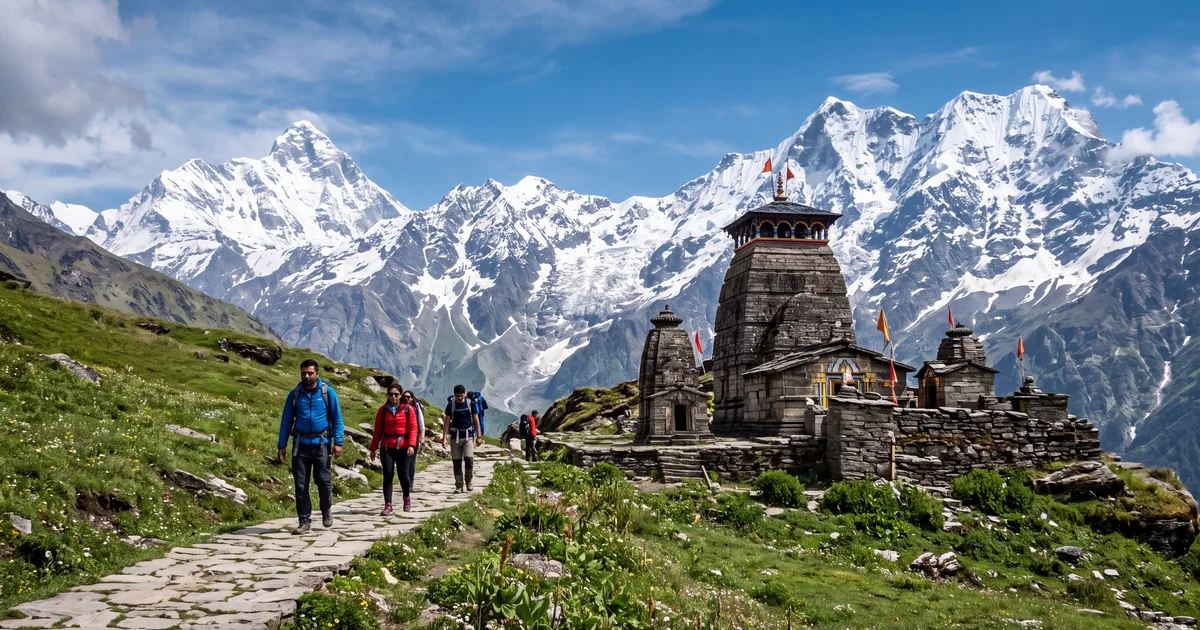
Tungnath sits at 12,073 ft in the Garhwal Himalayas. It is the highest Shiva temple in the world, older than most things humans have built that still stand. The Chopta Tungnath trek to reach it is a 3.5 km paved path that starts from a meadow called Chopta and ends at a small stone temple complex where priests have lit fires since the 8th century.
That description makes it sound simple, and it mostly is. You can walk from Chopta to Tungnath in under 3 hours without any trekking gear. But the place is more than its difficulty rating. The final 300 metres before the temple, where the treeline ends and the Himalayan panorama opens up to Nanda Devi, Trishul, and Chaukhamba, turns a casual walk into something worth the 14 hour drive from Delhi.
If you continue past the temple to Chandrashila summit (13,123 ft), another km up a rocky ridge, you get a 360 degree view that most Uttarakhand veterans rank alongside Kedarkantha and Roopkund for sheer spectacle. The whole thing takes a day. You could be back in your tent by lunch.
TL;DR
- The Tungnath temple trail is 3.5 km from Chopta, paved, no gear needed. Add 1 km for Chandrashila summit.
- Best months: March to May for rhododendrons and clear views, October to November for post monsoon crispness.
- Cost: 4,000 to 7,000 rupees for a 3 to 4 day group package from Haridwar or Rishikesh.
- Difficulty: Easy (Tungnath only) to easy moderate (with Chandrashila). No technical climbing.
- Group departures run through the season on TripzSearch.
What Is Tungnath and Why Does It Matter?
Tungnath is one of the Panch Kedar temples, five shrines attributed to the Pandavas from the Mahabharata. The mythology says Shiva hid from the Pandavas in the form of a bull and his arms surfaced at Tungnath. Whether you care about the legend or not, the physical temple is worth seeing: a small cluster of stone structures with slate roofs, bells, and a lingam inside the sanctum, all at an altitude where most trees cannot grow.
The temple's age is debated. Local tradition says Adi Shankaracharya established it in the 8th century. Archaeological estimates vary. What is not debated is that priests from Maku village have maintained it for generations, closing it every November when snow buries the complex and reopening it around April or May with a ceremony that draws pilgrims from across Uttarakhand.
For trekkers, Tungnath is often a stepping stone. You walk to the temple, pay respects or take photos, then push on to Chandrashila for the summit experience. But the temple section alone is satisfying if you are not up for the steep scramble above. Families with children and older pilgrims regularly do just the Tungnath portion.
One caveat: if you visit in peak season (May weekends, Dussehra week), the narrow paved trail gets congested. Expect 200 to 300 people on a Saturday. Weekdays in April or late October are dramatically quieter.
How Hard Is the Chopta Tungnath Chandrashila Trek?
The honest answer: if you can climb stairs for an hour without stopping, you can do Tungnath.
The trail from Chopta (8,790 ft) to Tungnath (12,073 ft) gains about 3,280 ft over 3.5 km. That sounds steep on paper, but the path is paved with stone steps for most of its length. The gradient is steady, never technical. There are no river crossings, no exposed ridges, no sections where you need your hands. Tea stalls appear at two points along the route (seasonal, usually open April to October).
The Chandrashila extension changes things slightly. The km from Tungnath to the summit (13,123 ft) is steeper, rockier, and unpaved. In winter, this section can have black ice under fresh snow. In summer, it is just a scramble over large boulders with faded paint marks showing the way. The exposure at the top is mild but real: the summit is a narrow platform with a small temple ruin, and the wind picks up after 10 AM.
Total time estimates:
- Chopta to Tungnath: 2 to 3 hours up, 1.5 to 2 hours down
- Tungnath to Chandrashila: 45 minutes to 1 hour up, 30 to 40 minutes down
- Full round trip from Chopta: 5 to 7 hours depending on pace and time spent at the top
The altitude is the only real challenge. At 12,000 to 13,000 ft, some people get mild headaches or breathlessness. If you are arriving from sea level (Chennai, Mumbai, Kolkata), consider spending a night at Chopta or Ukhimath (5,000 ft) before attempting the trek. If you are coming from Delhi or already spent time in Rishikesh at 1,100 ft, the acclimatization jump is manageable for most.
My take: do not skip Chandrashila unless weather or fitness prevents it. The Tungnath view is impressive, but the Chandrashila panorama, which adds Kedarnath peak, Bandarpoonch, and the Gangotri group to the west, is the reason this trek appears on best of lists.
When Is the Best Time to Do the Chopta Tungnath Trek?
The answer splits into three distinct seasons, each with a different experience.
March to June is the primary trekking window. March still has patchy snow on the Chandrashila ridge and the trail can be slippery above 11,500 ft. April is when it truly opens: rhododendron forests below Tungnath burst into red and pink bloom, the sky clears after winter haze, and the Himalayan wall stands crisp. May is warmer, busier, and the meadows at Chopta turn green with wildflowers. June stays clear until the monsoon arrives around the 20th.
If you have flexibility, the last week of April hits the best intersection: rhododendrons in full colour, snow still visible on the peaks (but not on the trail), and weekday crowds under 50 people.
September to November is the second window. September is risky because the monsoon's tail end still drops rain. October is many people's favourite month: the air is washed clean, visibility exceeds 100 km on good days, and the temperatures at Chopta hover around 5 to 10°C during the day. November brings the first frosts. Tungnath temple closes around Diwali (late October or early November depending on the year). After closure, you can still trek to the temple but cannot enter the sanctum.
December to February is snow season. The Chopta meadow gets 2 to 4 ft of snow by January. The trail to Tungnath becomes a snow path that requires proper boots and preferably microspikes. Chandrashila is icy and genuinely risky without experience. The temple is shut. The road from Ukhimath to Chopta may close after storms. But if you want a winter snow trek that is shorter and less committing than Kedarkantha or Brahmatal, this works. Several operators run 2 to 3 day winter departures from Ukhimath.
Avoid: July and August. The monsoon makes the trail slippery, clouds block all views (you will see nothing from Chandrashila), and leeches are active in the forest sections.
How to Reach Chopta from Delhi (and Other Cities)
Chopta is not a town. It is a small meadow clearing at 8,790 ft on the Ukhimath to Gopeshwar road in the Rudraprayag district of Uttarakhand. There is no railway station, no airport, and no regular bus service directly to Chopta. You get there by road.
From Delhi (440 km, 12 to 14 hours): The standard route is Delhi to Haridwar to Rishikesh to Devprayag to Rudraprayag to Ukhimath to Chopta. You can break the journey at Rishikesh or Rudraprayag. Most group operators pick up from Haridwar or Rishikesh and drive to Chopta in one day (7 to 8 hours from Rishikesh). The road is NH58 until Rudraprayag, then state highway. Conditions are decent except during active monsoon.
From Rishikesh (200 km, 7 to 8 hours): This is where most group treks start. Shared cabs run to Ukhimath from Rishikesh ISBT, and from Ukhimath you can get a local vehicle to Chopta (28 km, 45 minutes). If you are booking a group departure on TripzSearch, transport from Rishikesh or Haridwar is typically included.
From Dehradun (250 km, 8 to 9 hours): Same route through Rishikesh. Dehradun has the nearest airport (Jolly Grant), useful if you are flying from Bangalore, Mumbai, or Chennai.
By bus: GMOU (Uttarakhand state transport) runs buses from Rishikesh and Haridwar to Ukhimath. From Ukhimath, shared jeeps go to Chopta, but frequency is low (2 to 3 per day in season, near zero off season). Do not rely on public transport alone unless you are comfortable waiting.
One thing most guides omit: the final 28 km from Ukhimath to Chopta is a single lane mountain road. In monsoon, landslides block it regularly. In winter, snow can close it for days. Check conditions with your operator before leaving Rishikesh.
What Does the Chopta Tungnath Trek Cost?
This trek is one of the cheapest Himalayan experiences you can book.
Group packages (3 to 4 days, from Haridwar or Rishikesh): 4,000 to 7,000 rupees per person. Includes transport, 1 to 2 nights camping or homestay in Chopta, meals, and a guide. Some packages combine Tungnath with Deoria Tal (a lake 2 hours from Chopta by road) for a slightly longer itinerary.
DIY budget (solo or with friends): Under 2,500 rupees total if you take state transport, stay in a Chopta guesthouse (800 to 1,200 per night), and carry your own food. The trek itself costs nothing. There is no park entry fee for Tungnath (unlike Kedarkantha, which requires a Govind Pashu Vihar permit).
Add your travel to Haridwar or Rishikesh: Flights from Bangalore or Mumbai to Dehradun run 3,000 to 6,000 rupees one way depending on booking lead. Trains from Delhi to Haridwar start at 300 rupees (sleeper class). Buses from Delhi ISBT to Rishikesh cost 400 to 600 rupees.
Winter packages (December to February): Slightly more expensive, 5,500 to 8,500 rupees, because operators provide snow gear, microspikes, and sometimes a heated dining tent. Worth it if you do not own cold weather gear.
The lack of permits and the short duration make this trek an accessible option for people who cannot take a week off. Leave Friday night from Delhi, trek Saturday, return Sunday. Tight but doable.
What to See at Chandrashila Summit
Chandrashila means "Moon Rock" in Sanskrit. The summit at 13,123 ft has a small ruined temple and a flat area about 20 metres wide where you stand and look at everything.
On a clear morning (which is most mornings from October to May if you start before 8 AM), you can identify: Nanda Devi (25,643 ft) to the east, Trishul and Nanda Ghunti beside it, Chaukhamba (23,419 ft) to the north, Kedarnath peak directly behind the Kedarnath temple (though the temple itself is not visible), Bandarpoonch to the northwest, and on exceptional days, the Gangotri group including Shivling.
The practical reality: wind is constant above Tungnath. The summit platform has no shelter. Temperatures at 13,000 ft even in May mornings sit around 3 to 5°C with windchill lower. Bring a windproof layer and gloves even in the so called summer season.
Sunrise from Chandrashila is the classic photo, and it requires camping at Chopta the night before (or waking at 3 AM from a lower camp). If you arrive at Chopta by afternoon and trek up next morning, you miss sunrise but still get clean pre noon light. By midday, clouds typically build from the south and obscure the peaks.
Group Treks from Delhi: What to Expect
Most fixed departure groups run a 3 to 4 day itinerary:
Day 1: Pick up from Haridwar or Rishikesh, drive to Chopta. Arrive by evening. Settle into camp or guesthouse. Some itineraries stop at Deoria Tal en route for a short 1.5 hour trek to the lake.
Day 2: Early start. Trek Chopta to Tungnath to Chandrashila and back. Total 5 to 7 hours. Return to Chopta camp. Evening around a bonfire if weather permits.
Day 3: Drive back to Haridwar or Rishikesh. Drop off by afternoon or evening.
Groups range from 8 to 20 people. The trail is wide enough that group size does not bottleneck. A guide is useful for the Chandrashila section in low visibility, but for the Tungnath path itself, the paved route makes getting lost impossible.
Look for operators that include Deoria Tal in the itinerary. The lake at 7,841 ft reflects the Chaukhamba range at dawn and adds minimal effort (1.5 km trek each way). It is only 14 km by road from Chopta. Browse current departures on TripzSearch to compare dates and inclusions.
Things Most Guides Do Not Tell You About Chopta
There is no ATM at Chopta. The nearest one is in Ukhimath, 28 km away. Carry cash. Some guesthouses accept UPI, but signal is patchy.
Phone signal disappears after Ukhimath. BSNL works intermittently at Chopta. Jio and Airtel do not. Do not plan on making calls or using maps above Ukhimath.
Chopta "hotels" are mostly dhabas with rooms. Expect basic bedding, no hot water unless you ask (and wait 30 minutes for a bucket), and shared squat toilets. If you want something better, some operators run comfortable dome tents with sleeping bags rated for the temperature.
Monkeys are aggressive near Tungnath. The langurs around the temple have been fed by pilgrims for decades. They will snatch food from your hands. Keep snacks inside your bag while on the temple trail.
The paved trail has horse traffic. Mules and horses carry supplies (and tourists) up to Tungnath. They have right of way. Step aside when you hear bells. The trail gets genuinely narrow in two sections where a mule and a person barely fit side by side.
Altitude sickness is rare but not impossible. You gain 4,300 ft in a single day from Chopta to Chandrashila. If you drove from Delhi (700 ft) to Chopta (8,790 ft) in one shot, your body has not acclimatized. Drink water, move slowly in the first hour, and turn around if you get a persistent headache above Tungnath. This is easy to treat by descending 1,000 ft.
Combining Chopta with Deoria Tal and Kedarnath
Chopta sits on the road between Ukhimath (gateway to Kedarnath) and Gopeshwar (gateway to the Auli ski area). This makes it easy to combine into a longer trip.
Chopta plus Deoria Tal (1 extra day): Deoria Tal is a glacial lake at 7,841 ft, 14 km from Chopta by road (drive to Sari village, then trek 2.5 km uphill). The lake is famous for reflecting Chaukhamba at dawn. You can do it the day before or after your Tungnath trek. It adds 3 to 4 hours of total walking.
Chopta plus Kedarnath (2 to 3 extra days): From Ukhimath, you drive to Sonprayag and trek or take a helicopter to Kedarnath temple. The Kedarnath temple season runs May to November (check exact dates each year). This combination works well in May, June, September, or October when both Tungnath and Kedarnath are open.
Chopta plus Auli (1 extra day): Drive from Chopta to Joshimath (about 70 km, 3 hours), then gondola up to Auli. In winter, Auli has skiing. In summer, it is a meadow with Nanda Devi views. This adds a day but no trekking.
For group options that bundle multiple destinations in one Uttarakhand trip, check the Himalayan treks collection on TripzSearch.
Frequently asked questions
- How difficult is the Chopta Tungnath trek?
- The Tungnath temple trail from Chopta is one of the easiest Himalayan treks. It covers 3.5 km one way with 1,500 ft elevation gain on a paved path. Most reasonably fit people finish it in 2 to 3 hours. The Chandrashila summit adds another km with a steeper rocky section, bringing total difficulty to easy to moderate.
- What is the best time to visit Chopta and Tungnath?
- March to June and September to November are the best windows. April and May bring clear Himalayan panoramas and rhododendron blooms. October gives crisp post monsoon visibility. December to February offers snow but the temple closes and the Chandrashila trail gets icy. Avoid July and August because monsoon fog limits views and the trail gets slippery.
- How do I reach Chopta from Delhi?
- Drive or take a bus from Delhi to Rishikesh (5 to 6 hours), then continue to Ukhimath or directly to Chopta via Rudraprayag (7 to 8 hours more). Total road time is about 12 to 14 hours. Alternatively, fly to Dehradun Jolly Grant airport, then drive 8 to 9 hours. Most group treks include transport from Haridwar or Rishikesh.
- Can I do the Chopta Tungnath trek without a guide?
- Yes. The Tungnath trail is a well marked stone path, impossible to lose. You do not need a guide for the temple section. For Chandrashila, the trail is obvious in clear weather but can disorient in fog or snow. If you are going between December and February, hire a local guide from Chopta village for about 500 to 800 rupees.
- Is Chopta Tungnath open in winter?
- The trail stays physically accessible year round, but Tungnath temple officially closes from November end (after Diwali week) until April or May depending on snowmelt. You can still trek to the temple door and continue to Chandrashila in winter. The road to Chopta from Ukhimath occasionally closes after heavy snowfall in January.
- What is the cost of a Chopta Tungnath group trek in 2026?
- Group packages from Haridwar or Rishikesh typically cost 4,000 to 7,000 rupees per person for a 3 to 4 day trip. This covers transport, camping or guesthouse stay in Chopta, meals, and a guide for Chandrashila. Add your travel to Haridwar or Rishikesh separately. Solo travellers can do it for under 2,500 rupees without a package.