Camping Near Pune (2026): Lakeside, Fort and Riverside Spots Worth the Drive
Best camping spots near Pune in 2026: lakeside, riverside and fort campsite options within 100 km, what to expect and how to book group departures.
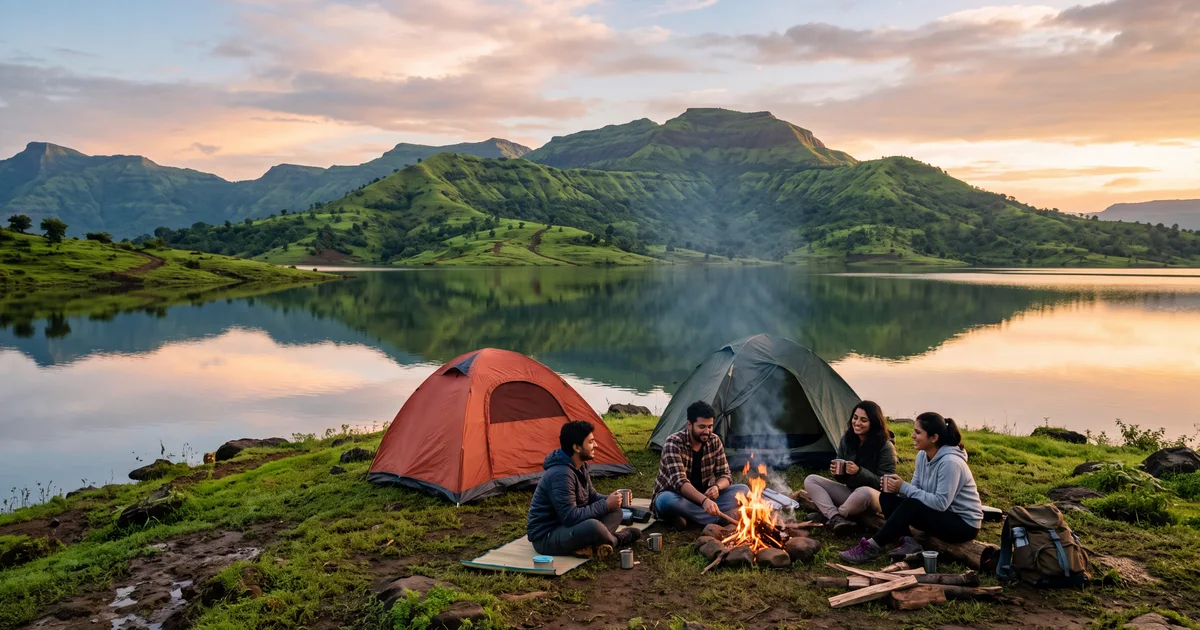
Pune sits in a bowl of the Sahyadris, which means you can drive 30 minutes in almost any direction and find yourself next to a lake, a river, or a hill fort with nobody around. That geography makes it one of the easiest cities in India for overnight camping without taking leave.
The challenge is not finding a campsite. It is finding one that is not overcrowded, overpriced, or both. Pawna Lake alone has over 50 operators advertising on Google, and the quality gap between a well run camp with clean washrooms and a muddy patch with a borrowed tent is enormous.
This guide focuses on spots within 100 km of Pune city, sorted by type: lakeside, riverside and fort, with honest notes on what each delivers and where they fall short.
TL;DR
- Pawna Lake (55 km): most options, biggest crowds on weekends, book weekday for quiet
- Mulshi Lake (40 km): fewer operators, better privacy, limited activities
- Fort camps at Tikona and Tung (50 to 60 km): history plus a morning trek baked in
- Riverside at Kundalika and Kolad (100 km): pair with rafting for a full weekend
- Budget: 1,200 to 3,500 rupees per person for tent, meals and basic activities
Which Lake Near Pune Has the Best Camping?
Three lakes dominate the weekend camping scene near Pune. Each attracts a different crowd.
Pawna Lake is 55 km from Pune via the Mumbai Pune Expressway exit at Lonavala. The north shore between Tikona base and Pawna dam wall has the densest cluster of campsites. On a Saturday night between October and January, you will see 150 to 200 tents across multiple operators. Noise carries over water. If you want peace, go on a Tuesday. The lake sits at 630 metres elevation, so December nights drop to 10 to 12 degrees Celsius.
Mulshi Lake is closer at 40 km via the Pirangut road. It draws fewer campers because the surrounding land is largely private and village owned, limiting commercial setups. The sites that do exist offer genuine quiet. You wake up to birdsong and mist on the water, not a neighbour's bluetooth speaker. Fewer activities here: kayaking is rare, bonfire is standard.
Bhandardara is the furthest at 160 km (about 3.5 hours), but it rewards the drive. The Arthur Lake backwaters sit at 750 metres, Randha Falls is a short detour, and the Milky Way is visible on moonless winter nights because there is no light pollution from any large town within 30 km. This is the spot for people who actually want to stargaze, not just Instagram a tent with fairy lights.
One honest caveat: Pawna gets genuinely unpleasant on long weekends. We are talking queues for washrooms, generators running past midnight, and no buffer between tent clusters. The lake itself does not disappoint. The infrastructure around it on peak days does.
What About Fort Camping? Is It Worth It?
Fort camping combines an overnight camp with a morning summit trek. Two forts near Pune do this particularly well.
Tikona Fort sits right above Pawna Lake at about 1,066 metres. Most operators set up camp at the base village (Tikona Peth) and offer a pre dawn climb that takes 45 minutes to an hour. You summit for sunrise, descend for breakfast. The fort itself is a Grade I easy trek with wide rock cut steps and one short scramble near the top gateway. Good for first timers and families with kids above age 8.
Tung Fort (also called Kathingad) is smaller, less crowded, and right next to Pawna as well. The climb is about 30 minutes and the top offers a narrower plateau with unobstructed 360 degree views. Fewer operators run camps here, which is precisely the appeal.
My preference: Tikona for groups with mixed fitness levels, Tung for a quieter experience with friends who can handle a bit of scrambling in the dark. Both beat a pure lakeside camp if you want to actually do something besides sit around a fire.
The limitation of fort camping is comfort. Tent pitches at base villages tend to be on agricultural land with basic or no washroom facilities. If you need attached toilets and running water, stick to the lakeside operators.
How Far Is Riverside Camping, and What Do You Get?
The Kundalika river at Kolad is about 100 km from Pune (2 to 2.5 hours via the Tamhini Ghat road). It is the only commercially rafted river within day trip distance of Pune, which makes the camps here a two activity proposition: camping plus 12 to 14 km of grade II to III rapids the next morning.
Campsites at Kolad line the riverbank upstream of the rafting put in point. Most offer tent stays, bonfire, dinner and a morning rafting slot packaged together for 2,000 to 3,500 rupees per person. The rapids run reliably from July to February thanks to the Bhira dam release schedule (releases happen early morning; water levels at the campsite rise slowly and predictably, not dangerously).
For people who want camping but find sitting around a lake dull, Kolad solves the problem. You get an actual activity with actual adrenaline, not just marshmallows and a guitar.
The downside: the drive through Tamhini Ghat in monsoon is slow and often foggy. Plan 3 to 3.5 hours in July or August. The road surface is decent but single lane stretches with truck traffic test patience.
What Should I Pack for Overnight Camping Near Pune?
Most operator camps provide tents, mats, and basic bedding. You do not need to carry your own shelter unless you are going to an unmanaged spot. Here is what they do not provide and you will actually need:
A warm layer for October to February nights. Even if the day is 30 degrees Celsius in Pune, lakeside temperatures at 600 to 700 metres drop to 10 to 15 degrees Celsius after midnight. A fleece or light jacket is enough.
Insect repellent. Pawna and Mulshi are surrounded by tall grass and standing water. Mosquitoes peak between 6 PM and 8 PM and again at dawn.
Shoes you can get muddy. Not sandals, not white sneakers. The walk from parking to most campsites is 200 to 500 metres over unpaved paths that turn to slush after rain.
A power bank. Phone charging points at campsites are either shared (one socket for ten tents) or non existent. You will drain battery taking photos at sunset, navigating Google Maps, and using your phone as a flashlight at 2 AM.
Toilet paper. Even clean sites occasionally run out on busy nights.
Skip the bluetooth speaker. Seriously. The outdoors does not need your playlist, and your neighbours do not want it.
How Do I Book a Camping Trip Near Pune?
Three options, in order of reliability:
Search group trips from Pune on TripzSearch. Filter by camping or outdoor activity. You get multiple operators with upcoming dates, verified reviews and transparent pricing. Useful when you want to compare three or four options side by side without messaging each one individually on Instagram.
Book directly with an operator whose camp you have visited before or that a friend recommends. Direct bookings sometimes save 100 to 200 rupees per person over aggregator rates.
Walk in. This works at Pawna on non peak weekdays when operators have empty tents. Do not try this on a Saturday between October and December, or you will drive 55 km for nothing.
For groups of 8 or more, most operators offer customised departures with private campfire zones and flexible meal timings. Check available camping trips for group ready options.
Is Monsoon Camping Near Pune a Good Idea?
It depends on your tolerance for discomfort. July to September monsoon camping near Pune offers genuinely dramatic scenery: waterfalls appear overnight on every hillside, lakes fill to their brims, and the air smells of wet earth and grass. The Sahyadris in monsoon look like a different mountain range than the brown, baked version of April.
The trade offs are real. Your tent will be damp. Your shoes will not dry overnight. Leeches are a near certainty on any trail below 800 metres in the Western Ghats between June and September. Roads flood unpredictably, especially the Lavasa road and stretches near Mulshi.
If those do not bother you, monsoon camping is actually the most atmospheric time. Just check the IMD forecast, avoid dates with heavy rain warnings, and pack everything in dry bags inside your backpack.
The campsites at Pune area destinations that stay open through monsoon are typically the more established ones with proper drainage, raised tent platforms and covered common areas. Newer operators often shut down during the rains because their land turns to a swamp.
Final Practical Notes
Alcohol policies vary wildly between campsites. Some allow BYO, some sell at the camp, some ban it entirely. Confirm before you show up with two cases of beer.
Campfires at Pawna are now regulated by the gram panchayat at certain spots. Operators handle the permit, but if you are setting up independently, expect a visit and a fine.
Phone signal: Pawna and Tikona have reliable 4G (Jio and Airtel). Mulshi has patchy coverage on the western shore. Bhandardara has weak or no signal once you leave the main highway.
Check in times at most camps are 3 to 4 PM. Arriving earlier means sitting in your car while they set up. Arriving much later means navigating farm roads in the dark, which is less fun than it sounds on a road with no markings and water buffaloes crossing.
The best camping near Pune is not about the destination. It is about going on the right day, with the right expectations, and without 200 other tents for company. A Tuesday night at Mulshi beats a Saturday at Pawna every single time.
Frequently asked questions
- What is the best time for camping near Pune?
- October to February offers the best balance of cool nights, clear skies and dry trails. Night temperatures drop to 12 to 15 degrees Celsius near Pawna and Mulshi, making it comfortable without a heavy sleeping bag. Monsoon camping (July to September) is possible at select sites but expect wet gear, leeches on forest trails and occasional road closures on the Tamhini ghat stretch.
- Is camping near Pune safe for families with kids?
- Yes, many operator managed campsites near Pawna Lake and Lonavala cater specifically to families. These have fenced perimeters, clean washrooms and flat tent pitches away from cliff edges. Avoid unmanaged solo spots near dam backwaters where water levels rise overnight during monsoon release schedules.
- How much does camping near Pune cost per person?
- Expect to pay between 1,200 and 3,500 rupees per person for a one night camp with tents, dinner, breakfast and basic activities. Lakeside spots with kayaking or premium dome tents run higher. Check current prices and group departures on TripzSearch for the latest options.
- Do I need to carry my own tent for camping near Pune?
- Not for operator run campsites. Most provide alpine or dome tents, sleeping bags, mats and sometimes bean bags. If you prefer your own gear, confirm with the operator beforehand because some sites charge less for BYO tent bookings.
- Which lake near Pune is best for camping?
- Pawna Lake is the most popular and accessible, about 55 km from Pune via the expressway. Mulshi Lake is quieter and closer (40 km) but has fewer commercial operators. Bhandardara is a longer drive (160 km) but offers the most dramatic backwater views and a star gazing friendly sky.
- Can I go camping near Pune on a weekday?
- Yes, and it is often better. Weekday crowds at Pawna drop by 60 to 70 percent compared to Saturday nights. You get quieter campsites, lower rates and a genuine sense of isolation that disappears when 200 tents line the shore every weekend.