Camping Near Mumbai (2026): Beach, Lakeside and Fort Spots Worth the Drive
Camping near Mumbai in 2026: Konkan beach camps, lakeside setups and Sahyadri fort trails within 150 km with real costs and group options.
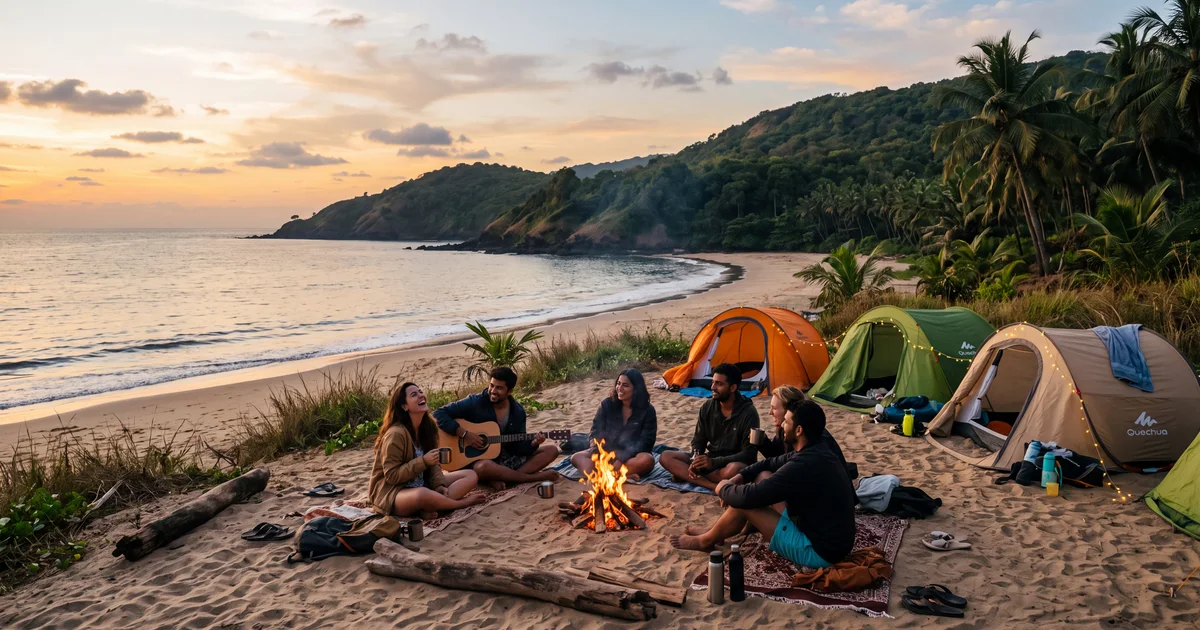
Mumbai does not lack green spaces. It lacks time. The city runs on borrowed hours, and by Friday evening most people want out without negotiating a flight or an overnight train. Camping solves that, but only if you pick the right spot.
The geography helps. Within 150 km of Andheri, you hit the Konkan coast to the south (beach camps), the Sahyadri range to the east (fort and lakeside camps), and the Thane creek mangroves to the north (kayak camps on backwaters). That variety means you can camp on a beach in October and a misty fort in August without repeating yourself.
This guide covers what each cluster offers, what it actually costs, and how to pick between them when you have one night and no patience for tourist traps.
TL;DR
- Pawna Lake (110 km): most popular lakeside camp, calm water, Tung and Tikona forts in view
- Alibaug coast (95 km via ferry): beach camping closest to the city, works best October to March
- Rajmachi Fort (115 km trail from Lonavala): fort camping with monsoon waterfalls, moderate difficulty
- Kolad river (120 km): rafting plus riverside camping combo, best November to June
- Budget: 1,200 to 2,500 rupees for basic camps, 3,000 to 5,500 for premium experiences
Where Can You Go Camping Near Mumbai on a Friday Night?
The real constraint is not distance. It is when you leave. Mumbai traffic between 5 PM and 8 PM on Fridays adds 30 to 60 minutes to any expressway route. Plan around that and three spots become Friday night friendly.
Pawna Lake is the default. Take the Mumbai Pune Expressway, exit at Lonavala, and continue 15 km to the dam backwaters. Total drive from Andheri: 110 km, roughly two and a half hours if you leave by 6:30 PM. Camps line the eastern shore with pre pitched tents facing the water. Tung Fort rises behind the lake, lit up at dawn when the mist clears. The scene is genuinely photogenic. Downside: weekends get crowded, especially during Diwali season and December.
Alibaug beach camps are closer by air, but logistics add time. You can drive the NH66 route (95 km, three hours with Panvel traffic) or take the Mandwa ferry from Gateway of India (45 minutes on water) plus a 30 km auto ride. The ferry option works only if you catch the 4:15 PM or 5:30 PM sailing. Miss it and you are stuck until morning. Beach camps at Nagaon, Kihim, and Revdanda operate October through March; monsoon shuts them down.
Kolad sits 120 km south on the Goa highway. Leave by 5 PM and you are pitching a tent by 8 PM. The Kundalika river runs through the valley, and most camps bundle a morning rafting session (Grade II rapids, nothing dangerous) with overnight stay. November to June is the window for rafting; monsoon turns the river too fast for commercial trips.
Is Pawna Lake Camping Overrated?
Short answer: only on peak weekends. The lake itself is a reservoir built in 1972, fed by streams from Tung and Tikona forts. Water levels peak post monsoon (October to December), which is also when the surrounding hills are greenest.
On a random Tuesday in November, you get a quiet lakeside with maybe four other tents visible. On a Saturday in December, that same stretch might hold 40 to 60 tents with music competing from three directions.
The fix is simple. Book weekday camps if possible. If weekends are your only option, choose operators on the northern or western shore, where density is lower. Camps on the Pawna dam wall side get the most footfall.
Expect to pay 1,500 to 2,200 rupees per person for a standard package: dome tent, barbecue dinner, breakfast, bonfire, and a basic sound system. Premium camps charge 3,000 to 4,000 rupees and add kayaking, archery, or a guided Tikona Fort trek at dawn.
One honest caveat: toilet facilities vary wildly between operators. Some have proper washroom blocks with running water. Others have portable loos that get overwhelmed by Sunday morning. Ask before booking.
Which Beach Camps Near Mumbai Are Worth the Trip?
The Konkan coast south of Mumbai has three beach camping clusters within reasonable reach.
Nagaon Beach (110 km via NH66) is the most established. White sand, relatively clean water, and camps that have been running five or more years. The beach is wide enough that camps do not feel stacked. A night here costs 1,800 to 3,000 rupees including a seafood dinner. October to March is prime season; the water is calm and nights stay between 20 and 26 degrees.
Kihim Beach (105 km) sits in a quieter pocket north of Alibaug town. Fewer commercial camps here, which means fewer crowds. The downside is less infrastructure. You will not find fancy dome tents or elaborate activity packages. What you get is a relatively empty stretch of coast with casuarina trees and a view of Murud Janjira fort in the distance. Budget 1,200 to 1,800 rupees.
Kashid Beach (130 km) is the prettiest but also the most commercial. White sand, clear water, hills on both sides. On weekends it fills with day trippers from Pune and Mumbai. If you camp on a weekday or in early October before the season peaks, it is a different place entirely. Most camps are actually 500 metres inland from the beach, connected by a short walk.
A general rule for all three: book with operators who confirm tent count on the beach. Some oversell, and you end up with tents practically touching neighbours. A good camp keeps 15 to 20 metres between setups.
What About Fort Camping in the Sahyadris?
Fort camping hits differently from lakeside or beach options. You carry your gear uphill (or the operator's porters do), pitch on a plateau with history underfoot, and wake up above the clouds.
Rajmachi Fort is the most accessible from Mumbai. The trek starts at the Lonavala end: either a 15 km gradual trail from Udhewadi or a steeper 5 km climb from the Karjat side. Most Mumbai groups take the Lonavala route because it is gentler and allows evening arrival. Camps sit between the twin bastions of Shrivardhan and Manaranjan. In monsoon (July to September), you get waterfalls cascading off the fort walls. Spectacular if you do not mind getting soaked.
Tikona Fort (near Pawna) works as a sunrise add on to Pawna lake camping. The climb takes 45 minutes from base, and the top has a flat area large enough for 10 to 15 tents. Views across Pawna lake at sunrise are the selling point. Difficulty is low to moderate with one rocky patch near the top.
Torna Fort (near Pune, 130 km from Mumbai) is harder. The last 20 minutes involve hand and foot scrambling over rock. Groups camp in the large open space inside the fort walls. Water is scarce on top, so operators carry all supplies. This is not a beginner camp. You need decent fitness and comfort with heights.
Fort camping costs 2,000 to 4,000 rupees depending on trek difficulty and what operators provide. The price covers guides, tents, meals, and sometimes porters for heavier gear.
How Do I Choose Between Lake, Beach, and Fort Camping?
It comes down to three questions: what you want from the night, how much effort you are willing to put in, and who you are going with.
Pick lake camping (Pawna, Bhandardara) if you want minimal effort, calm surroundings, and a setup where you arrive, eat, sleep, and leave. Good for mixed groups with varying fitness levels, couples, or a first camp with someone who has never slept outdoors. Drive up, tent is ready, sit by the water.
Pick beach camping (Alibaug, Kashid, Nagaon) if the sea matters to you. The experience is different from lakes: salt air, tide sounds, and the option to swim before bed. Works best October to March. Do not expect privacy on weekends.
Pick fort camping (Rajmachi, Tikona, Torna) if you want a physical challenge paired with the reward of altitude views. The effort filters out casual crowds, so you get quieter nights. Best for fit groups of 4 to 10 who enjoy trekking and do not mind basic facilities.
One thing to watch: some operators list "adventure camps" that are just lakeside camps with zip lines and paintball added. The outdoor sleeping part is the same as a basic camp, just more expensive. Read reviews specifically about the camping setup, not the activity package.
What Should You Actually Pack for One Night?
Most organized camps provide the tent, mat, and sleeping bag. But what they supply varies in quality, and what you bring determines comfort.
Essentials that every camp expects you to carry: a headtorch (not a phone flashlight, your battery will die), insect repellent (mosquitoes at lakeside camps are aggressive post sunset), a light fleece or hoodie for 2 AM temperature drops, and a small towel.
Things people forget: a power bank (no outlets in most tents), earplugs (other groups, dogs, and birds start at 4:30 AM), a dry bag or ziplock for your phone and wallet (condensation inside tents is real), and slippers you can get muddy without caring.
Skip bringing: speakers (the point is to not hear the city), full pillows (roll up a jacket), and glass bottles (most camps ban glass for safety, and some fine you 500 rupees per bottle).
For monsoon fort camps specifically: gaiters or leech socks (Rajmachi and Tikona in July are leech territory), a rain poncho (not an umbrella, you need both hands on rocky sections), and quick dry clothing that you do not mind ruining.
Where to Find Group Camping Departures from Mumbai
If organising logistics for 8 people sounds exhausting, fixed departure group camps solve that. Operators handle transport, food, tents, and an itinerary. You just show up at the pickup point.
Most Mumbai group camps depart from Dadar, Thane, or Panvel between 4 PM and 6 PM on Fridays or Saturdays. Pickup points are near railway stations for easy access. Return is typically by noon the next day.
Pricing for group departures runs 10 to 20 percent higher than direct booking (the operator takes a margin for transport and coordination), but you skip the planning overhead. For a group of 4 or fewer, this is often cheaper than hiring a car plus booking independently.
Check current group departures on TripzSearch trips from Mumbai or browse all available trips to filter by camping and your preferred dates.
If you already know the spot and want to compare operators, the destinations page lists locations with available departures so you can see who runs what, when.
Frequently asked questions
- What is the best time for camping near Mumbai?
- October to February offers the driest weather and comfortable nights between 18 and 24 degrees Celsius at coastal spots. Monsoon camping (June to September) is possible at select Sahyadri sites, but expect heavy rain, muddy trails and limited road access along the Konkan coast. March through May heats up quickly, especially at sea level.
- How much does camping near Mumbai cost per person?
- Basic tent camps with dinner and breakfast run 1,200 to 2,500 rupees per person. Premium setups with kayaking, beach bonfires, or fort treks included charge 3,000 to 5,500 rupees. Group bookings of 10 or more usually get 10 to 15 percent off. Bring your own tent options start at 600 to 800 rupees for just the campsite and meals.
- Which is the closest camping spot to Mumbai?
- Pawna Lake sits about 110 km from the Western Express Highway via the Mumbai Pune Expressway and Lonavala exit. On a Friday evening without holiday traffic, you can reach camp in two and a half hours. Alibaug beach camps are closer by distance (95 km via ferry plus road) but depend on Mandwa ferry timings.
- Is it safe to camp near Mumbai during monsoon?
- Lakeside camps like Pawna close during peak monsoon (July to mid September) because water levels rise unpredictably. Fort based camps at Rajmachi and Tikona stay open but trails get slippery and leech heavy. Stick to organized group trips with local operators who know the terrain. Never pitch near dry riverbeds or steep hillside drains.
- Can beginners camp near Mumbai without their own gear?
- Yes. Most organized campsites supply dome tents, sleeping bags, mats, and basic toiletries. You only need to bring a torch, insect repellent, and a light layer for post midnight wind. Some premium beach camps even provide cots. Call ahead if you have specific requirements like extra blankets in winter months.
- Do I need a car to reach camping spots near Mumbai?
- Not always. Pawna Lake camps offer pickup from Lonavala station (15 km), and several Alibaug beach camps arrange shared transfers from the Mandwa ferry point. For fort camps like Rajmachi, you can take a train to Lonavala and then walk the 15 km trail in. Having a car gives flexibility, but public transport plus short autos works for most popular spots.