Camping Near Bangalore (2026): Spots That Deliver Without the 5 Hour Drive
Camping near Bangalore in 2026: lakeside, hilltop and forest campsites within 120 km, real costs, what to expect and group departure options.
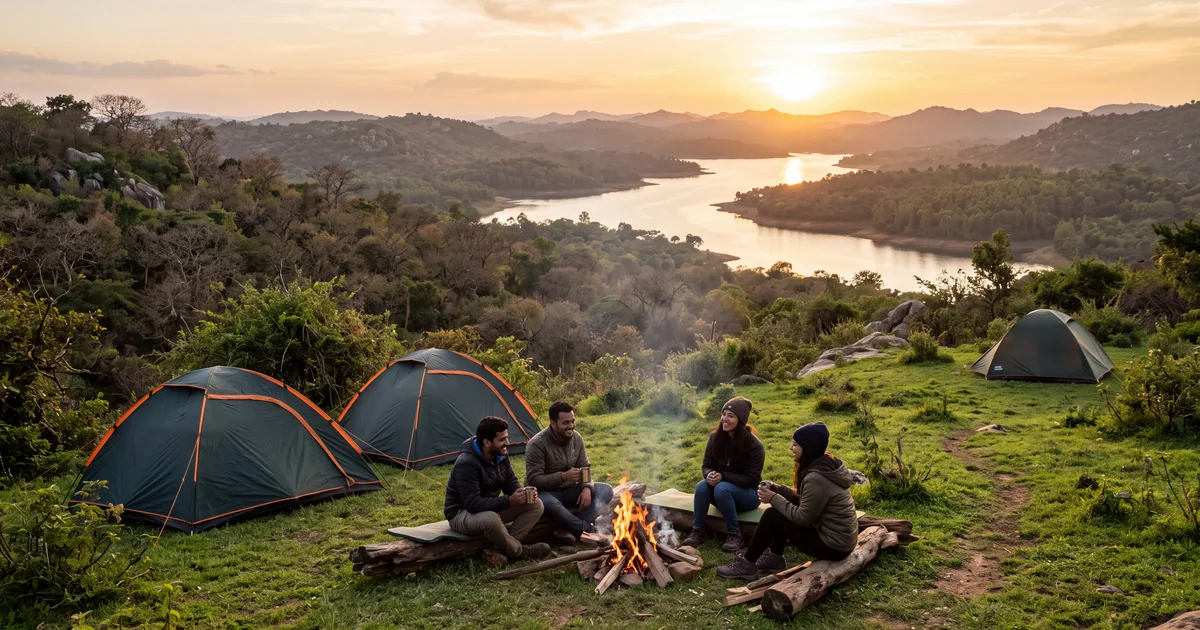
Bangalore's problem with outdoor escapes is not distance. It is that every campsite within 100 km markets itself as a "nature retreat" without specifying what that means. Some are genuine forest clearings. Others are a farmhouse backyard with three tents and a playlist.
The city sits on the Deccan Plateau at about 920 metres elevation, surrounded by scrub hills to the south (Ramanagara), dense forests to the west (Sakleshpur corridor), and lakeland to the north (Nandi Hills area). That spread gives you surprisingly varied camping within 90 minutes of Koramangala.
This guide covers what works, what does not, and where to go depending on what you actually want from a night outdoors.
TL;DR
- Ramanagara (50 km): closest, granite hills, rock climbing combos, Friday night friendly
- Anthargange (70 km): volcanic rock caves, night trek plus camping, cooler temperatures
- Sakleshpur corridor (220 km): real forest, coffee estate camps, needs a full weekend
- Manchanabele Dam (40 km): lake camping closest to the city, quiet on weekdays
- Budget: 1,000 to 3,000 rupees per person for standard camps, 3,500 to 5,000 for premium
Where Can You Go Camping Near Bangalore Without Taking Leave?
The answer depends on when you leave. If you can leave Bangalore by 4 PM on a Friday, you have three solid options that do not eat into Saturday morning.
Ramanagara is the obvious one. 50 km via NH 275 (Mysore Road), reachable in 60 to 75 minutes depending on traffic past NICE Ring Road. The camping here happens at the base of granite monoliths, the same ones used for the sholay train scene decades ago. Several operators pair an evening bonfire with a morning rock climbing session on 30 to 40 foot walls. Good entry point if you have never climbed before: routes are bolted, and instructors handle the belaying.
Manchanabele Dam is even closer at 40 km southwest of the city. Camps sit on the reservoir shore with views of the Savandurga hill across the water. The crowd here skews younger (corporate team outings) on weekends but empties completely on weekdays. It is the closest you can get to lakeside camping without crossing the 50 km mark.
Anthargange near Kolar is 70 km east. The draw is unique: volcanic rock formations with natural caves that you explore on a guided night trek with headlamps before returning to camp. The elevation (about 1,100 metres) means noticeably cooler nights than Bangalore itself, dropping to 14 to 16 degrees Celsius in December.
One caveat about Ramanagara: weekends between October and January are packed. If you arrive Saturday at 3 PM you will find 50 to 60 tents at the popular operators. The granite hills absorb heat all day and release it slowly, so even winter nights are warmer here than at Anthargange or Sakleshpur.
Is the Sakleshpur Corridor Worth the Longer Drive?
In a word, yes. But it needs planning.
Sakleshpur is 220 km from Bangalore (about 4 to 4.5 hours via Hassan). The camps there sit inside or adjacent to working coffee estates at 900 to 1,000 metres, surrounded by dense tropical forest. This is not scrub land with a view. This is proper Western Ghats green: canopy trees, birds you need binoculars for, and the sound of a river somewhere below.
The downside is the drive. 4 hours each way means you either need a full weekend or you accept arriving at camp exhausted at 9 PM. My recommendation: leave Saturday morning by 6 AM, reach by 10:30, spend the full day outdoors (most camps offer guided plantation walks, waterfall hikes, or coracle rides), camp overnight, and drive back Sunday afternoon.
Camps in this belt run between 2,000 and 4,000 rupees per person, often including a guided nature walk, meals, and bonfire. The coffee estate setting adds an authentic quality that the flat land camps closer to Bangalore cannot replicate. You wake up to mist rolling over coffee bushes with Bisle reserve forest as a backdrop.
The limitation: no phone signal at most camps. Jio works intermittently, Airtel barely. If you need to be reachable, this is not your spot.
What About Nandi Hills? Is Camping Allowed There?
Nandi Hills itself (60 km north of Bangalore) does not permit camping on the hilltop. The gates close at 6 PM and the forest department patrols after dark.
However, camps operate in the foothills and surrounding villages, typically on private agricultural land within 5 to 10 km of the Nandi base. These offer the "Nandi Hills camping" experience without actually being on the hill. You get the pre dawn drive up for sunrise (gates open at 5 AM) combined with an overnight camp nearby.
Be honest with yourself about what this is: it is farmland camping with a proximity benefit. The land is flat, the views are of crop fields, and the main attraction is the bonfire and the next morning's sunrise drive. If that is enough for your group, it works. If you want actual wilderness feeling, go to Anthargange or Sakleshpur instead.
How Do Group Camping Trips Work from Bangalore?
Most people booking camping near Bangalore are groups: college friends, work teams, or family clusters of 8 to 15 people. Operators have built their business around this.
A typical group camp includes: pickup point coordination (usually one bus from Silk Board or Marathahalli for groups above 15), tent allocation, evening snacks, bonfire with music, dinner, morning tea, breakfast, one activity (trek, climbing or kayaking) and drop back. Total duration is about 20 to 22 hours from Saturday 3 PM to Sunday 1 PM.
Pricing drops meaningfully for groups. A 4 person booking might cost 2,500 per head; the same camp with 12 people drops to 1,800 to 2,000. Some operators waive the organiser's fee entirely for bookings above 20 people.
Search camping and outdoor trips from Bangalore on TripzSearch to compare upcoming group departures with verified reviews. You can filter by date, group size and activity type without messaging five different Instagram accounts.
For custom private departures (your own bonfire, your own schedule), most operators need a minimum of 8 people and 5 days advance booking. Browse available group trips for current options.
What Should I Actually Pack?
Operators provide the big stuff: tent, sleeping bag, mat. Here is what you actually need to bring and what most first timers forget.
A light jacket or fleece. Bangalore nights are mild, but 50 to 70 km outside the city at slightly higher elevation, temperatures after midnight are genuinely cold between November and January. A hoodie is not enough at Anthargange in December.
Closed shoes. Not flip flops, not Crocs. You will walk on uneven ground in the dark, possibly do a short trek, and definitely step on things you cannot see. Ankle support helps.
Insect repellent with DEET. Camps near water bodies (Manchanabele, Hogenakkal corridor) have aggressive mosquitoes from 6 PM onwards. The citronella candles operators place around the bonfire are decorative at best.
A headlamp or clip on torch. Phones work but drain battery and blind people when you point them around camp. A 200 rupee LED headlamp from Decathlon solves this permanently.
Personal medication. Remote campsites are 20 to 40 minutes from the nearest pharmacy. If you need anything specific, carry it.
Skip the drone. Most campsites near Bangalore fall within 30 km of HAL airport or Yelahanka airbase restricted zones. Flying without clearance risks confiscation and a fine.
Picking the Right Spot for Your Group
If your group wants convenience: Ramanagara or Manchanabele. Leave late, arrive fast, no planning headaches.
If your group wants adventure: Anthargange for the night cave trek, or Ramanagara for morning rock climbing on real granite walls.
If your group wants wilderness and does not mind the drive: Sakleshpur. Accept the 4 hour commute, get rewarded with forest, silence and cold mornings in coffee country.
If your group wants Instagram content more than actual outdoors: any Nandi Hills adjacent camp with fairy lights and a projector. No judgement. Know what you want.
The campsite comparison on destinations near Bangalore helps narrow this down. Filter by distance, activity and budget. The difference between a great camping night and a forgettable one is usually just picking the right spot for what your group actually enjoys, not what looks best in photos.
Frequently asked questions
- What is the best time for camping near Bangalore?
- September to February works best. Night temperatures at 900 to 1,000 metres elevation near spots like Ramanagara and Anthargange drop to 16 to 20 degrees Celsius. Clear skies between October and January make stargazing possible. March to May nights stay above 25 degrees, which makes tent sleeping uncomfortable without a fan.
- Is camping near Bangalore safe for beginners?
- Yes. Most operator run campsites near Bangalore are designed for first timers: flat ground, pre pitched tents, washrooms within 50 metres, and a camp coordinator on site overnight. Stick to managed camps rather than solo setups at reservoirs or forest land, especially if you have never camped before.
- How much does camping near Bangalore cost?
- Budget between 1,000 and 3,000 rupees per person for one night including tent, dinner, breakfast and one or two activities like a short trek or bonfire. Premium setups with dome tents, kayaking or private bonfires run 3,500 to 5,000 rupees. Group discounts of 10 to 15 percent are common for 10 or more people.
- Which is the closest camping spot to Bangalore?
- Ramanagara is only 50 km from the city centre, about an hour by car via the Mysore expressway. Camps there sit at the base of granite hills used for rock climbing, and you can leave Bangalore after work on a Friday and reach camp before dinner.
- Can I camp near Bangalore during monsoon?
- Yes, though options shrink. Camps at Ramanagara and the Sakleshpur corridor stay open through the rains. Expect damp conditions, muddy trails and leeches on forest paths. The upside is lush green scenery and zero crowds. Camps near reservoirs like Manchanabele may close when water levels rise.
- Do I need my own gear for camping near Bangalore?
- Not for organized camps. Operators supply tents, sleeping bags, mats and sometimes pillows. Bring your own torch, insect repellent and a light jacket for post midnight cold. If you prefer hammock camping or ultralight setups, call ahead because some sites charge differently for BYO gear.