Bhira Dam (2026): Camping, Treks and How to Reach from Pune and Mumbai
Bhira dam guide: lakeside camping, the Andharban and Devkund treks that end here, monsoon season calls, and travel times from Pune and Mumbai.
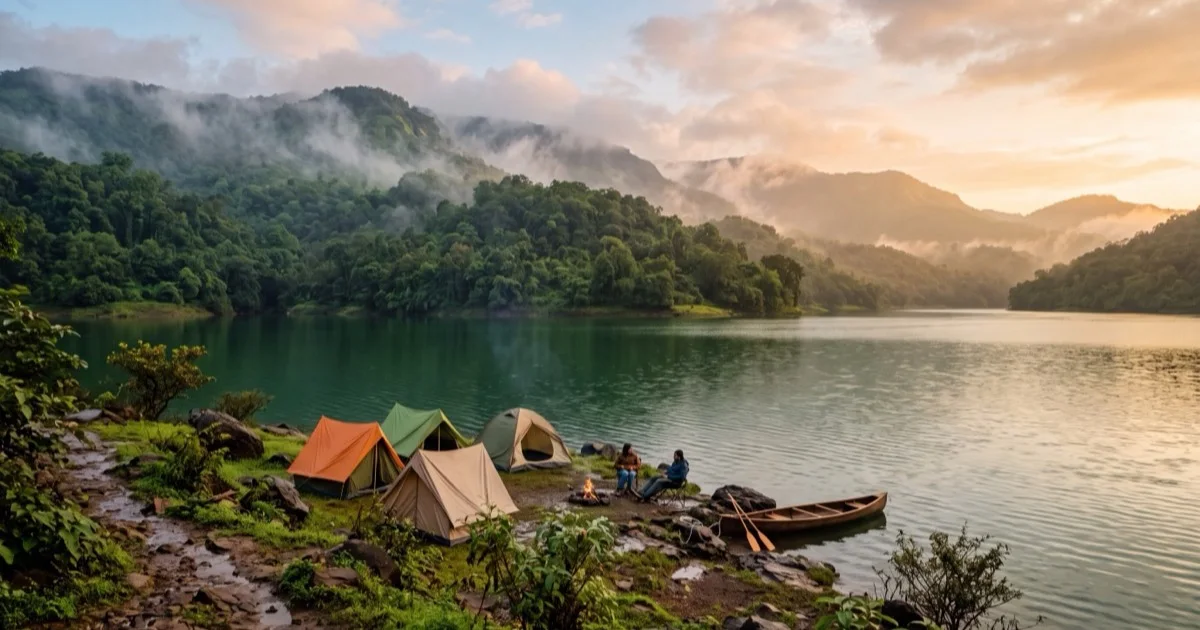
Type "bhira dam" into Google during monsoon and you are looking at one of the Sahyadris' quiet junction points. One reservoir on the Kundalika river, at the bottom of Tamhini Ghat, connects three of Maharashtra's most loved outdoor plans: the Andharban forest trek that finishes on its shore, the Devkund waterfall walk that starts in its village, and the lakeside camping scene that has grown along its backwaters.
Bhira is not a destination you stumble on. It sits at the end of a narrow ghat road, 100 km from Pune. That inconvenience is exactly what has kept it good.
Here is how the pieces fit, and how to plan a trip that uses them properly.
TL;DR
- Bhira dam is on the Kundalika river in Raigad, below Tamhini Ghat
- From Pune: about 100 km, three hours, over Tamhini
- From Mumbai: roughly 150 km via Kolad, three and a half to four hours
- The 13 km Andharban trek ends at the Bhira backwaters
- Bhira village is the trailhead for Devkund waterfall
- Camp October to February; trek June to September
Where is Bhira dam and which river is it on?
Bhira dam holds back the Kundalika river at Bhira village in Raigad district. The site is industrial history as much as scenery: Tata's hydroelectric station here was commissioned in 1927, fed by water dropping more than 500 metres through the ghat from the Mulshi catchment above. The powerhouse still runs. Its releases set the rhythm for everything downstream, including the rafting at Kolad, about 30 km away.
The backwaters are the part travellers come for. Green ridges close in on three sides. In monsoon the lake turns a heavy emerald and low cloud drags across the water most mornings.
One caveat before you romanticise it: this is a working power project, not a park. The area right around the powerhouse and dam wall is restricted, and security will turn you back. The camping and swimming spots are on the open backwater shores, arranged through local hosts.
My opinion: Bhira at 7am on an October morning, mist lifting off flat water, beats most of the famous viewpoints on the Tamhini road. Few people see it. Most drive past at noon.
Why trekkers keep ending up at Bhira
Look at a map and the logic appears. Three experiences share this one valley.
The Andharban trek physically ends here. The Devkund trail starts here. Kundalika rafting runs on this dam's water. So a weekend built around Bhira can stack a forest descent, a waterfall swim, and a rafting run without ever driving more than an hour between them.
That stacking is the real reason group operators love the place. A Saturday Andharban batch camps at the lake, then walks to Devkund on Sunday. Two treks, one camp, one drive from Pune.
The honest limitation is capacity. Bhira village is small. On peak monsoon weekends in July and August, parking chokes the approach road and the Devkund trail takes on a queue like feel by 10am. Come on a weekday or in the shoulder months if crowds ruin it for you.
How do you reach Bhira dam from Pune and Mumbai?
From Pune, the route is Chandni Chowk, Pirangut, Mulshi dam, then over Tamhini Ghat and down to Bhira. Around 100 km, about three hours dry. Tamhini in monsoon is slower: fog patches, waterfalls landing on the road, and weekend traffic near the viewpoints. Add an hour in July.
From Mumbai, come down the Mumbai Goa highway to Kolad, then turn inland along the Kundalika for the last 30 km. Roughly 150 km total, three and a half to four hours.
Public transport is the weak link. ST buses from Swargate toward Mangaon can get you across Tamhini, but the final stretch to Bhira depends on shared jeeps from the Kolad side and they thin out by evening. Realistically you have three options: own vehicle, a hired cab, or a group trip from Pune with pickup built in. For a first visit, the third option removes the two genuine risk points, night driving on Tamhini and finding the campsite in the dark.
A short note for bikers: fuel up at Pirangut or Paud. Pumps past Mulshi are scarce.
Camping at Bhira dam: what it is and what it is not
What it is: private lakeside campsites on the backwater shores, usually a tent for two, dinner and breakfast cooked on site, a bonfire, and that specific silence you only get where phone signal weakens. Nights in December drop to around 15°C by the water. The star field is far better than anything visible from Pune.
What it is not: an official campground with facilities. Toilets are basic. Power is a shared charging point at best. And you cannot pitch a tent wherever you like, because most usable shoreline is either village land or Tata property. Book a host rather than freelancing it.
Three safety points that campsite hosts repeat every weekend, because guests keep testing them. The lake bed drops off fast, so weak swimmers should stay waist deep. Water levels change with dam operations, so do not camp on low mud flats. And in monsoon, check for leeches after every walk. Small stuff, until it is not.
Real opinion: monsoon camping at Bhira is overrated, and October camping is underrated. July gives you a wet tent and a grey lake. October gives you the same lake, full from the rains, under a clear sky.
The Andharban trek: 13 km downhill into the Bhira valley
Andharban means dense, dark forest, and for once the name undersells it. The trail starts near Pimpri dam close to Tamhini village, drops into evergreen canopy, and descends roughly 13 km to the Bhira backwaters near Patnus. Because you start high and finish low, the day is mostly downhill, which makes this the rare Sahyadri trek where distance does not equal suffering.
Expect five to six hours of walking. Streams cross the path repeatedly in monsoon. The canopy keeps the trail dim and cool even at noon, and the last hour opens out to lake views that land like a reward.
The caveat: downhill is deceptive. Thirteen kilometres of wet descending stone works your knees and your attention harder than a short climb would. This trek causes more slips per trekker than steeper hills nearby precisely because people relax. Wear proper grip, not gym shoes.
Andharban runs as a one way route, so logistics matter: you need a drop at the top and a pickup at Bhira. This is why nearly everyone does it with an organised batch. Check what is departing on live group treks and trips before planning it solo.
Devkund waterfall from Bhira village
Devkund is the plunge waterfall the internet fell for, a white column dropping into a blue green pool deep in the forest upstream of Bhira. The walk from Bhira village takes about two hours each way, mostly level, with a couple of stream crossings that swell after rain.
Local guides are arranged at the village and are worth it beyond the rule keeping: the forest junctions are confusing, and the guides know the flood behaviour of the streams. This trail has had flash flood incidents in past monsoons, and the authorities now close it during heavy rain spells. Check status before you drive out in July or August. That closure risk is the one real planning caveat for a Devkund centred weekend.
Best swim window: late September to December. The pool is full, the current is tame, and the water is cold enough to make you shout but not cold enough to make you leave.
When is the best time to visit Bhira dam?
June to September is peak drama. Every fold of Tamhini runs with water, Andharban is at its greenest, and the lake fills. It is also peak crowd, peak leeches, and the season when Devkund most often closes. You trade certainty for spectacle.
October to February is the planner's window. Trails are drained, the lake is still full from monsoon, camping nights are cool, and everything stays open. If your trip revolves around the campsite rather than the waterfalls, this is the better half of the year. February mornings on the backwater are flat calm.
March to May is the season to skip. The lake shrinks, the hills brown, and afternoon heat in the valley is heavy. Rafting at Kolad continues on dam releases, but that is a Kolad plan, not a Bhira one.
Doing Bhira as a group trip
The Bhira valley rewards the two day format: Andharban down on day one, camp at the backwaters, Devkund on day two. Doing that independently means arranging a top drop, a campsite, a guide, and a return pickup with no phone signal to coordinate any of it. Group departures bundle the whole chain, which for once is convenience worth paying for.
When you compare listings, look for stated group size, whether the Devkund leg includes the village guide, and what the camp provides. Costs move with season and inclusions, so see current prices on group trips running now, and browse other Sahyadri trek destinations if your dates fall in the dry months when Bhira is at half power.
One lake, three plans. Sequence them right and it is the best value weekend within 100 km of Pune.
How do you choose a trip around Bhira?
Start by distinguishing the activity you want: a dam visit, a campsite stay and a Devkund waterfall trek can have different meeting points and inclusions. A trip in the Bhira area does not automatically include all three.
Compare current Bhira-area listings, or browse the current Devkund waterfall trek listings. Before requesting availability, note your departure city, preferred date and group size. Ask the operator to confirm the exact route, transport, entry arrangements and current access conditions for that date.
Frequently asked questions
- Where is Bhira dam located?
- Bhira dam sits on the Kundalika river at Bhira village in Raigad district, Maharashtra, at the foot of the Tamhini Ghat section of the Sahyadris. It is about 100 km from Pune over Tamhini Ghat and roughly 150 km from Mumbai via Kolad. The dam feeds the Tata Power hydroelectric station that has run here since 1927.
- Is camping allowed at Bhira dam?
- Yes, through private lakeside campsites around the backwaters rather than any official campground. Operators set up tents, dinner and a bonfire on the shore, usually as part of a package. The land immediately around the powerhouse belongs to Tata Power and is off limits, so camp only where your host has arranged access.
- How do I reach Bhira dam from Pune?
- Drive out of Pune via Chandni Chowk and Mulshi, cross Tamhini Ghat, and descend to Bhira. It is about 100 km and takes around three hours in dry weather, longer in monsoon fog. Public transport is thin, so most people come by car, bike, or on a group trip with pickup included.
- Which river is Bhira dam built on?
- The Kundalika, the same river that hosts white water rafting downstream at Kolad. The rafting stretch runs on water released through the Bhira powerhouse, which is why raft timings follow the morning release. The dam and powerhouse are part of a Tata Power hydro project commissioned in 1927.
- Is Bhira dam the same as Devkund waterfall?
- No, but they share a base. Bhira village is the starting point of the Devkund waterfall trek, a walk of about two hours each way to a plunge pool fed by the Kundalika. The dam backwaters and the waterfall make a natural two day combination.
- Does the Andharban trek end at Bhira dam?
- Yes. The Andharban trail starts near Pimpri dam close to Tamhini village and descends roughly 13 km through dense forest to the Bhira backwaters near Patnus. Most groups finish at the lake, eat, and either drive back up the ghat or camp by the water.
- What is the best time to visit Bhira dam?
- June to September is the spectacle season, with the lake full, the hills green, and waterfalls running everywhere. October to February is calmer and better for camping, with clear skies and cool nights. March to May is hot and the water level drops, so skip summer unless rafting is your only goal.