Best Places for Solo Female Travel in India (2026): Where to Start
The best places for solo female travel in India: Himachal, Kerala, Rajasthan, Sikkim and more, with honest notes on what each destination asks of you.
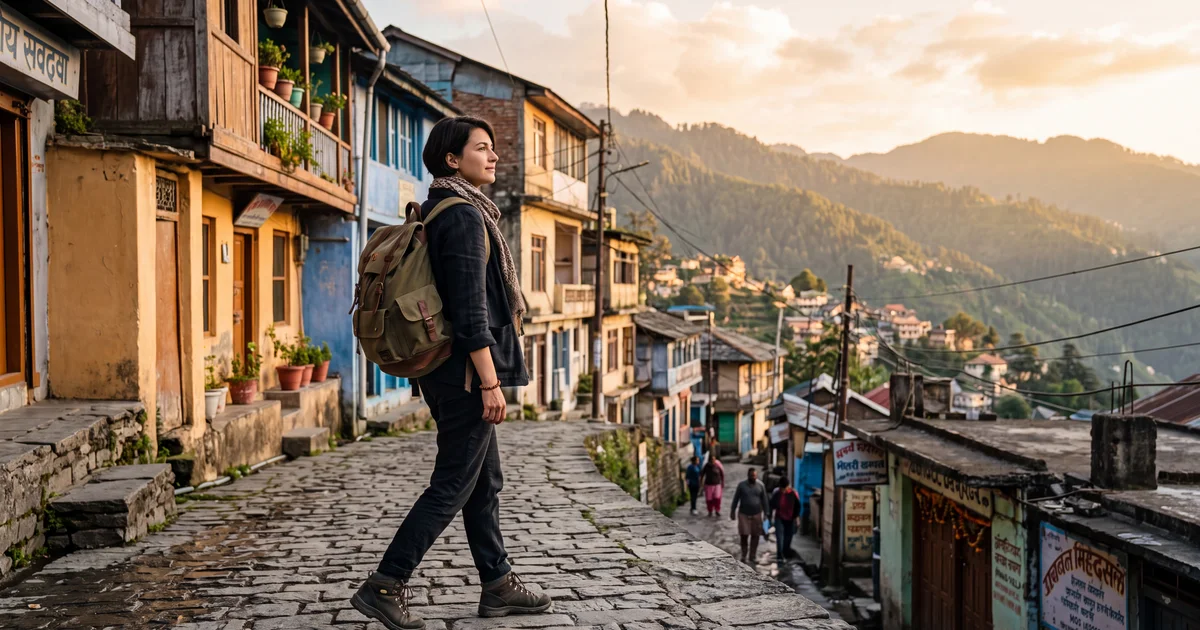
India has an image problem that does not match what most solo women actually experience on the ground. The best places for solo female travel in India are excellent destinations: easy to navigate, interesting, and far less intimidating than the coverage suggests. Millions of women travel here alone every year. The gap between the reputation and the reality is significant, and picking the right destinations closes most of it.
This guide is about the specific places. Not general safety habits, but where to go, what makes each destination work, and what it honestly asks of you.
TL;DR
- Rishikesh and Kasol are the easiest North Indian starts: social, walkable, and backpacker-dense.
- Kerala (Varkala, Munnar, Alleppey) is the most relaxed choice if you are coming from South India.
- Sikkim and Meghalaya are among the safest states in the country by any measure.
- Rajasthan works from Udaipur and Jaipur, with a bit more awareness required than the hills.
- A group trip is a real option if you want to see more of India without planning every detail yourself.
What makes a destination good for solo female travel?
Not every place earns the recommendation equally. A destination works when a few things are stacked together: a compact, walkable centre, locals used to independent travellers, accommodation clustered near the main activity, and enough daytime foot traffic that you are not defaulting to isolated spots.
Himachal's hill towns pass this check easily. Kerala passes it. The Northeast passes it quietly, and Rajasthan passes it with an asterisk on a few cities.
The honest caveat here: this guide focuses on starting points. Places that feel daunting on a first solo trip in India often feel routine by the third. Use this list for the first two trips, then expand on your own terms from there.
North India: Himachal Pradesh
Himachal Pradesh is the gold standard for first-time solo female travel in India. It has been for years.
Manali sits at 2,050 metres and runs entirely on tourism. Old Manali, Vashisht village, and the mall road are walkable in a morning. The cafes run all day with solo travellers, the accommodation is dense and competitive, and the next-stage options from Manali are excellent: Spiti Valley in May, Solang Valley in January for snow, Chandrakhani Pass for a day trek. Temperatures drop to 5°C at night by October, sometimes lower. Pack a proper layer.
Kasol is smaller, slower, and probably the most social town on this list. Five hours by bus from Delhi, the main stretch is one lane of hostels and restaurants along the Beas River. You will meet other solo travellers within the first hour of arriving. The Kheerganga trek from Kasol (14 kilometres, day-hike pace) is a genuine highlight and easy to join at the trailhead.
Bir Billing is the quietest option in Himachal. India's paragliding centre, about 75 kilometres from Dharamshala, runs calmer than Kasol. The Tibetan refugee colony nearby adds real depth to a morning. The morning view toward the Dhauladhar range from the paragliding launch site is extraordinary, even if you are just watching.
One real opinion: Manali in January is one of the most underrated windows for solo travel in Himachal. Far less crowded than summer, rooms are 30 to 50 percent cheaper, and the snow is real. Most travellers go in June. Going in winter means you mostly have the place to yourself.
Is Uttarakhand good for solo female travellers?
Yes, and Rishikesh specifically is the single most beginner-friendly location on this entire list.
Rishikesh is not India at its most complex. The Ram Jhula area is walkable, calm in the evenings, and safe to move around in the main lanes after dark. Yoga ashrams structure your time if you want it: courses run in 1-week, 2-week, and month-long formats. River rafting runs April to June and September to November, and there are rapids at Grade III to IV for anyone who wants something with a bit more intensity. The Neer Garh waterfall is 3 kilometres from town: a good half-day solo option.
Nainital in the Kumaon hills is about 300 kilometres from Delhi and a genuinely quieter alternative to Rishikesh. The lake town peaks from March to June and is especially beautiful in early spring when rhododendrons are out at around 2,000 metres altitude. It does not have Rishikesh's traveller density. For some people that is exactly the draw.
Honest caveat: roads above 2,000 metres in Uttarakhand get icy and occasionally close between December and February. If you are planning Chopta, Auli, or Kedarnath in winter, check current conditions before booking anything non-refundable.
Is Kerala the right choice for solo women from South India?
For anyone based in Bangalore, Kerala is the most practical first recommendation, and the easiest one to test on a long weekend.
Varkala is a cliff-top beach town, about 3 hours by rail from Thiruvananthapuram. The North Cliff strip is roughly 200 metres of restaurants, guesthouses, and yoga studios, and it is difficult to feel isolated or unwatched-over there. Solo women rate it consistently as one of the most low-friction beach destinations in India. The nearest railway station (Varkala Sivagiri) is 3 kilometres away and well-connected on the Thiruvananthapuram to Mumbai coastal line.
Munnar sits between 1,450 and 2,695 metres elevation and stays pleasantly cool from October to February (8 to 18°C on most days). The tea estates need a bike or hire car to explore fully, but the town centre is compact and safe to walk. About 4 hours from Kochi airport by road, and shorter in the dry season when traffic is lighter.
Alleppey (Alappuzha) runs on houseboat tourism, which works better as a group booking than fully solo. The town itself is a fine solo base with good hostel options, and Kochi, 80 kilometres north, is one of the most walkable cities in South India.
Pondicherry is consistently underrated. The French Quarter is one of the most walkable urban neighbourhoods in India, the heritage guesthouses have real character, and the seafront promenade is fine to walk after dark. About 3 hours from Chennai and 5 hours from Bangalore by road.
Check current departures from Bangalore to these destinations at /from/bangalore or browse the full destinations list for what is currently running.
Why is the Northeast so good for solo women?
The Northeast is the most underrated region on this list. It is the one place solo women consistently say surprised them most, in a very good way.
Sikkim ranks among the lowest-crime states in India on every published index. Gangtok's MG Marg is a pedestrian zone: clean, well-lit, and easy to walk alone at any reasonable hour. Pelling, about 130 kilometres from Gangtok, has clear views of the Kanchenjunga range on a good morning. Yuksom further west is the starting point for the Goecha La trek, one of the great high-altitude routes in the Eastern Himalaya at 4,940 metres at the viewpoint.
Meghalaya centres on Shillong, 30 kilometres from Guwahati airport. The Living Root Bridges near Cherrapunji (Sohra) are a half-day from the city, about 53 kilometres on mountain roads. Shillong itself is compact, hilly, and coverable in two days on foot. The market around Police Bazaar is worth a morning.
Honest caveat: getting to the Northeast from Bangalore means a flight, usually via Guwahati or Bagdogra. Factor in 2 to 3 days for transit if you are coming from the South. Build at least 7 nights into any trip here to make the journey worthwhile.
Can a woman travel alone in Rajasthan?
Yes, and thousands do every year. Rajasthan earns a more measured recommendation than the options above, not because it is unsafe but because it asks for slightly more awareness.
Udaipur is the easiest starting point. The old city around Pichola Lake is compact, the traveller circuit is well established, and the boat to Jagmandir Island runs 10 minutes from the main ghat. Most solo women rate Udaipur as the most relaxed major city in Rajasthan.
Jaipur is bigger, louder, and has more friction: persistent touts near Hawa Mahal and Amber Fort, crowded bazaars, and more complicated auto-rickshaw negotiations. Still worth doing. October to December is the cleanest window before the tourist rush of Christmas and New Year.
Jodhpur and Jaisalmer are excellent but work better once you already have one India trip behind you. Both cities are best visited between October and February. The desert heat from May to August is severe: above 42°C on most afternoons, and the roads between the forts and the town are not walkable distances.
One real opinion: Rajasthan is India at its most visually dramatic. Udaipur at dusk over the lake is genuinely one of the most beautiful things you can see anywhere in the country. It belongs on the itinerary. Just not as your very first India trip.
Joining a group before going fully solo
If you want to see more of India but are not ready to coordinate everything yourself, a verified women-only or small mixed group trip is worth considering. Not as a compromise. As a smart first step.
Many women do their first India trip with a group, learn how travel here actually works, meet people from day one, and skip the after-dark logistics. The next trip solo is a completely different experience once the pattern is clear. You stop second-guessing the basic decisions.
The All-Girls Adventures collection on TripzSearch is built for exactly this kind of trip. Every operator on the platform shows real reviews and verified credentials before you book. A group departure from Bangalore to Kerala, Coorg, or Rishikesh is a low-barrier way to test the experience before going fully independent.
The destinations above are the best starting points for solo female travel in India. Pick one that matches your current comfort level and extend from there. The only thing that does not teach you anything is not going.
Frequently asked questions
- Which is the safest place for solo female travel in India?
- The calmest starting points are Himachal Pradesh hill towns (Manali, Kasol), Rishikesh in Uttarakhand, Sikkim, and South India including Kerala and Pondicherry. These regions have solid tourist infrastructure, locals used to independent travellers, and compact town centres you can navigate comfortably on foot.
- Is Kerala safe for solo female travellers?
- Yes. Kerala consistently ranks as one of the easiest states for solo women in India. Varkala, Munnar, and Alleppey are all beginner-friendly: accommodation is plentiful, the pace is calm, and solo women face minimal friction. Varkala in particular is one of the most relaxed beach towns in the country.
- Can a woman travel alone in Rajasthan?
- Yes, and many do every year. Udaipur and Jaipur both have solid tourist infrastructure and are safe with standard precautions. Udaipur tends to feel more relaxed than Jaipur. Plan for daylight travel between cities and avoid isolated areas after dark.
- Is Sikkim good for solo female travel?
- Sikkim is one of the best choices in the country. It ranks among the lowest-crime states in India, the culture is warm, and towns like Gangtok and Pelling are easy to navigate on foot. Most solo women report it feeling noticeably calmer than north Indian plains destinations.
- What are the best hill stations for solo women in India?
- Manali, Kasol, Bir Billing, Rishikesh, and Nainital are the most popular choices. Rishikesh is the easiest starting point for first-timers. Kasol and Bir are more social and backpacker-heavy. Nainital in the Kumaon hills is a quieter option, about 300 kilometres from Delhi.
- Should I travel solo or join a group for my first India trip?
- Both work, but a verified women-only or small mixed group is a smart first step. It removes the logistics, gets you meeting people from day one, and helps you understand how travel in India works before planning everything yourself. Many women find solo travel much easier after one group trip.
- When is the best time for solo female travel in India?
- October to March covers most of the country comfortably: cool, dry, and manageable. The hills are best from March to June. Kerala and South India are good almost year-round, and the Western Ghats are particularly lush in and just after the monsoon from June to September.